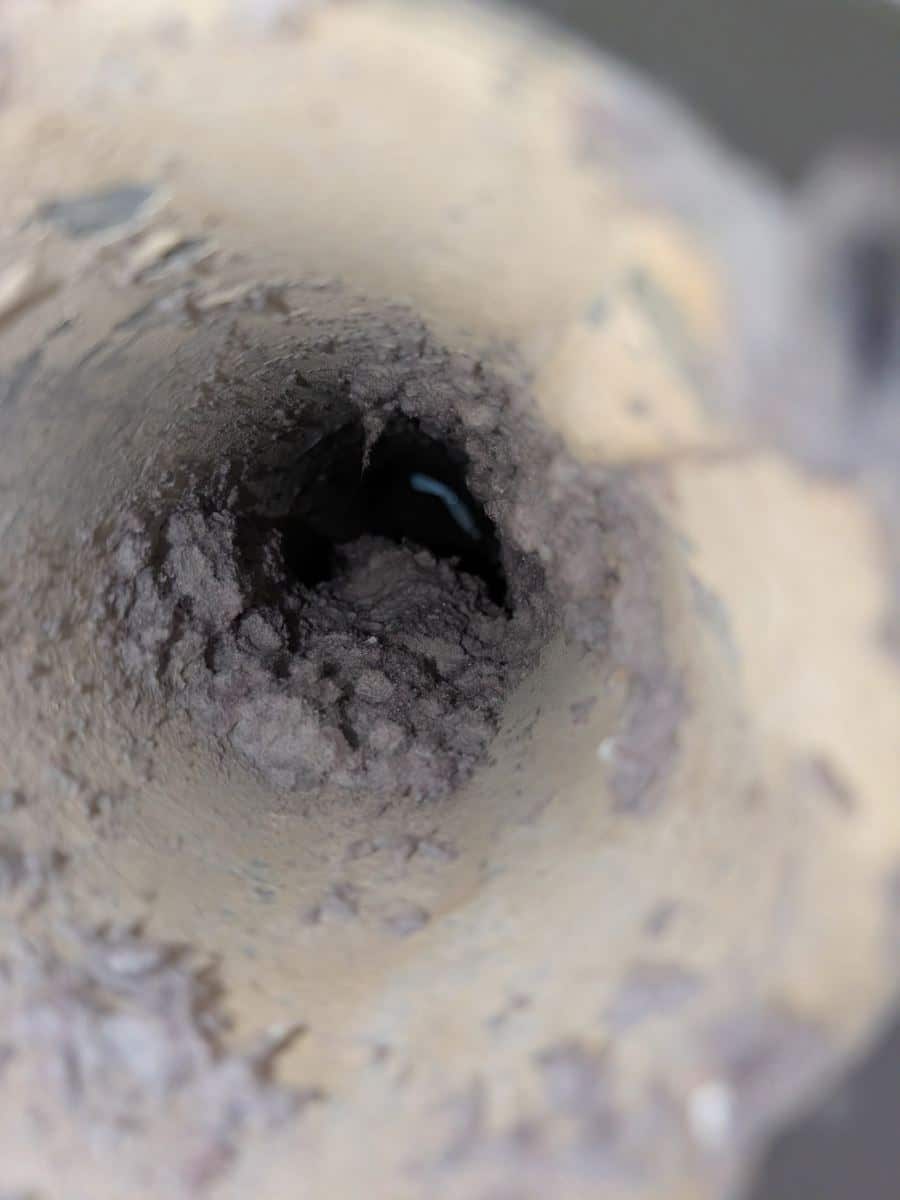
Nearly three in ten homes inside the Town of Warrenton were built before 1960. Houses that old weren’t laid out around a clothes dryer, so the dryer vent line was added later, often from a basement laundry straight out through the rim joist or a back wall. The run is short. The trouble tends to sit behind the machine, in a crinkled foil or vinyl hose that’s been crushed against the wall for years and holds lint in every fold.
Most Warrenton mail goes outside the town: about 34,700 people live in ZIP codes 20186 and 20187, and about 10,200 of them inside the limits. New Baltimore, along Lee Highway in 20187, has more residents than the town does. Nearly all of its homes are single-family houses, about half built since 2000, and a house from those years often puts the laundry upstairs by the bedrooms. From there the dryer vent line runs across the ceiling joists to find an outside wall, and every sag in a long horizontal run is a place for lint to pile up.
The Warrenton Historic District adds one wrinkle. The Town wants a Certificate of Appropriateness before any change to the outside of a building there. A dryer vent cleaning stays inside the line and changes nothing on the facade. Replacing the hood, or opening a new exit through a wall, is exterior work: Town staff can sign off on small, compatible changes, and bigger ones wait for the Architectural Review Board, which meets once a month and takes applications until the 1st.
About six in ten owner homes in town heat with gas, about half in New Baltimore do, and one in seven there burn propane. On a gas or propane dryer the burner’s exhaust leaves through the same line as the lint, so a blocked run matters twice. Fauquier County Fire Rescue takes requests for smoke and carbon monoxide alarms through a form on its Public Education page; a house with a fuel-burning dryer should have one.