In a house with no gas line the dryer runs on electricity, and in Bealeton that’s most houses: about seven owners in ten heat with electricity and fewer than one in ten have utility gas. An electric dryer has no burner, but its heating element depends on air moving past it. When the dryer vent line packs with lint, the air slows, the element overheats, and a safety switch cuts the heat partway through the load.
Propane is the other fuel: about one owner home in seven inside the Census place, and across all of ZIP 22712, past the edge of the service district, closer to one in four. A propane dryer sends its burner exhaust out the same dryer vent line as the lint, so a blocked run holds back combustion gases as well as heat, and a slow cycle on one is worth a call sooner.
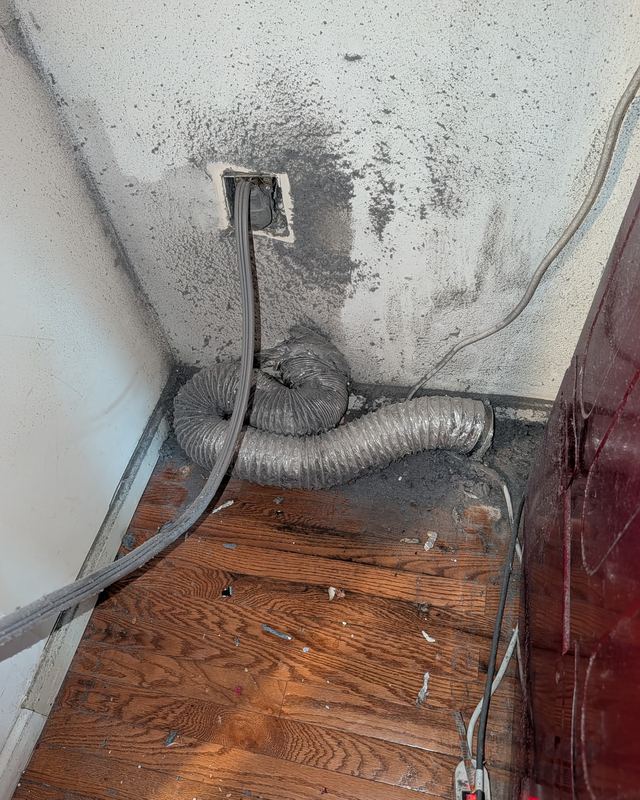
Most Bealeton homes are single-family houses, and the County’s plan says the 1990s building went mostly onto half-acre lots. With the dryer on an outside wall, the dryer vent line is usually a short run straight out. Short runs clog at their two ends: the hose behind the dryer, crushed when the machine got pushed back, and the hood flap outside, where lint builds until it sticks. A foil accordion hose from the 1990s is worth replacing with metal; you get the price first.
Fauquier County’s permit page is about replacing and moving appliances, not cleaning them. Moving a dryer to a new spot, or putting in a propane one, is trade permit work; a dryer vent cleaning on the line you already have is maintenance.