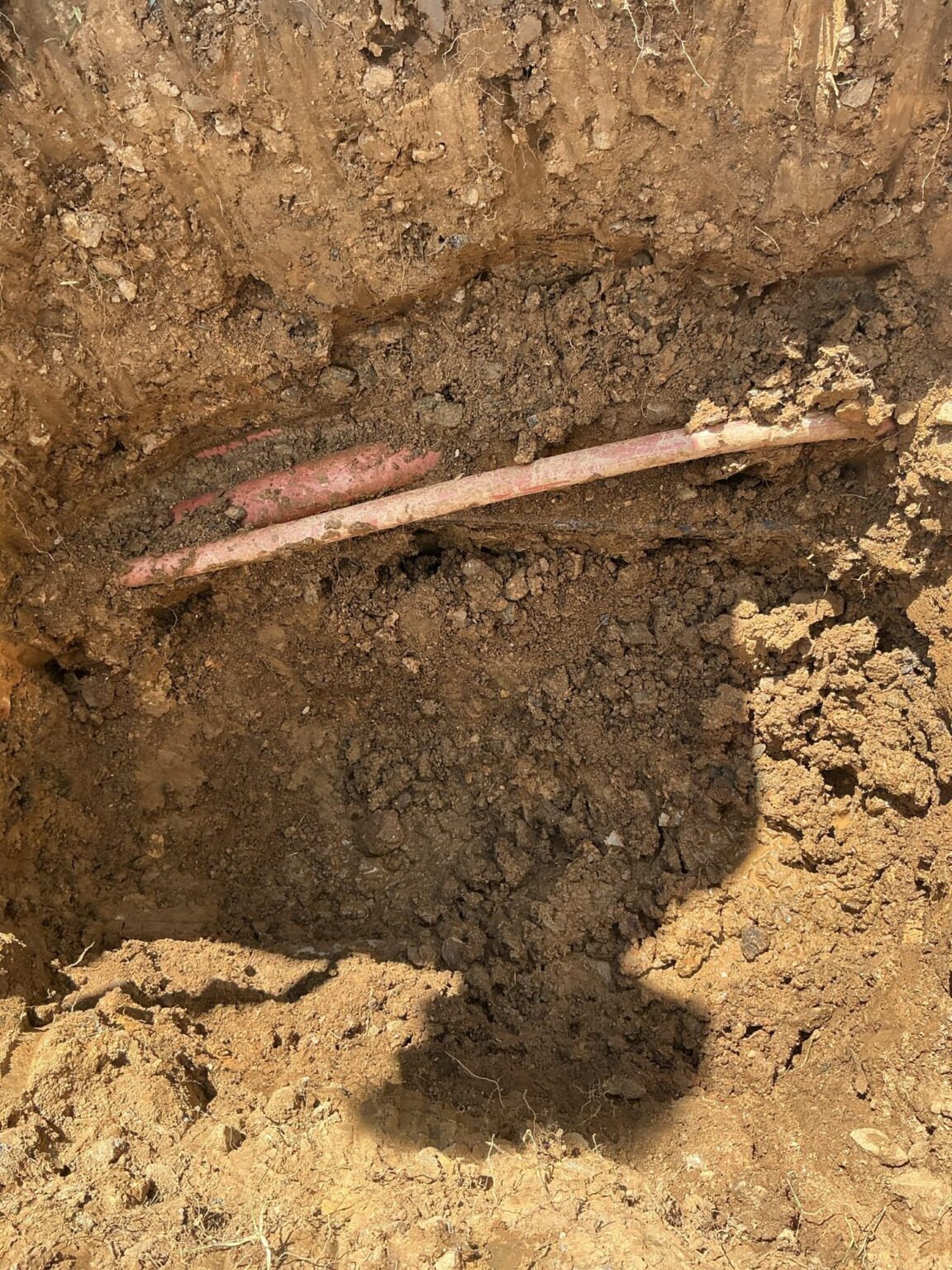
Bealeton’s sewer lines are young because the sewer came late. The County planned a suburb at Routes 17 and 28 in 1967, then waited: 1970s soil studies showed the ground wouldn’t take septic drainfields, so building held off until a force main sewer came up from Remington. The Census counts about 15 homes from the four decades before 1980 and roughly 1,600 since, the subdivisions among them built on public sewer from the start.
That timing shapes the inspection. Orangeburg, the fiber pipe that goes oval as it ages, was laid mostly between the end of World War II and the early 1970s, when Bealeton hardly built. Lines from the 1980s on are usually PVC, so the inspection here is about joints, grade and bedding. The County calls this an old lakebed with very water retentive soils, and a trench backfilled in ground that wet can sink unevenly, leaving a low spot that collects paper.
The oldest houses are the exception. Bealeton grew up around a railroad depot in the 1850s, and the Census still counts about 90 homes from before 1940. One of those on the public sewer got its line to the main when the sewer arrived, so the drain under the floor can be cast iron decades older than the pipe in the yard. The camera shows how that joint has held up.
The Fauquier County Water and Sanitation Authority, FCWSA, keeps the mains. The service line from its main to your property line, and the building lateral from there to the house, are your private property in the Authority’s eyes; it fixes only the stretch under a public street. FCWSA also lists faulty laterals among the ways groundwater leaks into its sewers. So the footage answers two questions: what’s wrong, and which side of the property line it’s on.