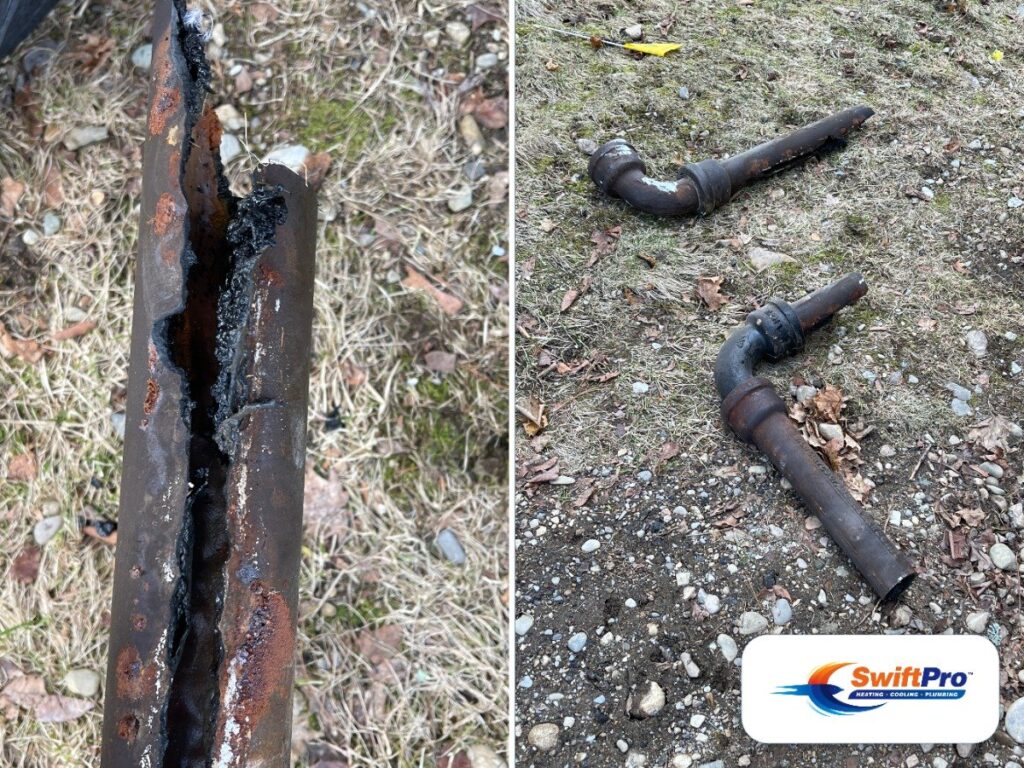
Reston’s oldest sewer lines went in with Reston itself. Robert E. Simon bought the land in 1961 and Lake Anne, the first village center, opened in 1965, so only about one home in seventy here predates 1960. A 1960s or 70s house or cluster townhouse usually drains to the street through cast iron or clay, and some from the first decade may have Orangeburg, a pressed fiber pipe that was falling out of use by the early 1970s and slumps oval with age.
Those 1970s lines are concentrated in 20191, around Hunters Woods and South Lakes, where nearly half of all homes went up in that decade. Fifty years on, they run under the trees Reston Association writes rules to protect, and roots slip in wherever a joint has loosened. For roots that keep coming back, Fairfax County names two fixes: periodic cutting or new plastic pipe. The camera shows which your line needs.
North Point and the rest of 20194 belong to the plastic era, with more than eight in ten homes built in the 1980s and 90s. PVC won’t rust, but thirty years of settling can leave a dip in the trench that holds water and snags paper. In 20190, from Lake Anne to Reston Town Center, more than half the homes are in condo and apartment buildings, where the main out of the building is usually the association’s to inspect.
Past the house, Fairfax County leaves no doubt whose pipe it is: yours, out to the county sewer, the connection and any stretch under the road included. Clusters complicate that, because a townhouse lateral may cross common area the cluster association owns before reaching the main. Read the cluster documents before anyone prices a trench.