Only about two in ten Reston homes are single-family houses. The rest are townhouses and condos, many in clusters from the 1970s and 80s, and in those the water heater is often in a hall closet or a small utility room with a drain pan under it and no floor drain in sight. So the hose goes out to the laundry standpipe, or into buckets, never across a hallway carpet, and with the tank empty the tech looks over that pan and the small line leaving it, which is all that stands between a slow drip and the room below.
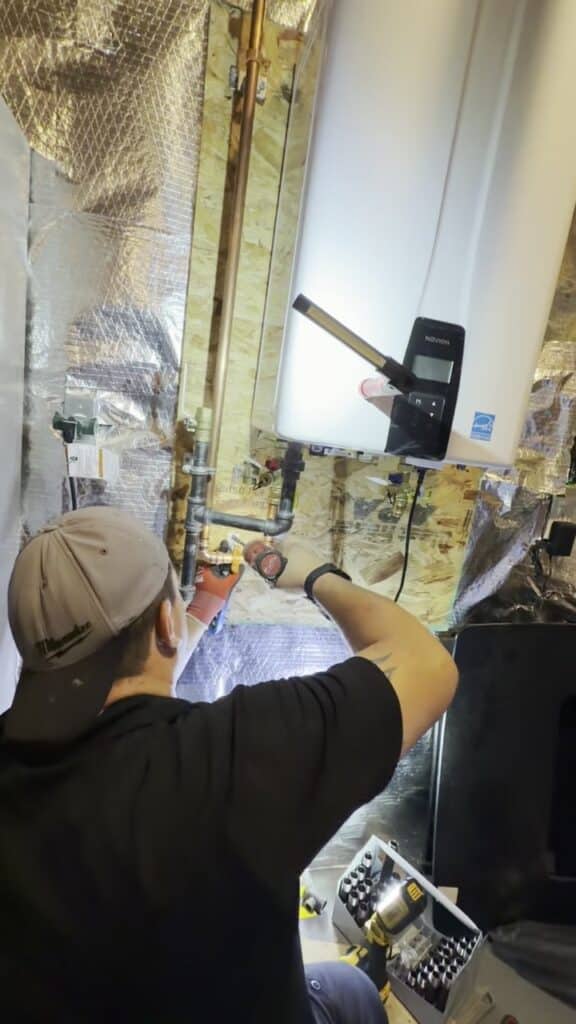
The water is Fairfax Water’s, the county’s supplier for 97 percent of residents, and up here in the north of the county it comes mostly from the Corbalis plant on the Potomac. Its 2025 lab sheet shows the river’s swing month by month: 97 milligrams per liter in April, 70 in May, then 170 by September and 185 in November, roughly 4 to 11 grains a gallon. We plan around the top of that range. Past 4 grains, Navien wants a tankless descaled every year unless a softener is doing the work.
Reston’s cluster associations often keep their own rules about plumbing work, and roughly four in ten homes here are rented. A flush changes nothing an association cares about. If the tank turns out to be near the end, though, check what your cluster asks for before a replacement, and if you rent, that call belongs to the owner.
Close to half of Reston’s owner homes heat with electricity, and in an all-electric townhouse the water heater is electric too: two elements, no burner, no flue. Grit settles over the lower element first, so a shower that turns lukewarm early is often the first sign, and that element gets a meter on it once the tank is empty.