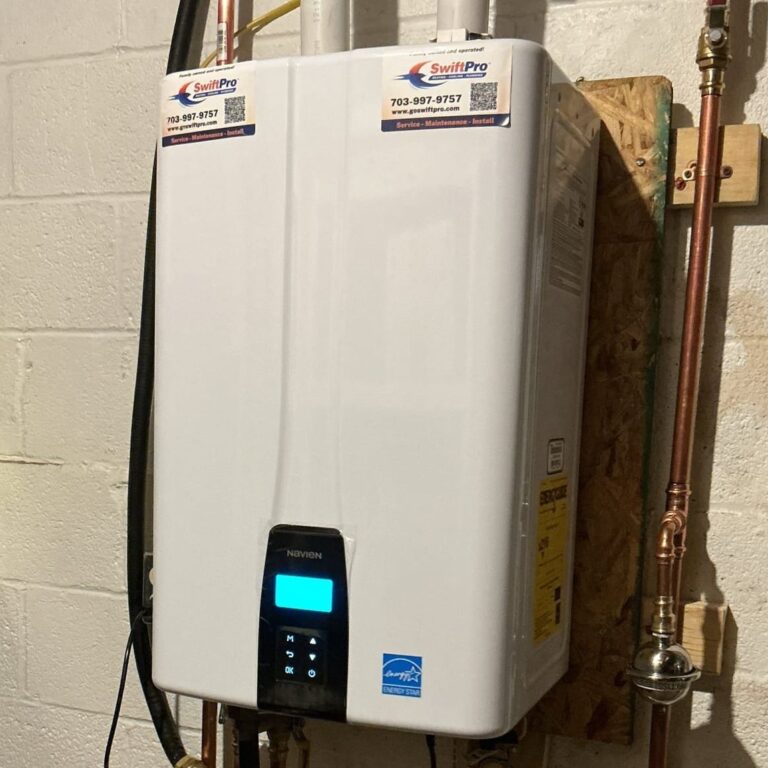
Inside the town limits the water is FCWSA’s The Plains system: two drilled wells, 415 and 610 feet deep, pumping to an above-ground storage tank set higher in the system. The geologic map puts Catoctin greenstone under the town, an old volcanic rock, and water drawn up through rock can carry minerals and fine grit that drop out wherever water sits still and gets heated. The bottom of your tank is that place.
FCWSA’s 2025 report prints no hardness number for The Plains, so there’s no published figure to set a schedule by, only the tank itself. What the report does list is zinc orthophosphate, added at the wells to coat household pipes against corrosion. That protects your copper; it does nothing to keep grit from settling in a tank. Draining it once a year is still how that comes out.
FCWSA’s 2026 flushing schedule lists The Plains for two dates, May 27 and November 23, all areas. On a flushing day the mains get run hard for hours, and pressure can drop, air can spit from the taps and the water can come out tinted. The Authority asks you to hold off on laundry and baths, then run a cold tap until it’s clear. Keep the hot side closed until then, so the heater doesn’t draw in what the mains shed. A yearly flush booked after the November round sends the tank into winter clean.
Most of 20198 lies outside the town, and out there a house usually runs on its own well; the USGS says wells supply every private household in Fauquier County. Some have a sediment filter or a softener ahead of the heater, some have nothing. The well and its equipment belong to a well contractor; the flush starts at the water heater’s cold inlet. About a quarter of the ZIP’s owners heat with propane, and a propane tank’s burner fires right under whatever has settled.