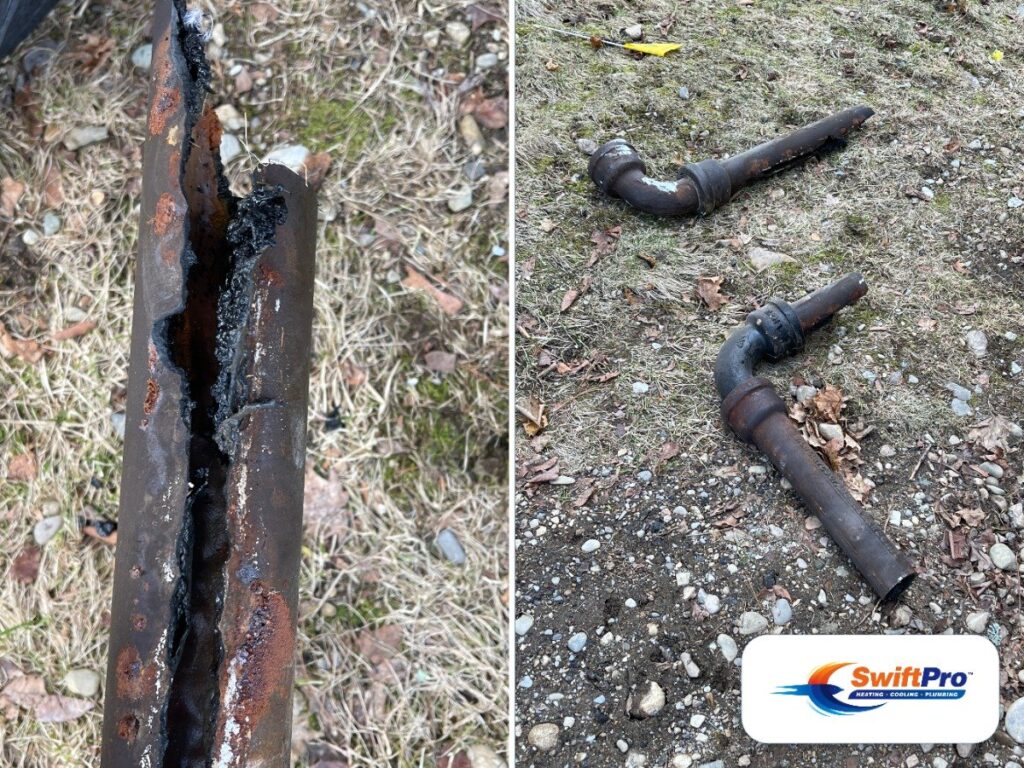
Reston’s pipe depends on when your corner of it went up. In 20191, around Hunters Woods and South Lakes, nearly half the homes date from the 1970s: typically copper supply and cast iron drain stacks. Cast iron of that age rusts thin along its floor, where water sits, and a camera, $89 added to a visit, shows how much is left before anybody opens a wall.
North Point and the rest of 20194 went up almost all at once: more than eight in ten homes there are from the 1980s and 90s, mostly the years grey polybutylene supply pipe was going into new construction. Look under a sink or behind the tub’s access panel before a fitting picks the day for you; replacing it runs $1,000 to $12,000, and where yours lands depends on how many rooms it feeds.
In 20190, from Lake Anne to Reston Town Center, more than half the homes are in condo and apartment buildings, and about four in ten went up after 2000. A building’s shared risers and stacks are usually the association’s, and what branches off them inside your unit is yours. In a cluster, the sewer line past your front walk may cross common area the cluster association owns, so check its documents before a dig.
Fairfax County bills a home’s sewer on the lower of this quarter’s water use or the last winter quarter’s. A toilet that runs all winter raises that ceiling for the year that follows, so fix it before winter; toilet repair runs $250 to $900. And with about four in ten of Reston’s occupied homes rented, an empty unit between tenants is where drain traps dry out.