Where an Oakton drain ends depends on the lot. The condos, townhouses and older streets along Chain Bridge Road and Blake Lane are on county sewer. North of Jermantown Road, Oakton Road and Waples Mill Road, in the headwaters of Difficult Run, Fairfax County’s plan keeps sewer out on purpose, and has since the Board of Supervisors reaffirmed it in May 1989, so a lot of the houses on those big lots run on a septic tank and a drainfield.
On septic, the county draws a clear line: plumbing problems inside the house go to a licensed plumber, and the tank and field outside go to a licensed septic contractor. A backup at the lowest drain can be either one. We start inside, and a camera in the line from the cleanout, $89 added to the visit, shows whether the pipe to the tank is blocked or broken before anybody pays to pump a tank that wasn’t the problem.
County code also says the tank gets pumped at least once every five years, and the contractor records each pump-out in the county’s PLUS system, so you can look up when yours was last done. The Health Department’s own list of what clogs a septic system starts with fats, oils and grease down the kitchen drain.
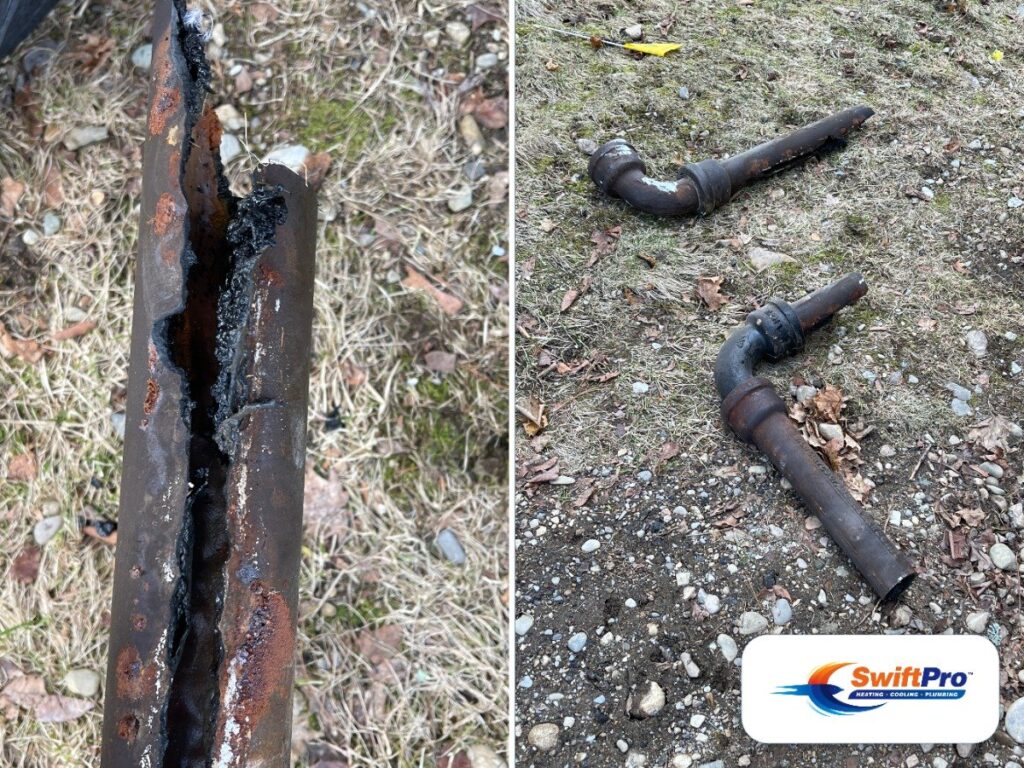
On the sewer side, the pipe era decides most calls. About four in ten Oakton homes went up before 1980, usually with copper supply and cast iron drains, and close to half in the 1980s and 90s, when grey polybutylene supply pipe was going in. The exception to the septic rule is a pocket north of I-66, west of Jermantown Road, that the county added to its sewer area after septic systems there failed, so a big lot isn’t proof of a tank.