For close to a hundred years the Town has bought its water from the Marine Corps base’s Mainside system and sent its sewage back to the base, through a small Town system the EPA lists at 175 service connections. The water project under way now ends that. Paid for mostly by a state grant awarded in 2022, it replaces the Town’s water and sewer mains and turns the whole system over to Prince William Water, which will own and run it and bill each home monthly. The Town aims to finish by December 2026.
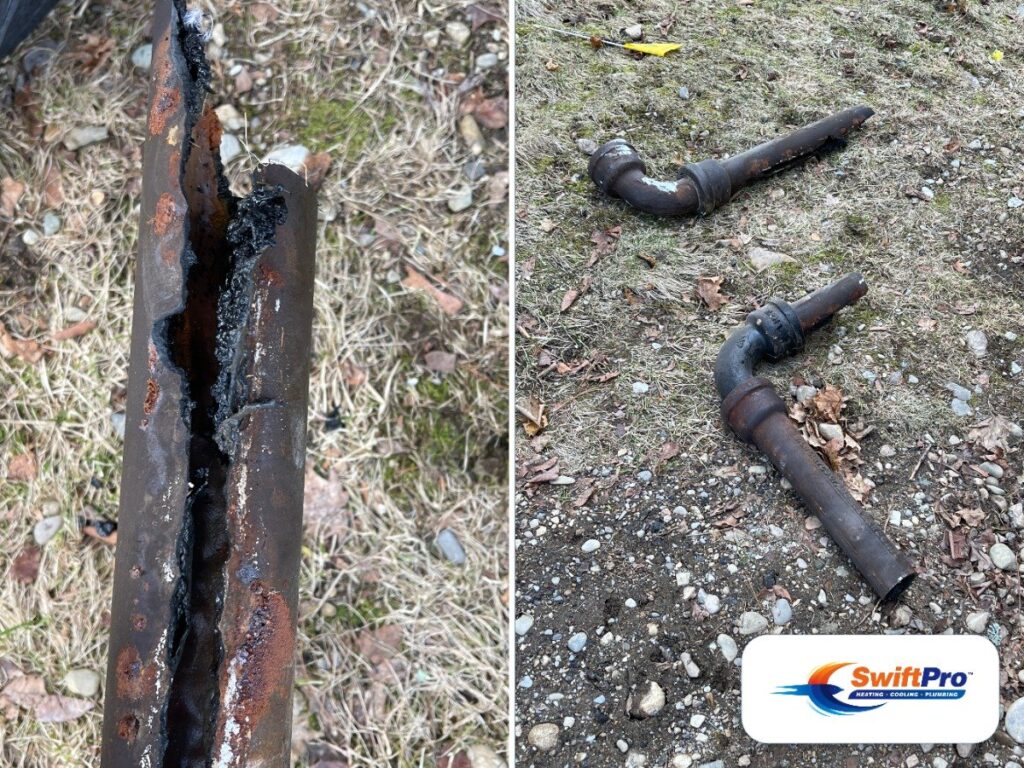
Some Town houses are tied to old mains that run down the alleys, and the Town’s own FAQ says a plumber will be needed to connect each of those houses to the new mains. Every home also gets a new meter and a sewer cleanout. Before the line from a 1920s or 1930s house is joined to brand-new pipe, it pays to know what that line is: in a house that age, often cast iron or clay, with joints that roots find. The camera is $89 when we’re already there, and the new cleanout makes it an easy look.
The river is close, but FEMA’s flood map keeps its flood zones to the shoreline: not one of the 323 residential addresses in Prince William County’s records for the Town plots inside the 100-year zone, or even the 500-year one. The National Weather Service gauge at Leesylvania State Park notes that at 5 feet, its minor flood stage, water starts covering the sidewalks out to the dock at the Town park. So storm trouble in a Town house usually comes from the rain, not the river: groundwater seeping into a cracked old line until the drains slow, or a sump pump that falls behind. A pump that runs nonstop, or not at all, after a storm is due for replacing; our sump pump replacement page has the one price.
Cold is the other weather risk. The air station drops to 32 or colder on roughly 76 nights in an average year, and pipe running along an exterior wall, or through a crawlspace, of an old Town house freezes first. If one splits, close the house valve; if it won’t budge, the Municipal Office at 337 5th Avenue can turn the water off at the curb during its weekday hours. Then call us. Leak detection runs $200 to $500, and a house that keeps splitting old galvanized pipe is a candidate for repiping, $1,000 to $12,000.