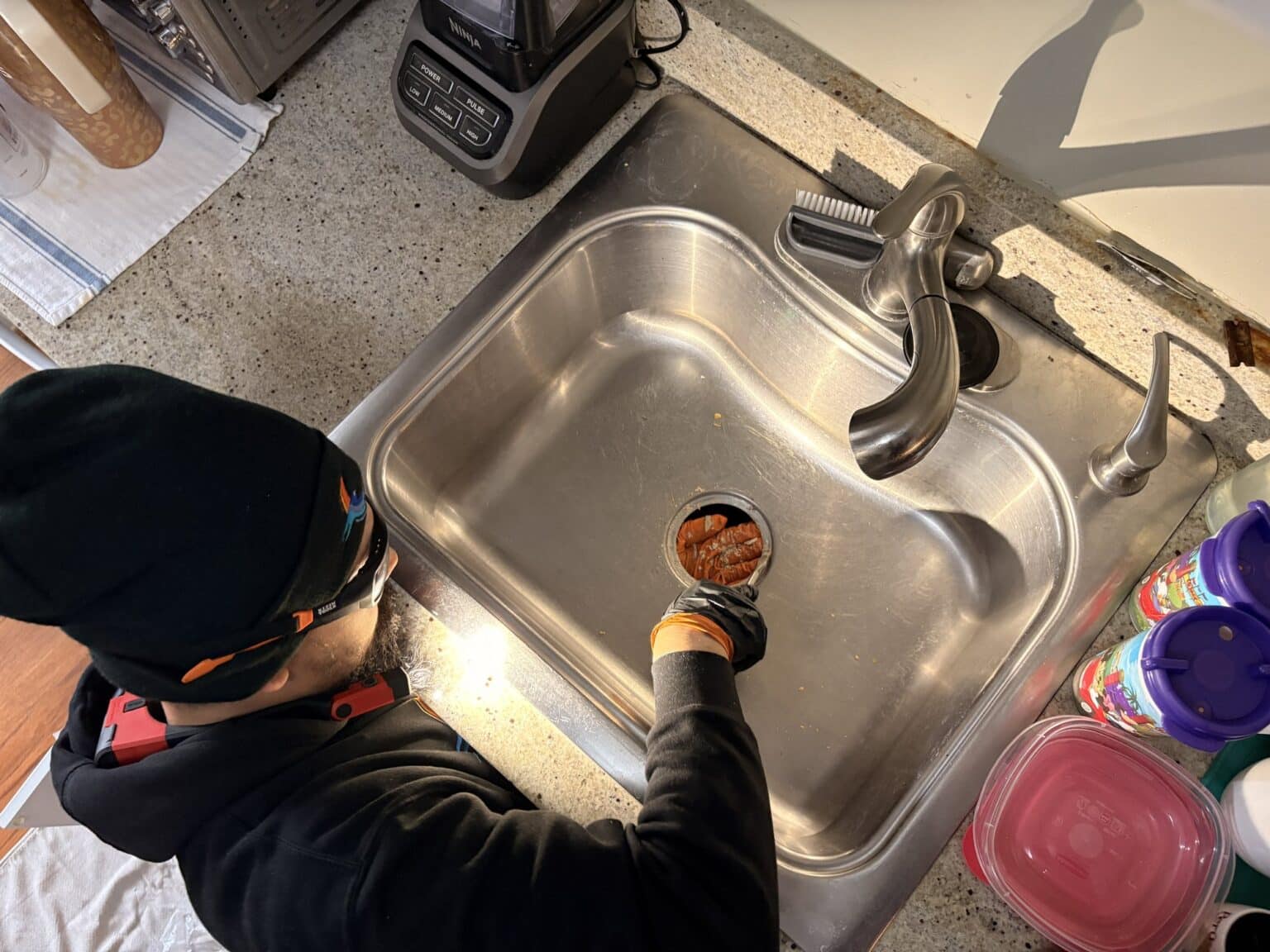
Most Annandale houses went up in the 1960s, many with a basement or lower level, and the lowest opening is usually a floor drain by the furnace or a laundry tub by the washer. That’s where a blocked sewer shows itself first. The drain under that floor is usually cast iron, and in the Annandale Census place, where more than a quarter of homes predate 1960, the supply overhead may still be galvanized steel in places.
Fairfax County asks for one step before any plumber: if sewage is coming up, call its 24-hour line so an inspector can check the county main. Sewage rising when nothing in the house is running points at the county’s pipe; a backup only when you flush, shower or run the washer points at yours. If the main checks out, the county sends you to a plumber, since the lateral to that main is yours.
A lateral laid in the 1950s or 60s could be cast iron, clay tile, or Orangeburg, a tar-soaked wood-fiber pipe used until the early 1970s that slowly flattens under the soil. Roots work into the joints of all three. A camera, $89 added to a visit, shows which pipe you have and where it’s failing before anybody prices a dug replacement at $7,500 to $9,000.
Two more county rules matter in a basement house. A sump pump, downspout or French drain piped into the sanitary sewer is illegal in Fairfax County, because rainwater overloads the system and can push sewage into basements. And the county tells owners with fixtures below ground to check that their home insurance covers sewage backup, which can be an add-on.