Remington built in two bursts. The Census counts 287 homes in ZIP 22734 from before 1940 and 303 more from the 1940s and 50s, then only about 120 across the 1960s and 70s together, then 377 in the 1980s alone. So the pipe under a Remington yard is usually one of two kinds: very old, behind a house that predates World War II, or plastic laid from the 1980s on.
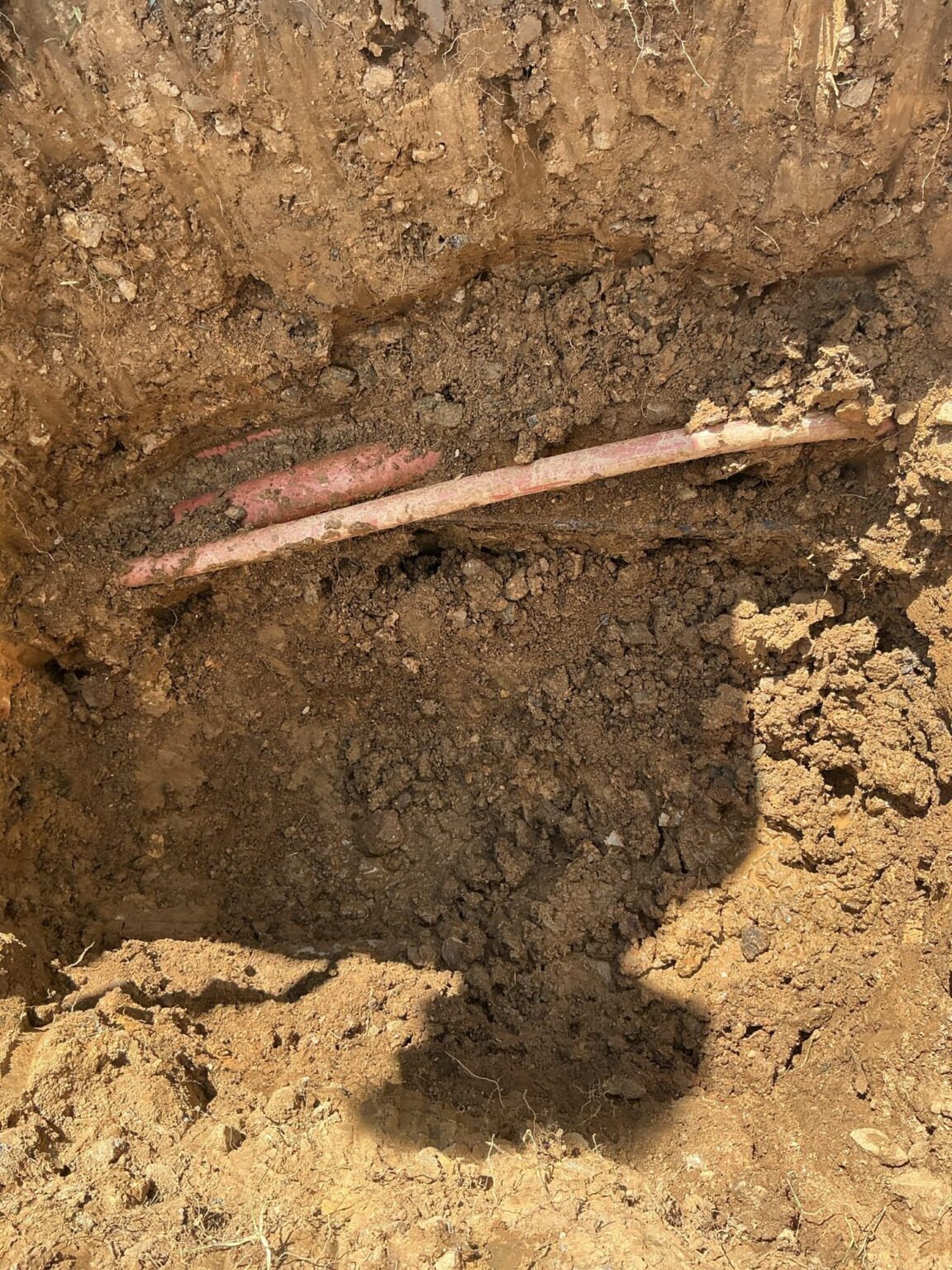
In a prewar house the drain under the floor is often cast iron, and the run out through the yard may be clay tile in short lengths, every joint a spot where roots or groundwater can find a way in. The camera shows each change of material and how every joint has held. In a 1980s line the pipe itself is rarely the issue; a dip where the trench settled usually is.
Groundwater getting in is a real Remington problem. When the Fauquier County Water and Sanitation Authority, FCWSA, studied every pipe feeding its Remington treatment plant, the downtown streets let in more rain and groundwater than anywhere else, and their flow jumped fast once a storm began. FCWSA names cracked pipe, failed joints and faulty laterals among the ways in, and its multi-year plan rebuilds its own downtown mains and manholes. Your lateral isn’t part of that plan.
In FCWSA’s rules the pipe from its main to your house is the owner’s to keep clear, except the part under a public street. That split decides who pays after a backup: if a failure of FCWSA’s main sent sewage into the house, it offers a cleaning service at its expense, and if its main is flowing, the blockage is yours. More than four households in ten across 22734 rent, and the typical rented home dates from 1957, so the oldest lines in town often belong to landlords.