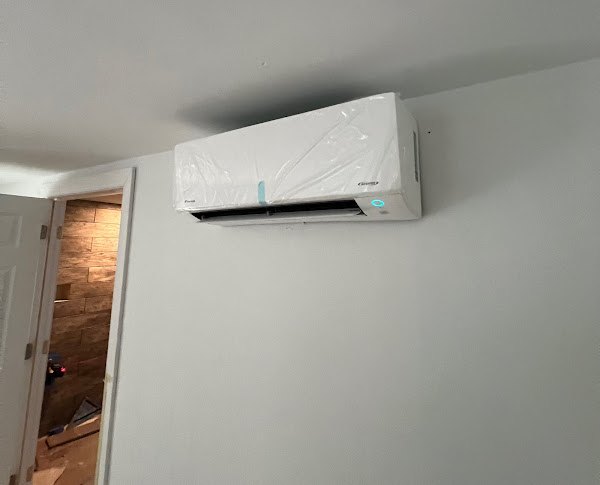
Remington’s oldest houses were built before anybody ran ductwork. ZIP 22734 has 287 homes from before 1940, close to one in five, and Fauquier County’s plan counts 75 buildings in town worth a place on the historic registers, Queen Anne and Victorian houses among them. Plaster walls, narrow stairs and no spare attic often leave a duct system nowhere good to go, while ductless asks only for a small hole per head and a covered line set down the outside wall.
Most of those houses are rented: of the occupied pre-1940 homes in the ZIP, the Census counts 229 rented and 50 owned. If you rent, the landlord decides. If you own one and rent it out, a head adds cooling and heat to a room without tearing into the finishes a tenant lives with, and the work happens on walls you pick.
An I-plan house has no interior rooms: front to back it’s a single room, so each bedroom touches the outside, and a head can hang on that wall with its lines dropping straight down outdoors. Two heads sharing one outdoor unit price as two zones, $11,000 to $15,000. Across the ZIP about four homes in five are detached, and a sunroom, a garage apartment or a rear addition is where a single head usually lands.
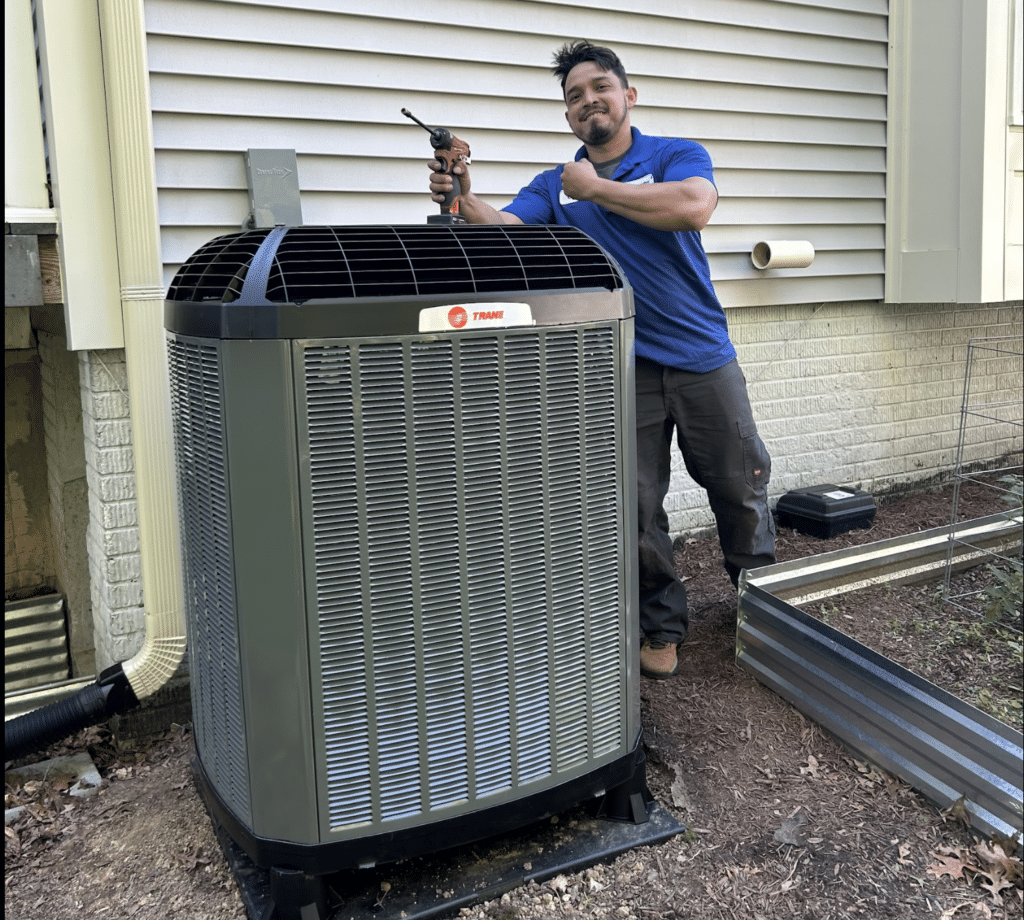
Placement is the Remington question. Fauquier County’s plan blames the Rappahannock and Tinpot Run for flooding part of downtown now and then, on old lakebed soils that hold water. The condenser for a ductless system can be wall-mounted on brackets or raised on legs, clear of standing water and of drifts; after January 2016’s blizzard, snow stood 25 inches deep at Warrenton 3 SE.