In the village, 37 percent of homes were standing before 1960, and across 20181 the Census counts 262 from 1939 or earlier. Houses that old mostly predate central air as a household standard, and the ducts they have now went in later, threaded wherever they’d fit. They tend to serve the main floor well and the rooms under the roof poorly. In a house with a half story upstairs, the bedrooms under the roof slope are usually the warmest in July and the worst served by the ducts.
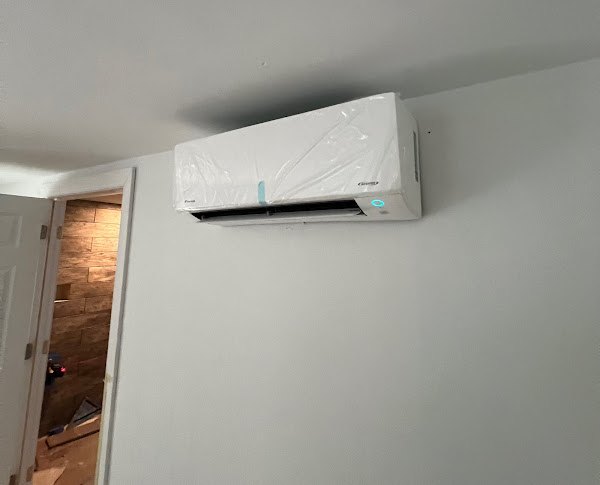
The usual answer is one head per room off a shared outdoor unit: $11,000 to $15,000 installed for two rooms, $12,500 to $18,000 for three. Each head’s copper and drain line pass through a hole a few inches across, so no plaster gets opened and no old floorboards come up for ductwork.
Out past the village, 20181 skews newer and larger: 60 percent of its homes have nine rooms or more. Space like that tends to get finished after the closing, a rec room carved out of the basement, a bonus room above the garage, a screened porch turned year-round, and the original system was never sized with any of it in mind. One wall head serving that space alone leaves the existing ductwork’s balance undisturbed.
The Census counts no apartment or condo buildings of five units or more anywhere in 20181, so the outdoor unit nearly always goes on your own ground. The exceptions are a subdivision with an HOA, which the County tells owners to check before changing the outside of a house, and the 60 village homes in three- and four-unit buildings, where a head in each unit gives each household a thermostat of its own.