The Census counts how old Nokesville houses are, not what’s under them, so nobody can honestly say how many have a basement. Across 20181 the median owner home dates from 1989 and about a quarter went up in the 2000s; where one of those has a pit, the pump in it is probably not the first. In the village, where close to four in ten homes predate 1960, an old farmhouse may sit on a stone cellar or a crawlspace, with any pit added long after.
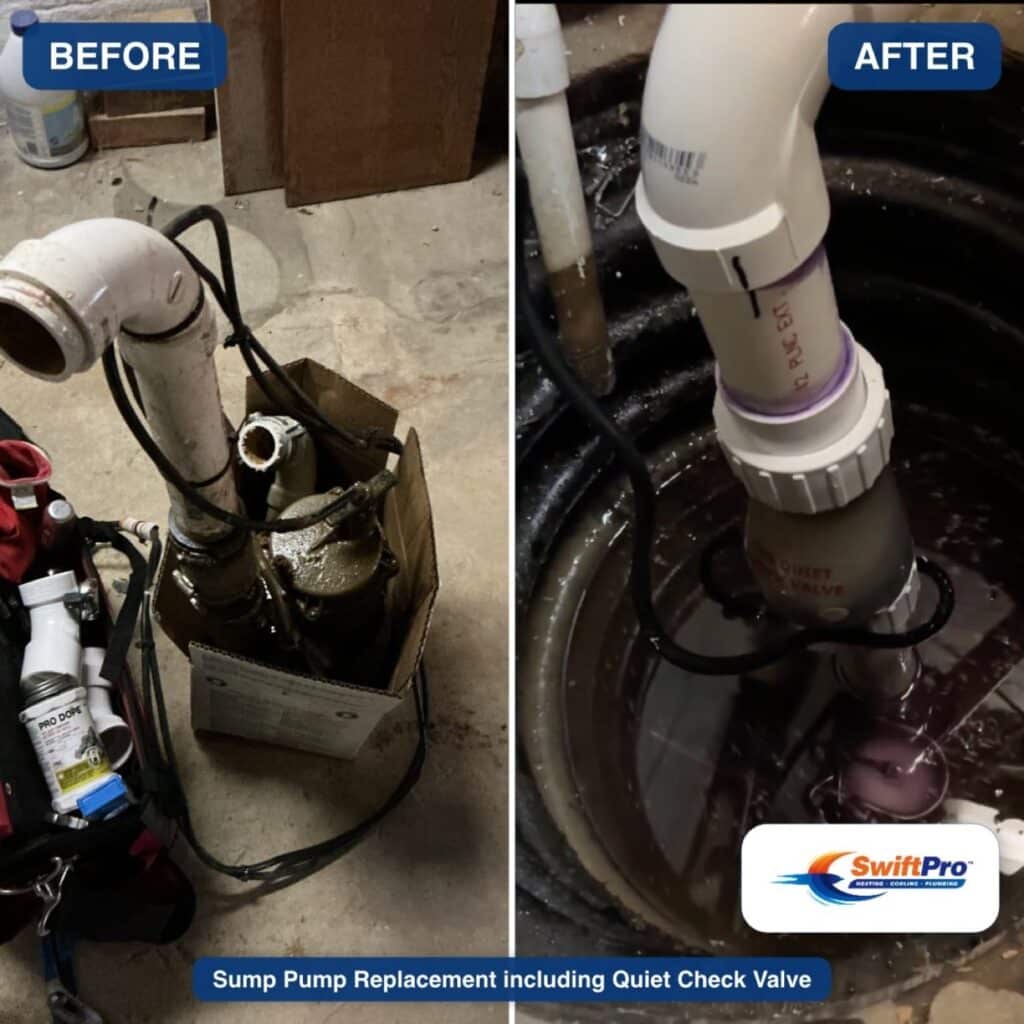
Where there is a pit, the ground keeps it busy. On Prince William County’s soil map, about two thirds of the Census’s Nokesville place, the village and the fields around it, is Category III, the County’s problem soils, and nearly all the rest Category II, the class for groundwater that rises with the seasons or perches on a tight layer, and for shallow rock. Under one percent is Category I, ground the County rates good for foundations.
Two names cover a quarter of that map between them, Albano and Waxpool silt loam, and the USDA’s soil descriptions call both poorly drained, with slow or very slow permeability. Count the soils those descriptions give a seasonal perched water table too, and it’s about half the place. After a wet week that water lingers against the foundation, and the footing drain delivers it to the pit.
Where the pump empties matters. On Prince William Water’s sewer, the utility lists sump pumps among the inappropriate connections behind sewer overflows, and on a grinder pump, groundwater is just more work for the grinder. On a septic lot, a sump piped into a house drain sends that water through the tank to a drainfield built for the household’s wastewater. Either way the line belongs outside, downhill from the house and clear of the drainfield and the wellhead.