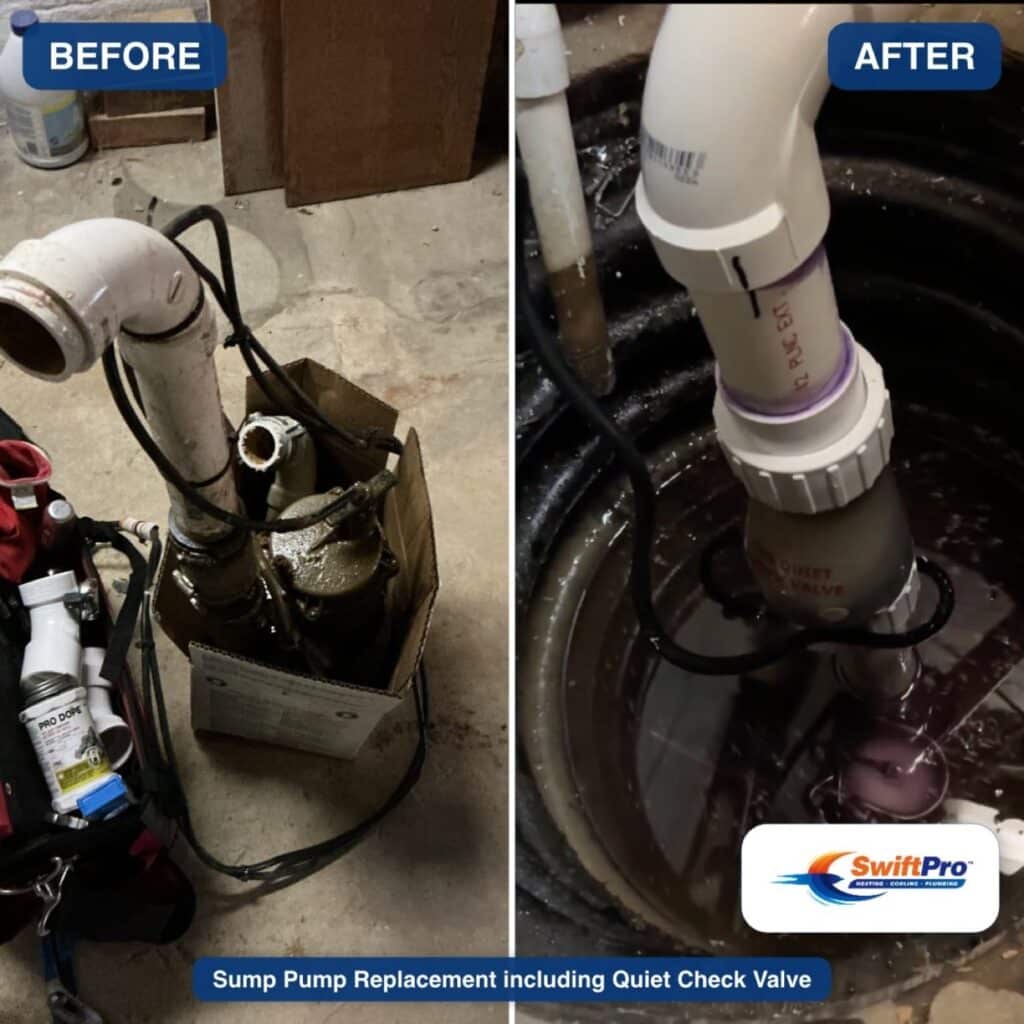
Start with whether there’s a pit at all. No Census table counts basements. About half of Woodbridge’s homes are detached houses, close to three in ten townhouses and one in six in condo or apartment buildings, where a unit above the ground floor has nothing to pump. If your lowest level is below grade, look for a lidded round basin sunk into the floor, usually in the utility room or a corner nobody finished.
Where there is one, the ground sets its workload. Prince William County sorts its soils into three engineering categories: I is good ground, II flags things like high groundwater, and III takes in marine clay, shrink-swell and compressible soil, undocumented fill and floodplain. On a sample of the county’s soil map, the Woodbridge CDP along Route 1 comes out nearly all II or III, a third of it III, and Leesylvania about four in ten III. Potomac Mills and Dale City hold the most good ground, close to half and about a third Category I.
There’s a catch near Route 1. The categories rest on a soil survey published in 1989, and the county says ground already built on by then wasn’t studied. About half the Woodbridge CDP’s land is mapped simply as urban land. Under many of the older houses there the map has little to say, so how often the pump runs after a storm is the better guide.
In Leesylvania and County Center the typical owner’s house dates from 2006, the year the county’s foundation drainage policy took effect. It has the builder show the sump pump running at the final inspection, and some of the pumps that passed may still be in the pit. Inside the Lake Ridge association a new discharge line has rules too: buried and aimed away from the neighbors if it crosses the front yard, any buried line ending inside your own lot, and the splash block in brick, stone, unpainted concrete, or black, brown or green plastic.