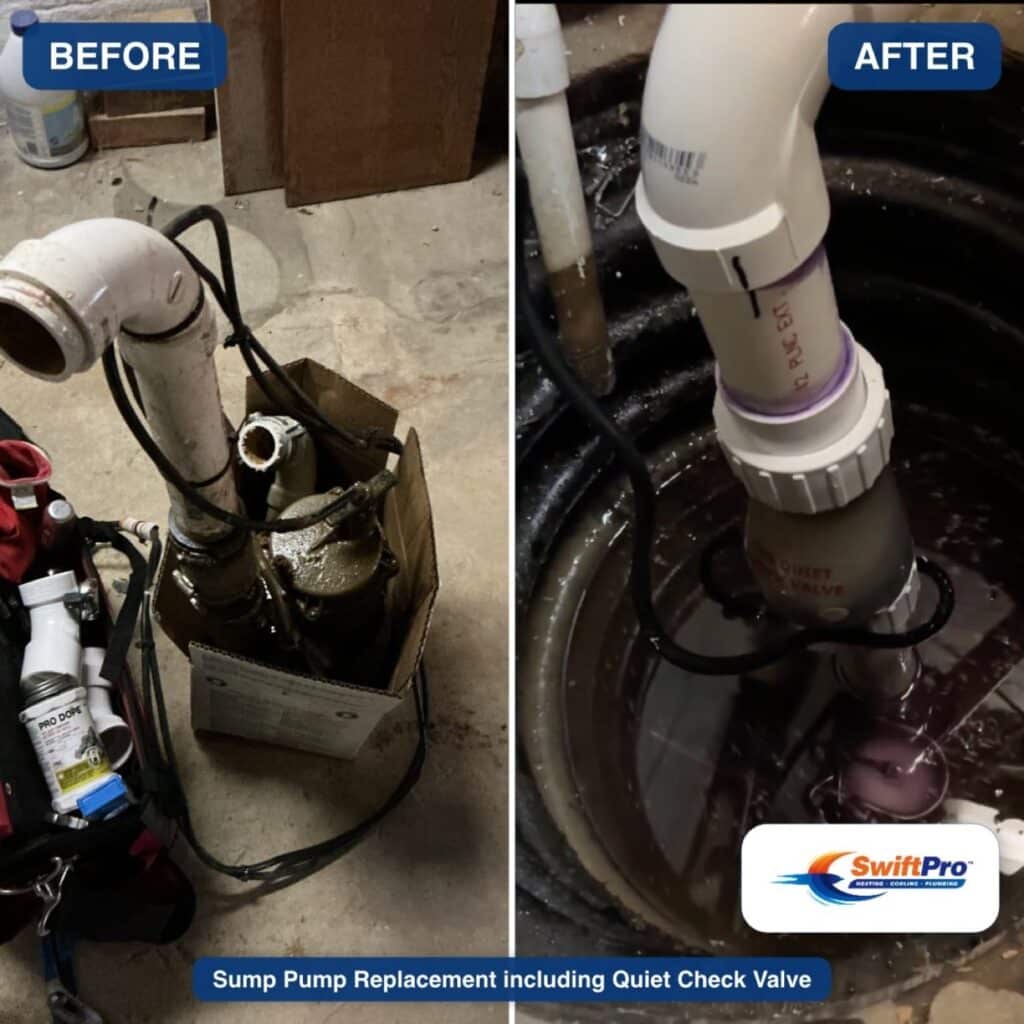
A lot of Upperville is older than any sump pump. The state’s 2021 survey of the historic district counts 136 principal buildings, 40 of them up before 1861, in stone, brick and frame. A cellar under a house that old predates sump pumps by a century or more, so if it has a pit today, the pit was added to the floor later. The Census can’t count pits, and its sample for ZIP 20184 is small, so the age of the pump is something we read off the pump itself.
Water comes at this village from more than one side. Tanyard Branch, a branch of Panther Skin Creek, runs under Route 50 through a culvert in the village, and FEMA maps Zone A and Zone AE floodplain within a few hundred yards of its center. The County’s village plan warns that soils in the drainageways feeding Panther Skin Creek flood or hold a high seasonal water table. The nearest long rain record, at The Plains about ten miles southeast, averages 46 inches a year.
The postwar houses on Parker and Patrick Streets are a different case: four small Minimal Traditional houses, thirteen ranches and three split-levels, mostly one story. Many of that kind have a crawlspace in place of a cellar, and a crawlspace on damp ground can hold water at the low corner. Whether a pit is down there is something the visit settles. A pit in a tight crawlspace is a cramped job, and a new or deeper one is an extra, written down before work starts.
Storms take Upperville’s power along with its trees. NOAA records numerous trees and power lines down in and around the village on August 10, 2021, dozens of trees and wires on August 7, 2023, and half a mile of Route 50 shut by downed poles on May 20, 2026. A sump pump on household power stops with the rest of the house, and so does the well pump. A battery backup keeps the sump pump going; the well pump stays with your well company, since we don’t work on wells.