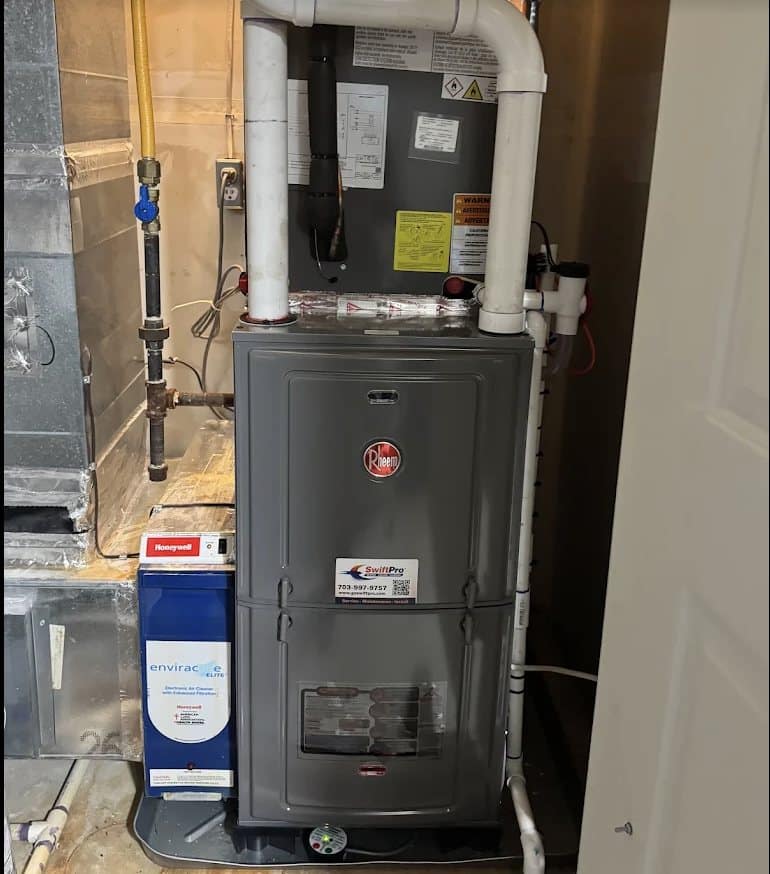
Utility gas doesn’t show up in ZIP 20184 at all. The Census survey there is a small one, 67 owner homes with a wide margin, but it finds about two in three heating with electricity, the other third on propane, and none on a gas main. So a furnace replacement in Upperville means a propane furnace drawing from a tank on the lot. If the new one is larger than the old, or the line from the tank was sized tight to begin with, the supplier may want to look at the regulator, so give them our install date.
Purcellville’s co-op station, about 14 miles northeast at 510 feet, is the closest long weather record to the village’s 557. Across 1991 to 2020 its January nights averaged 24.5 at the low, about 115 nights a year got down to freezing, and five or so hit 10 or colder. For sizing, the County’s design criteria use a 17 degree winter night. We figure the heat loss of your rooms against that night, then choose the furnace.
Out on the farms the answer can change. The Mount Weather station on the Blue Ridge, under five miles north at 1,659 feet, piles up about 7 percent more heating degree days than Purcellville, and its January lows run two degrees colder. A house up the slope toward Ashby Gap or Sky Meadows needs more heat on the same night than one on Route 50, and its furnace gets sized for where it actually stands.
The village’s oldest houses came long before any furnace: the register survey dates sixteen of its main buildings to before 1830, and many carry brick or stone chimneys at the gable ends. Where a furnace vents into one of those, a high-efficiency replacement usually leaves the chimney and exhausts out a side wall in plastic pipe instead. Power is the other half. On May 20, 2026, downed poles and lines closed half a mile of Route 50 just west of the village, and a propane furnace’s igniter and blower stop when the electricity does.