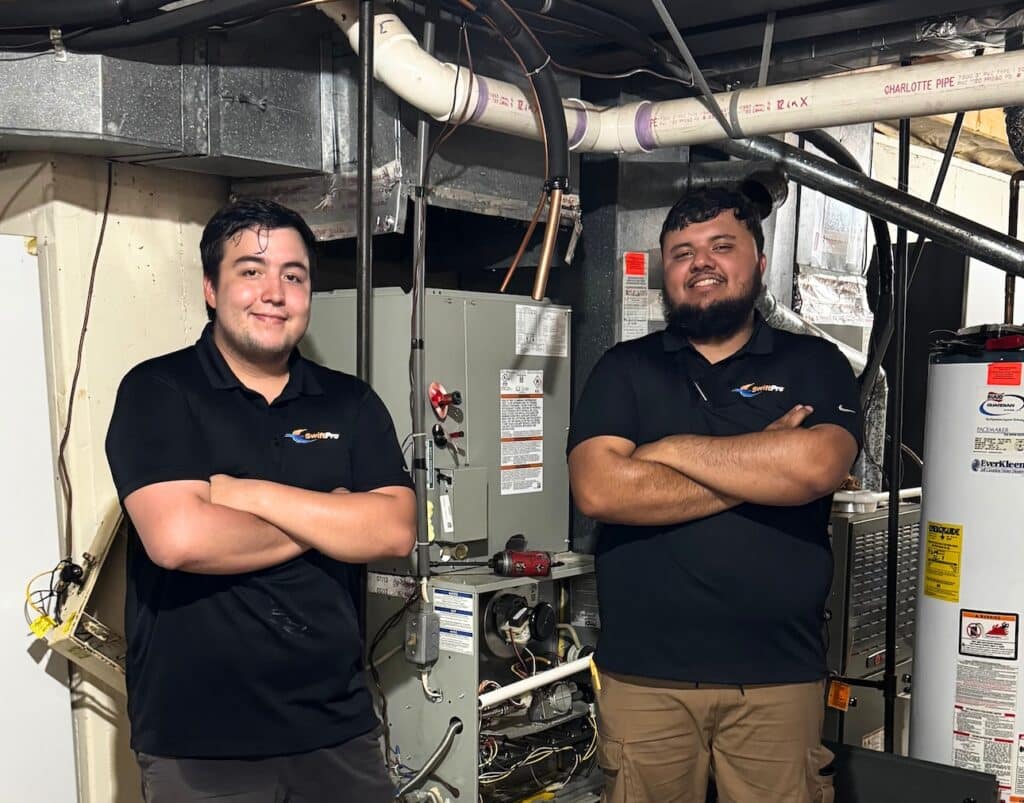
Natural gas heats 8,587 of the 10,869 owner homes in the 20155 ZIP, and most of those furnaces arrived in one rush: more than half of all homes in the ZIP were finished between 2000 and 2009. A furnace that came with one of them has run seventeen to twenty-six winters, the age when heat exchangers and inducer motors start to quit, and when replacing the furnace alone, with the cooling left as it is, often makes the most sense.
Propane is the other fuel, and it mostly lives outside the line the Census draws around Gainesville: 293 owner homes in the ZIP heat with tank gas, and only about twenty of them sit inside that line. Most are likely the bigger lots out past the subdivisions, where a gas main may never have reached. Most new furnaces leave the factory set for natural gas, so on a propane house the installer fits the maker’s conversion kit, which swaps the burner orifices, and checks the gas pressure before the first fire.
Plenty of the bigger 2000s houses here run two systems, one downstairs and one up, and the second furnace often sits in the attic. Replacing an attic furnace takes a unit that fits through the hatch and onto the platform, a drain pan under it, and a condensate line that won’t freeze across unheated space. Often only one of the two is failing, and only that one goes.
A high-efficiency furnace changes the outside of the house, too. One replacing a furnace that vents up a metal pipe through the roof often vents out a side wall in plastic pipe instead. Virginia Oaks lets owners replace a metal roof flue without an application, but a new opening in a wall may count as a change to the home’s exterior, which its guidelines send to the design review committee. Ask before the install date.