Of the 4,951 owner homes in the Gainesville Census place, 2,087 went up in the 2000s and 1,480 in 2010 or later, and the typical one in 2007. Gas heats about eight in ten of them, mostly through furnaces and ducts, so a hot water boiler here is usually something an owner chose: a Navien combi or a heat-only boiler that took over the job from a furnace. One in three owner homes is a townhouse and more than half are detached houses, so a boiler, when there is one, is usually in a detached house. Only 18 owner homes in the Census place burn propane, so a Gainesville boiler is a gas one.
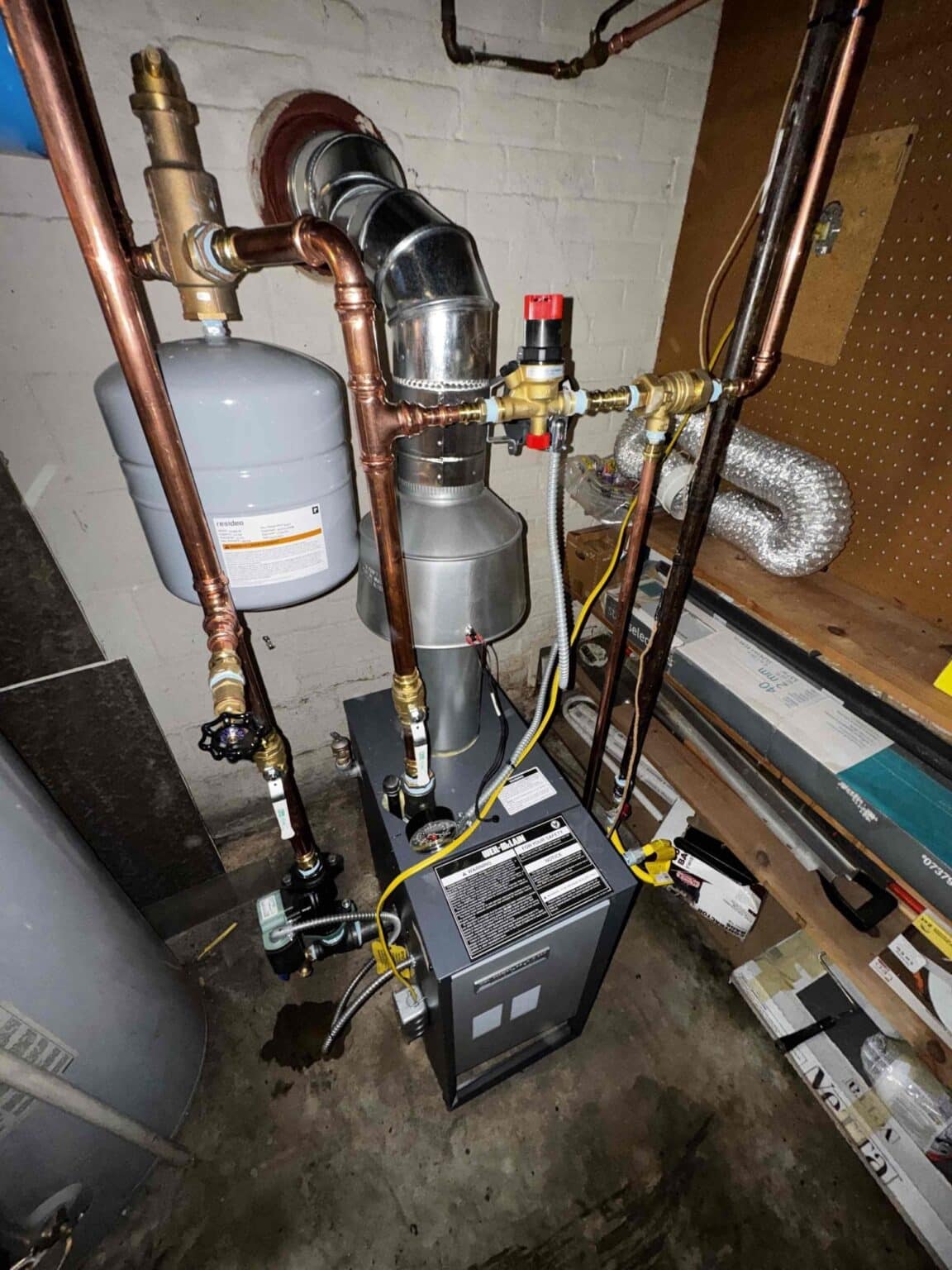
That changes what a boiler call looks like. On a house this young the boiler is often wall-hung and condensing already, venting out the side in white plastic pipe, and the work is upkeep: the system pressure, the expansion tank, the condensate drain and the circulator, at $99 a system. A condensing boiler also wants its combustion checked, since a burner set wrong soots the heat exchanger it depends on.
In Virginia Oaks, where the homes date from 1994, the guidelines let owners replace a metal roof flue without an application, but a new opening in a side wall can count as an exterior change, so ask the design review committee before a condensing boiler’s vent goes through the wall. The County also says to check with your homeowners association about exterior work. The replacement itself is Prince William County permit work, since the County covers any gas appliance swap, same model or not.
Heritage Hunt, zoned in 1997, includes four condominiums with their own management, and in a condo building the boiler is often the building’s, not yours, so check your documents before you book. In a detached Heritage Hunt house the boiler is yours, and a combi or condensing replacement runs $12,782 to $16,500 installed.