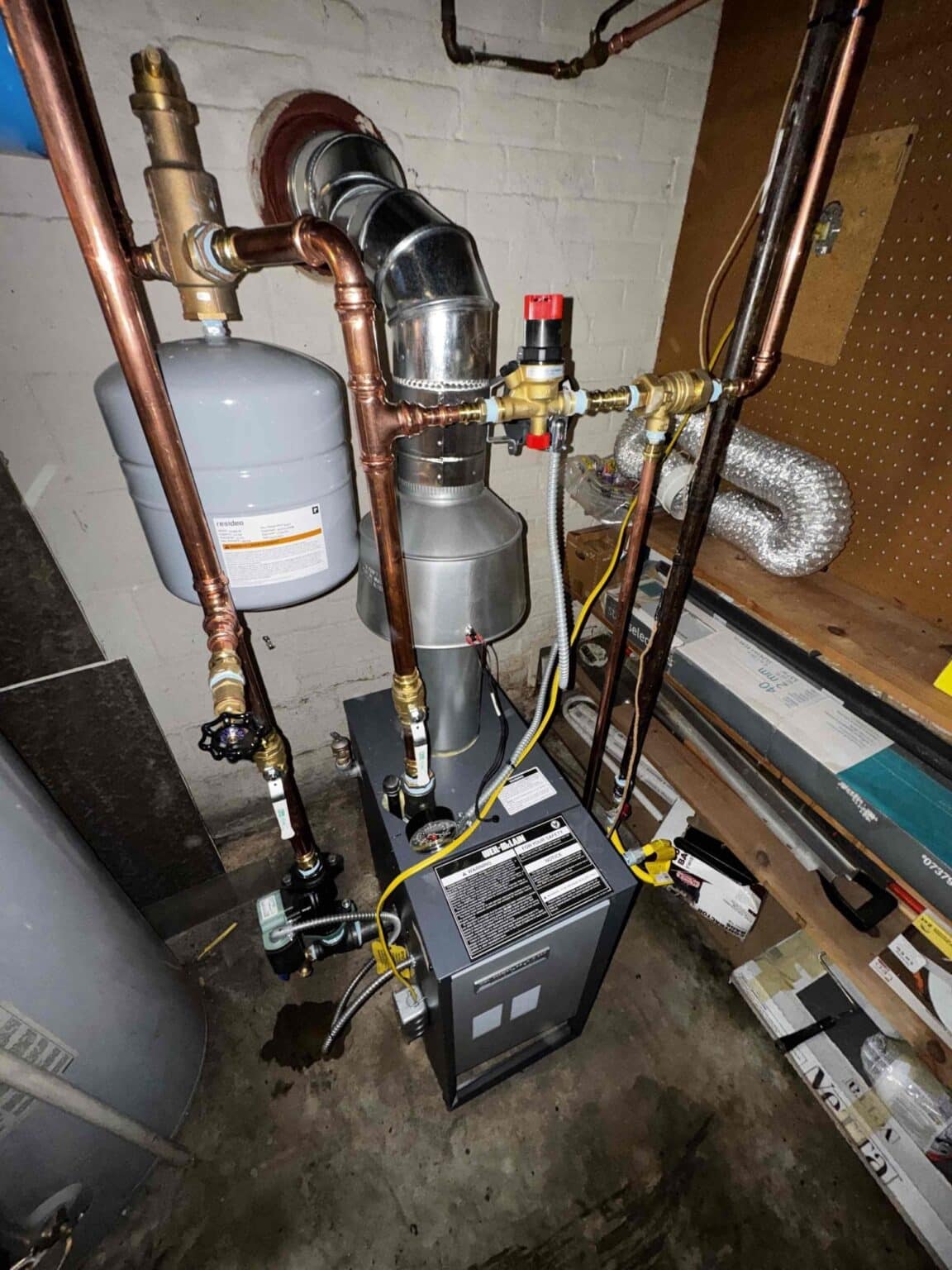
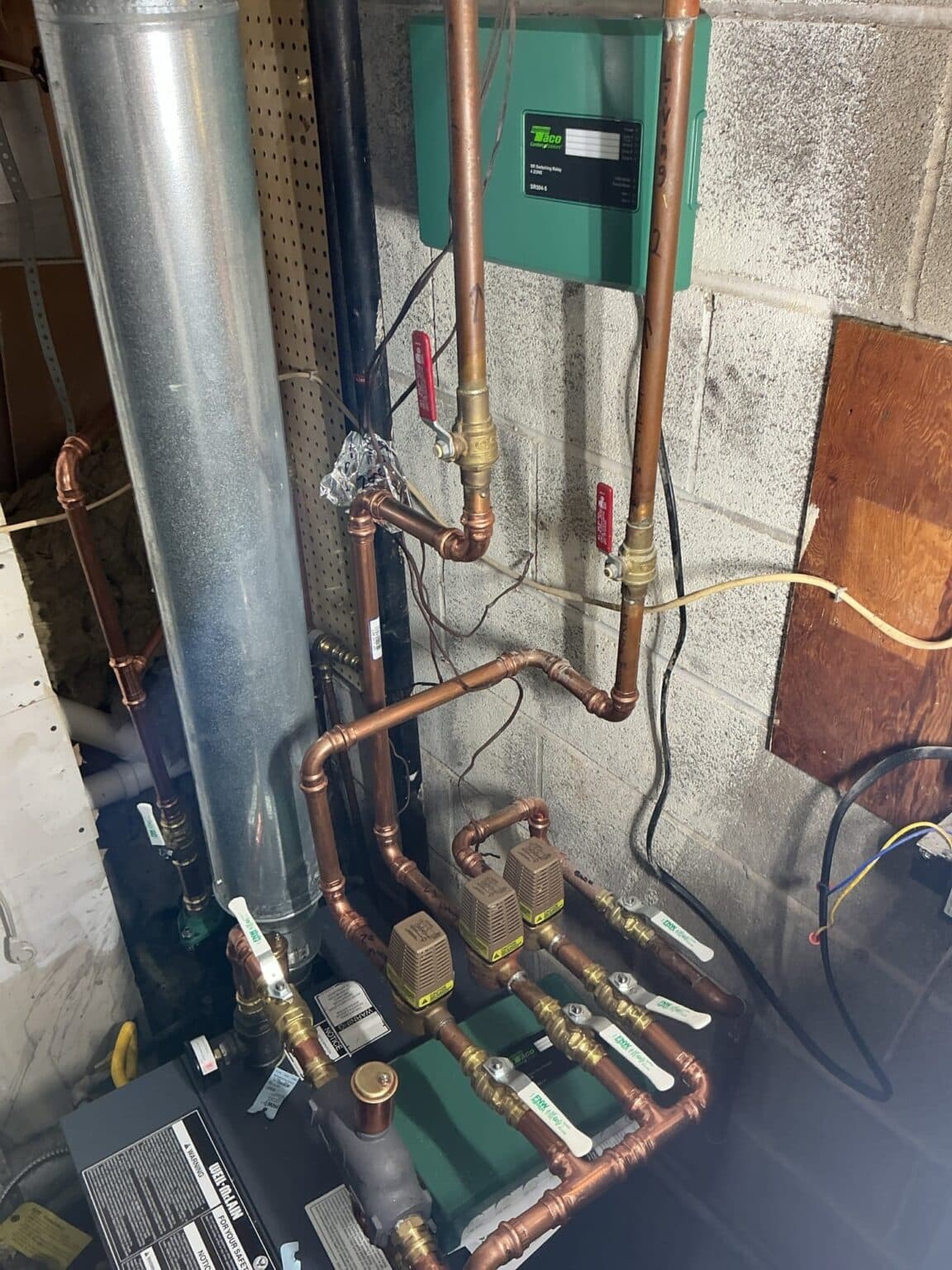
ZIP 22060 counts 3,456 housing units, and about six in ten of them sit inside the Army post. Family housing there is privatized: The Villages at Belvoir runs it, and a resident puts in a broken boiler, like any other repair, as a service request with The Villages. Our boiler work in Fort Belvoir is the other four in ten, the homes with 22060 mail outside the installation, which are Fairfax County’s.
Only about 270 homes in the ZIP are owner-occupied, and nine in ten of its occupied homes are rented, so a boiler call off post often comes from a landlord or a property manager as much as from the family living there. Among owner homes, about four in five heat with gas and the rest with electricity, so a boiler here is almost certainly on natural gas.
Close to half of those owner homes are townhouses and about three in ten are condos, with detached houses at about one in four. In a townhouse or a condo the boiler usually shares a utility closet with the water heater, and the swap that fits is often a wall-hung Navien combi at $12,782 to $16,500 installed, which heats the radiators and makes the hot water from one box on the wall. In a condo, ask the association about a new wall vent before the quote is final.
Off post, a boiler swap is Fairfax County permit work even like for like, since the County wants a permit for any gas appliance replacement and a chimney vent certification for a fuel-burning one. When a boiler quits in the cold, Virginia’s code puts the work ahead of the paperwork, with the application due by the end of the next working day. The cold does come: Oxon Hill, the nearest long-record station across the Potomac, logs about 80 nights a year at or below freezing, and in late January 2026 wind chills from the Piedmont to I-95 fell to between 0 and -10.