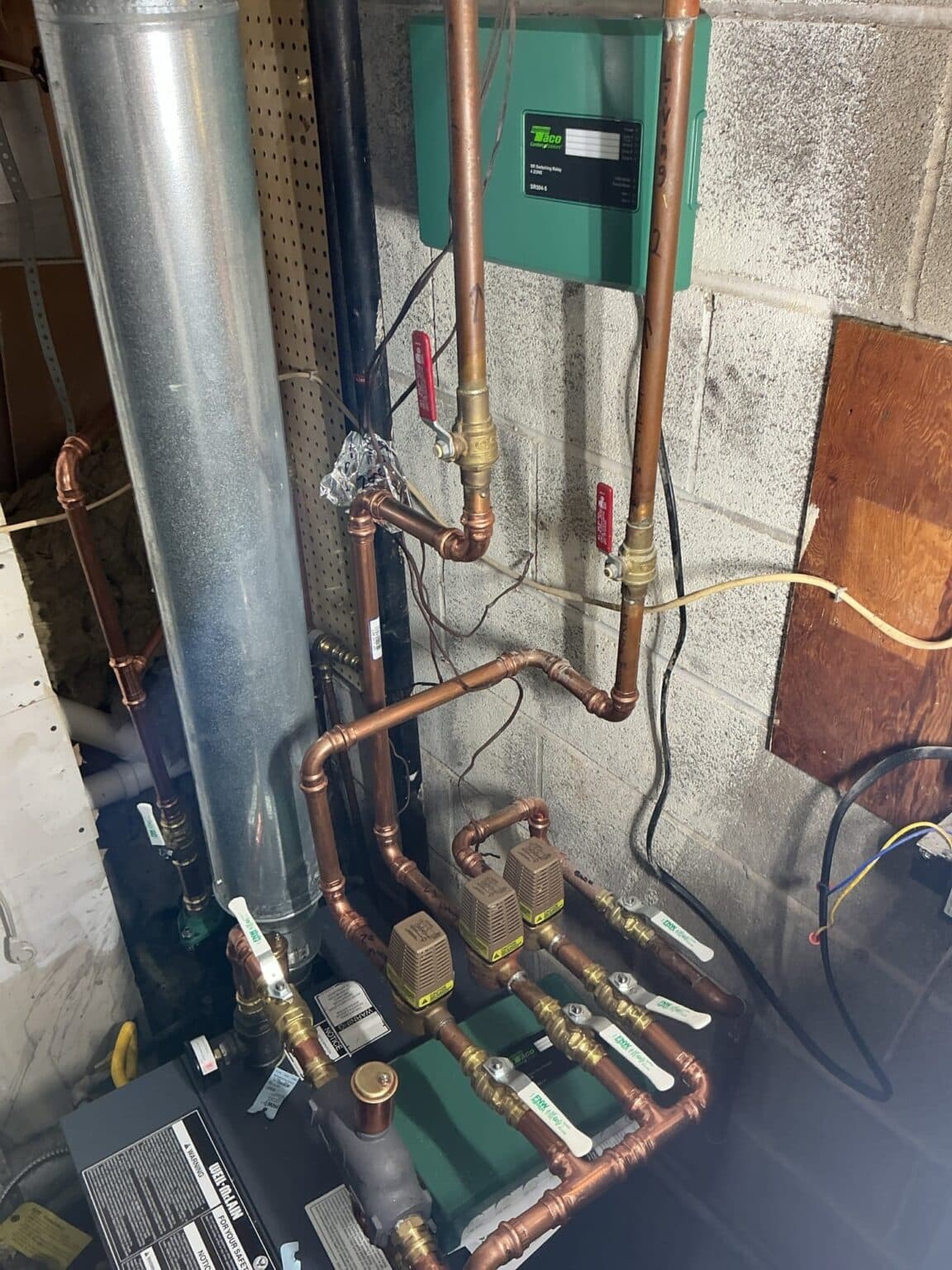
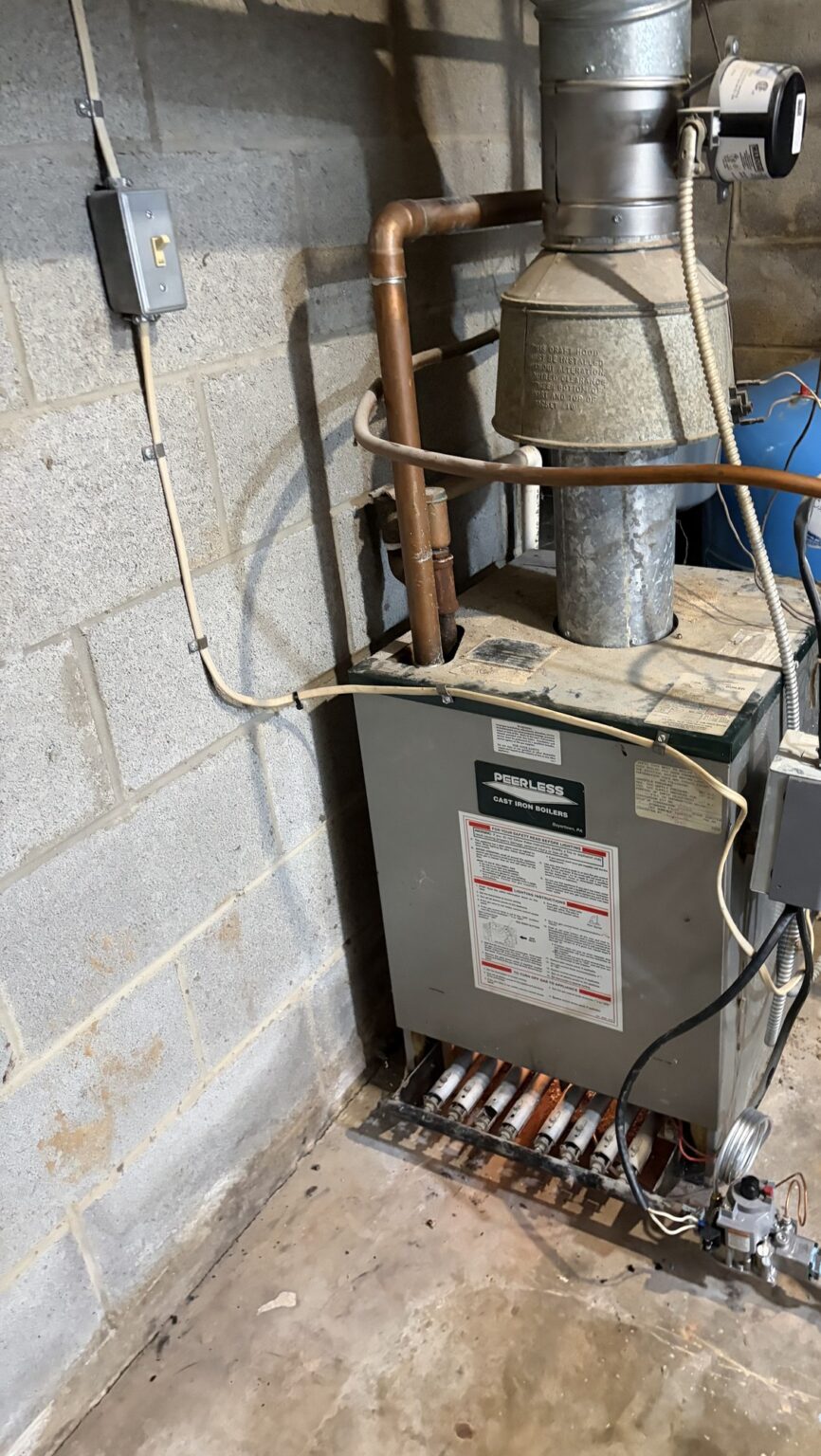
Rectortown shares ZIP 20115 with Marshall, and across that ZIP about two in three owner homes heat with electricity and one in five with propane, with utility gas close to absent. A house here with radiators or baseboard is a distinct setup in a village of heat pumps and forced air, and its boiler most likely burns propane. The 2,109 owner homes in that ZIP are about eight in ten detached houses, and about one in five went up before 1960.
At about 514 feet, Rectortown gets the cold Fauquier plans for: the County’s design temperature for heating is 17 degrees. The 2016 blizzard dropped 24 to 36 inches of snow here; a boiler that quits in a storm like that leaves a house cold until the roads open, which is the argument for a fall tune-up at $99 a system. Late January 2026’s Arctic outbreak put Piedmont wind chills at 0 to 10 below.
For a propane or gas boiler, Fauquier’s permit rule covers any fuel-fired appliance going in. An electric boiler replaced with a similar one in the same spot counts as an ordinary repair and needs none, while moving a boiler to a new location takes a permit either way.
Going from a chimney-vented cast iron boiler to a condensing one changes the vent: the chimney stops being the path, and the new boiler needs a clear way out through a wall in plastic pipe. A condensing or combi boiler runs $12,782 to $16,500 installed, and the written price says where the vent goes and what it means for the siding. Goose Creek, gauged at Route 710 1.2 miles north-northwest, has a FEMA-mapped Zone A floodplain, and in September 2012 flash flooding closed Crest Hill Road at Rectortown Road. The March 2018 nor’easter’s 55-knot winds put trees and wires down across the county, many on houses, and a boiler is only as dependable as the power to its circulator.