Electric heat leads in 20181: about seven in ten owner homes in the village and more than half across the ZIP, mostly heat pumps. Of the 3,076 owner homes in the ZIP, 597 heat with propane and 459 with natural gas, and in the village around Aden Road propane outnumbers gas about three to one. So a hot water boiler in Nokesville is more likely fed by a tank in the yard than by a gas main.
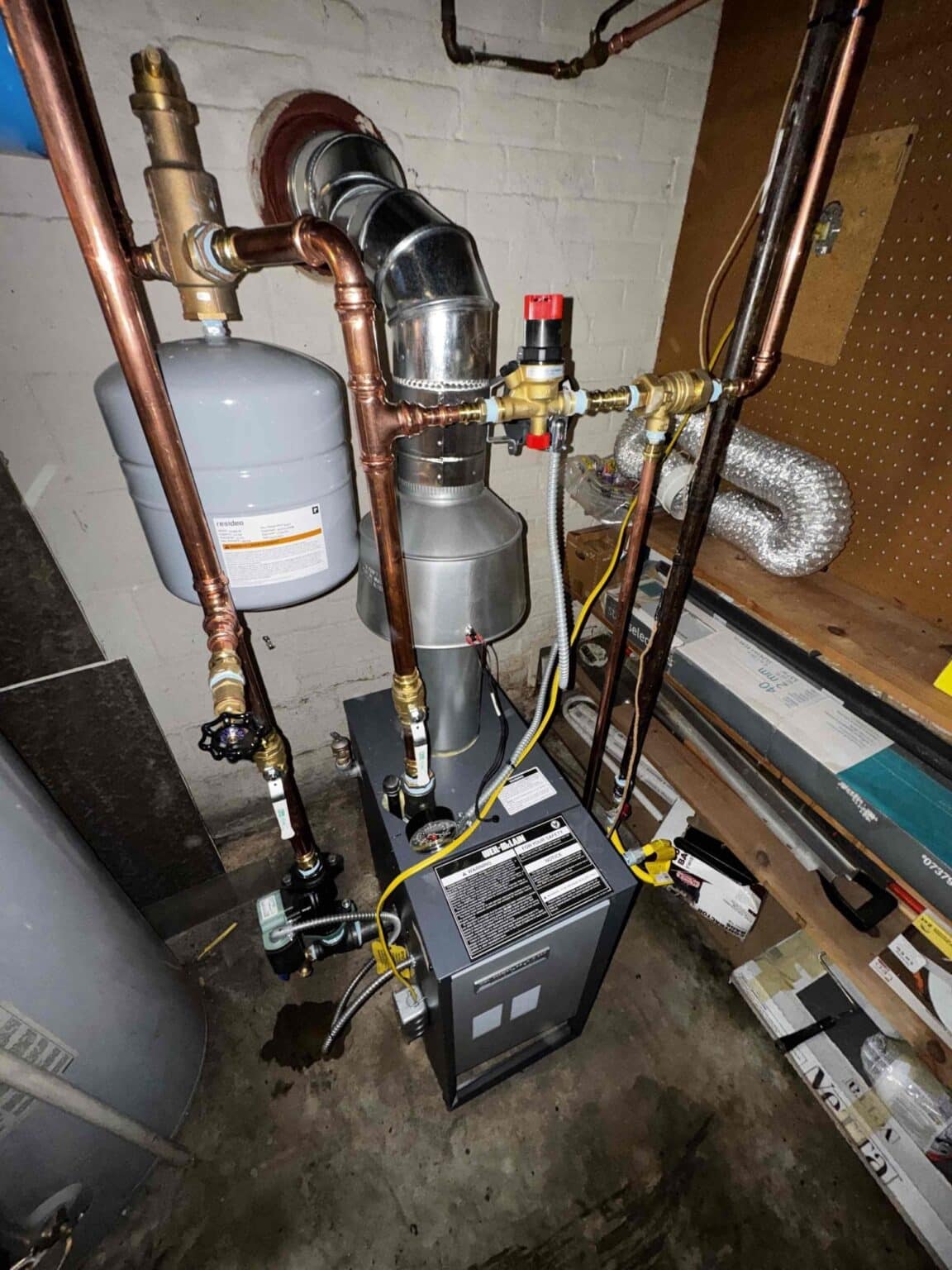
The village houses are the old ones: the typical owner home there dates from 1970, and about six in ten predate 1980, against 1989 for the ZIP as a whole. Those older village houses are the likeliest place for a cast iron boiler on a chimney, and the swap there is either another cast iron boiler on the same chimney or a wall-hung condensing boiler at $12,782 to $16,500 installed, venting through the side wall in plastic pipe.
Nokesville has no town hall of its own; the permit for a gas or propane appliance swap, even like for like, comes from Prince William County. A boiler that dies in a cold snap can be replaced first under Virginia’s code, as long as the County has the application by the end of the next working day. The County’s fire and rescue department asks for a CO alarm on each level and outside the bedrooms, tested once a month.
A propane tank in Nokesville usually feeds more than the boiler, often the water heater and the range too, so a no-heat morning is worth a glance at the gauge before a service call. A new propane boiler is converted and set to propane’s gas pressure, then leak-checked, before it fires the first time.