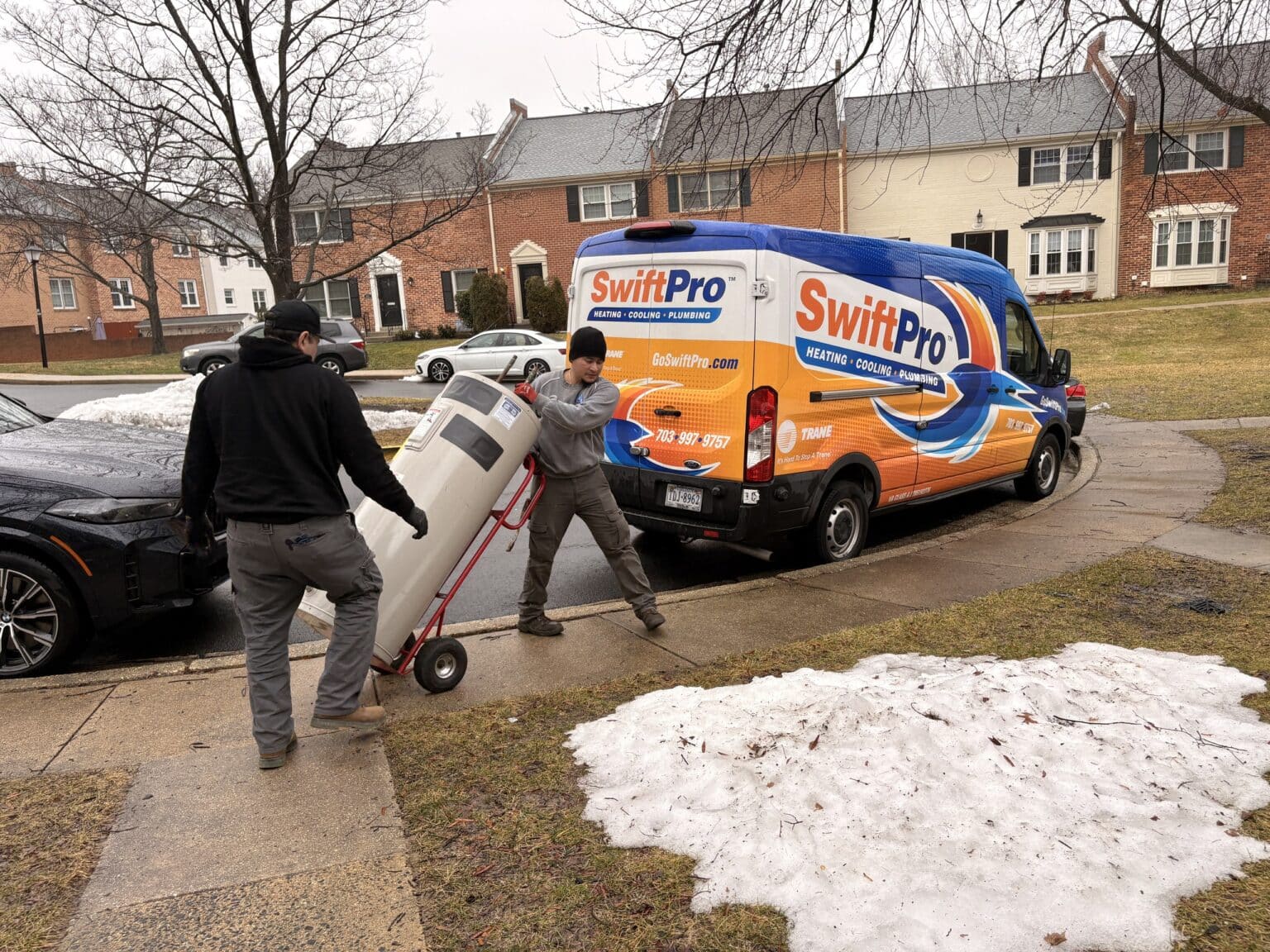
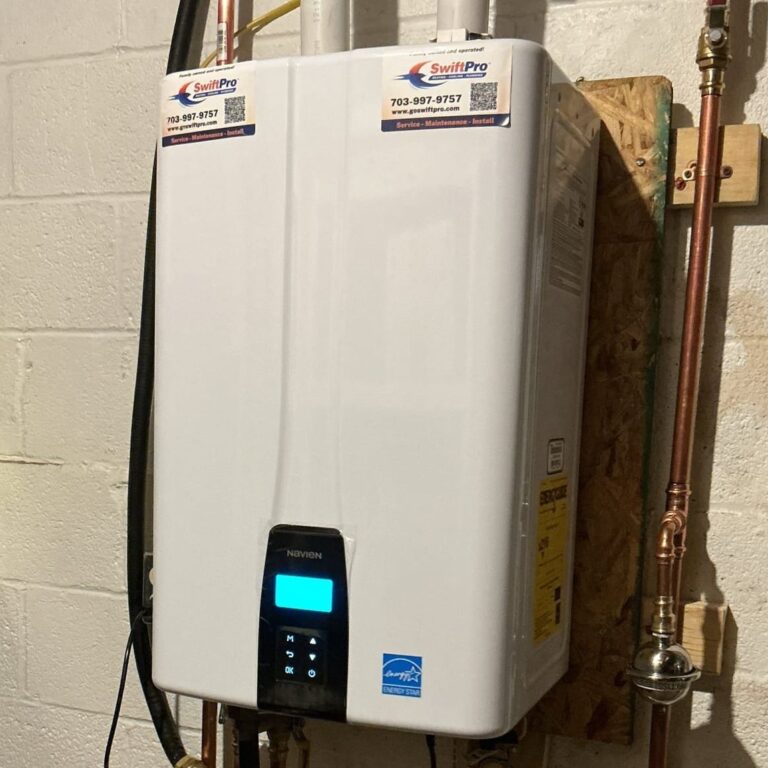
In the village about seven in ten owner homes heat with electricity, and an all-electric house nearly always has an electric water heater: two elements, a thermostat for each, no flue. That’s the $2,757 to $5,493 row. About two in ten heat with propane, and a propane tank goes on the same row as natural gas, $3,379 to $5,485 installed on the flue you already have.
The bigger difference is the water. With no Prince William Water main in the village, it comes up from a private well carrying whatever the rock puts in it. Western Prince William sits on the Culpeper Basin, the USGS’s maps of that basin take in the Nokesville area, and its county well study found sulfate highest there. Sulfate is what a standard magnesium anode rod turns into a rotten egg smell on the hot side, while the cold smells fine. A different anode usually ends it.
A well also means no meter at the street and no utility pressure. A pump fills a pressure tank, a switch turns the pump on and off, and a check valve keeps water from running back down the well. That closes the system, so the water has no room to grow as it heats, which is why the expansion tank comes with every replacement we price here.
In the old part of the village, close to four in ten homes went up before 1960. In a house that age the water heater has often moved at least once, into a cellar corner or a utility room off the kitchen, at the end of a run of pipe that’s part galvanized. The tech checks the shutoff and the first few feet of pipe before pricing the swap, because a valve that won’t close turns a replacement into a plumbing job.