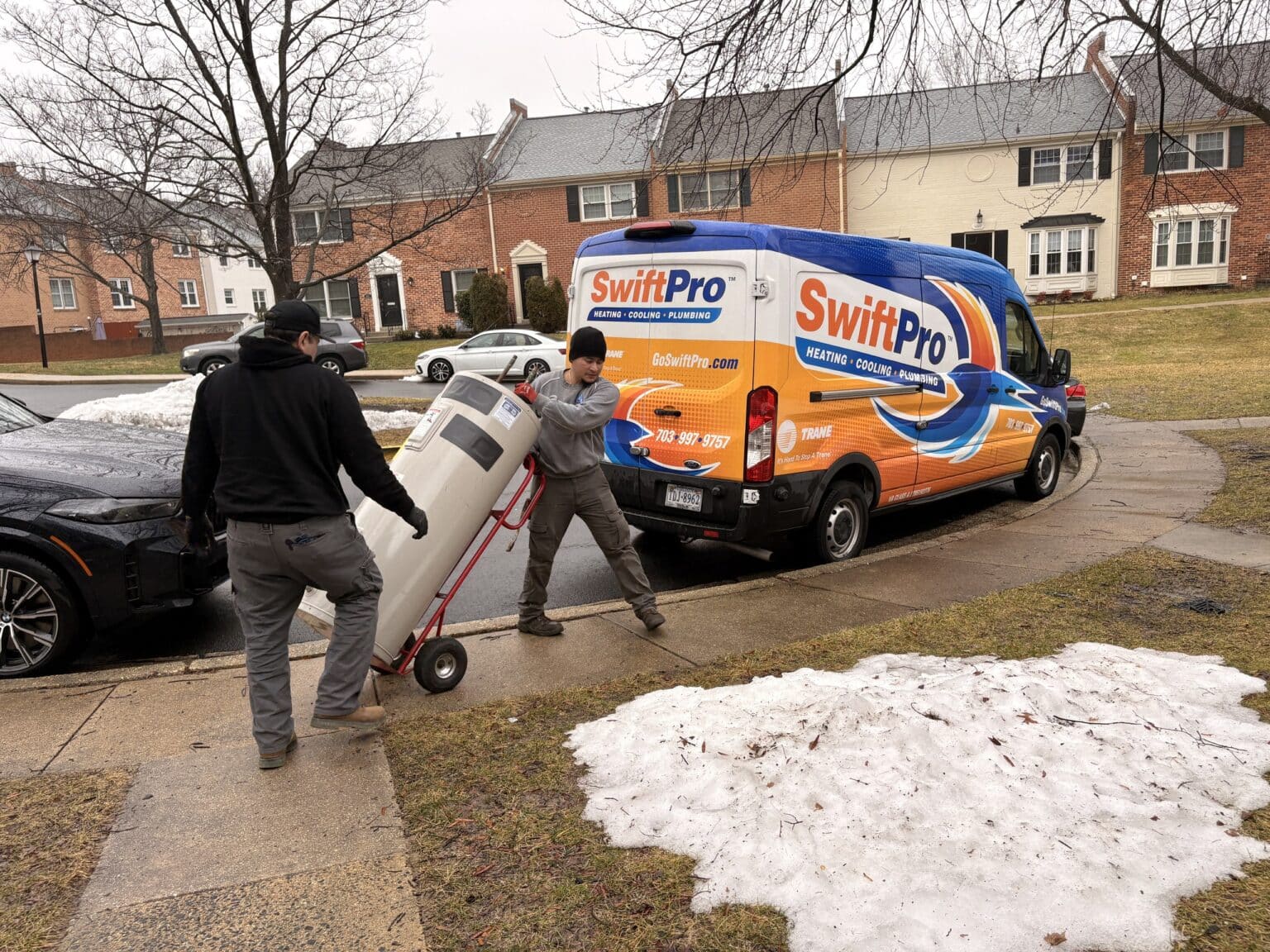
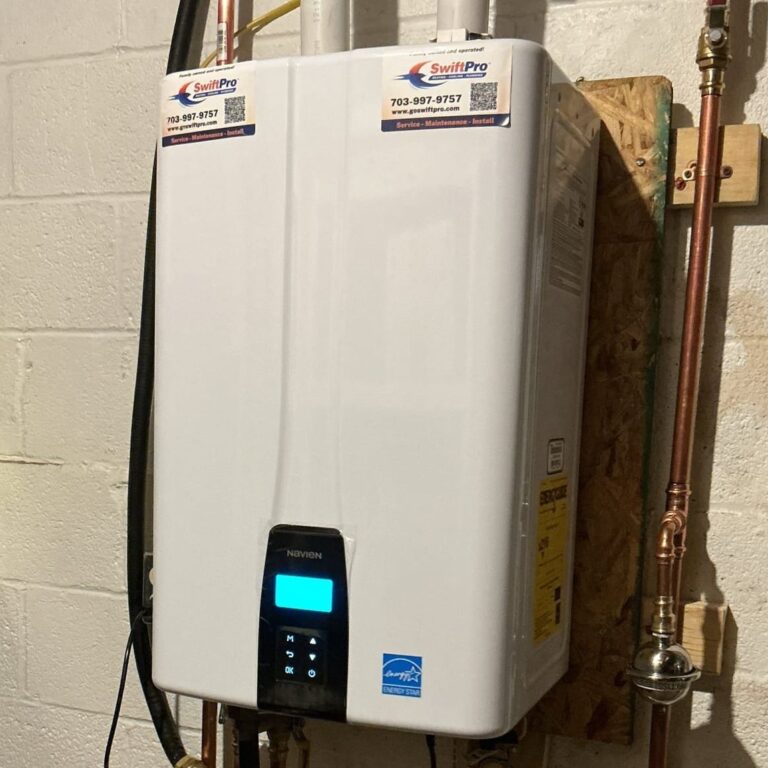
In the 1950s and 60s houses of West Falls Church, Lake Barcroft and the older City streets, you’ll most often find a gas tank down in the basement beside the furnace. Replacing it means a permit whichever side of the City line you’re on, and the City casts the widest net: any work on a natural gas appliance, even pulling one out, takes a gas permit. Floodwater does reach houses on a Falls Church address. On July 7, 2020, the National Weather Service logged flash flooding in the 6600 block of Barrett Road, and the water got into homes. A gas tank that sat in it shouldn’t be relit until someone has looked it over.
The City also makes its own case for electric. Its Electric Water Heaters page walks through electric tanks, tankless units and heat pump water heaters, and spells out what the switch takes: most electric models need a dedicated 240-volt circuit, a heat pump model needs at least 1,000 cubic feet of air around it and a spot that stays between 40 and 90 degrees, and new wiring means an electrical permit. A roomy basement can work; a small closet usually can’t.
Hard water wears the tank down too. Most of Falls Church typically gets Washington Aqueduct water through Fairfax Water, and the Aqueduct’s two plants tested from 5.6 to 10.9 grains per gallon across 2025, hardest in December. Those minerals settle as grit under the burner year after year, and draining them is the point of a yearly flush.
Nearly half the homes in the City, and over six in ten in Bailey’s Crossroads, are in buildings of ten units or more. Heaters there tend to be electric tanks squeezed into closets, and the pan under one is all that stands between a slow leak and the neighbor’s ceiling.