The Census doesn’t count basements, so we won’t guess how many Falls Church homes have a pit. What it does count is house types, and fewer than four in ten homes here are detached houses, on either side of the City line. Close to half the City’s homes are in apartment and condo buildings. A sump pump in Falls Church is mostly a question for the older detached streets: West Falls Church and Lake Barcroft, where about six in ten homes are detached houses, and Pimmit Hills, where it’s more than seven in ten.
Those are postwar houses. The typical owner’s house in West Falls Church dates from 1957, and in Lake Barcroft from 1958. A basement that age often wasn’t built with a sump at all, and when one went in later, the discharge sometimes went the short way, into a floor drain or the laundry tub’s line. Some still do. The City’s own sewer page tells residents whose sump pump is connected to the sanitary sewer to warn the City’s relining contractor before work on their street, or risk a backup in their own basement.
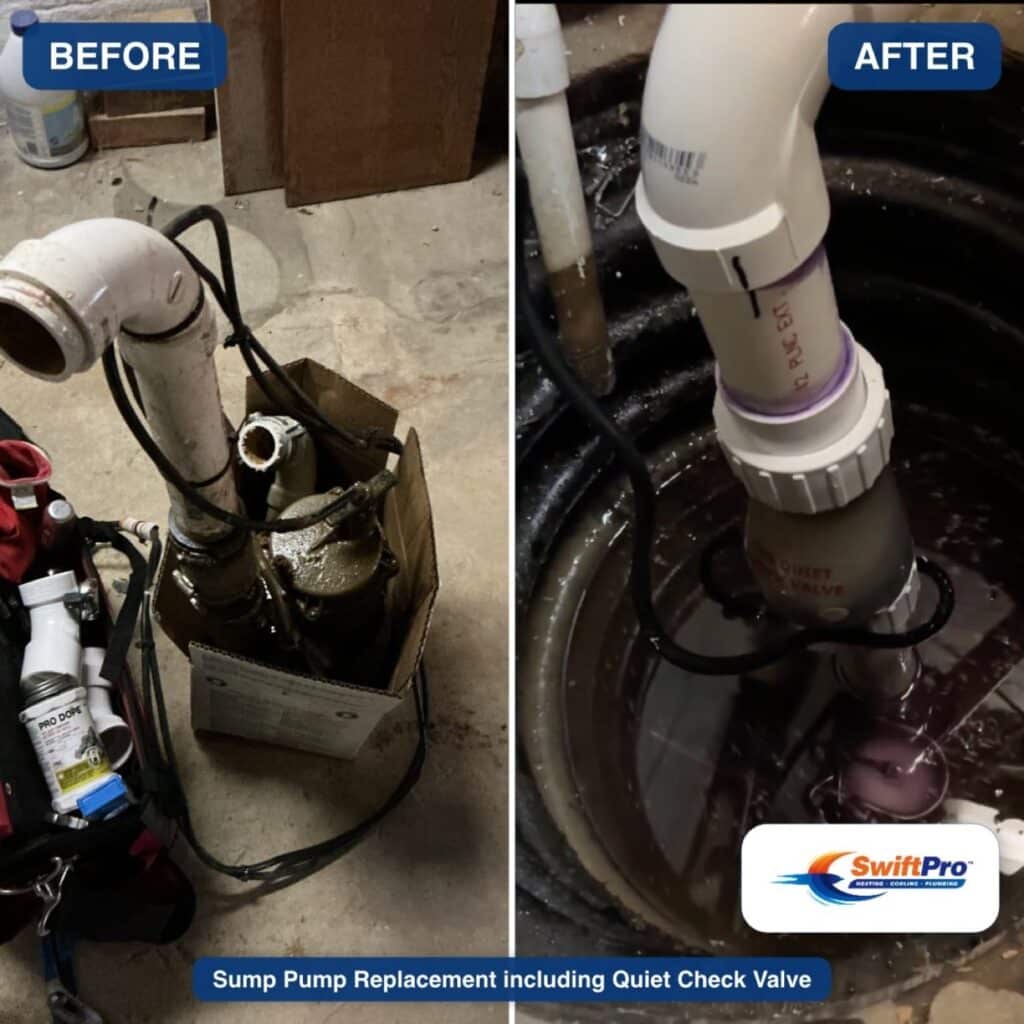
So when we replace a pump in a City basement, the first thing we check is where its water ends up. If the line runs into the sewer, moving it outside is the discharge line work named beside the price, quoted in writing before we start.
On the Fairfax County side the rule points the same way. The county’s sewer ownership diagram shows a sump pump piped outdoors as a proper connection, and one piped into the sewer lateral as an improper one. The county’s battery backup reimbursement covers properties inside Fairfax County only; the City of Falls Church is its own city, so a City house doesn’t qualify.