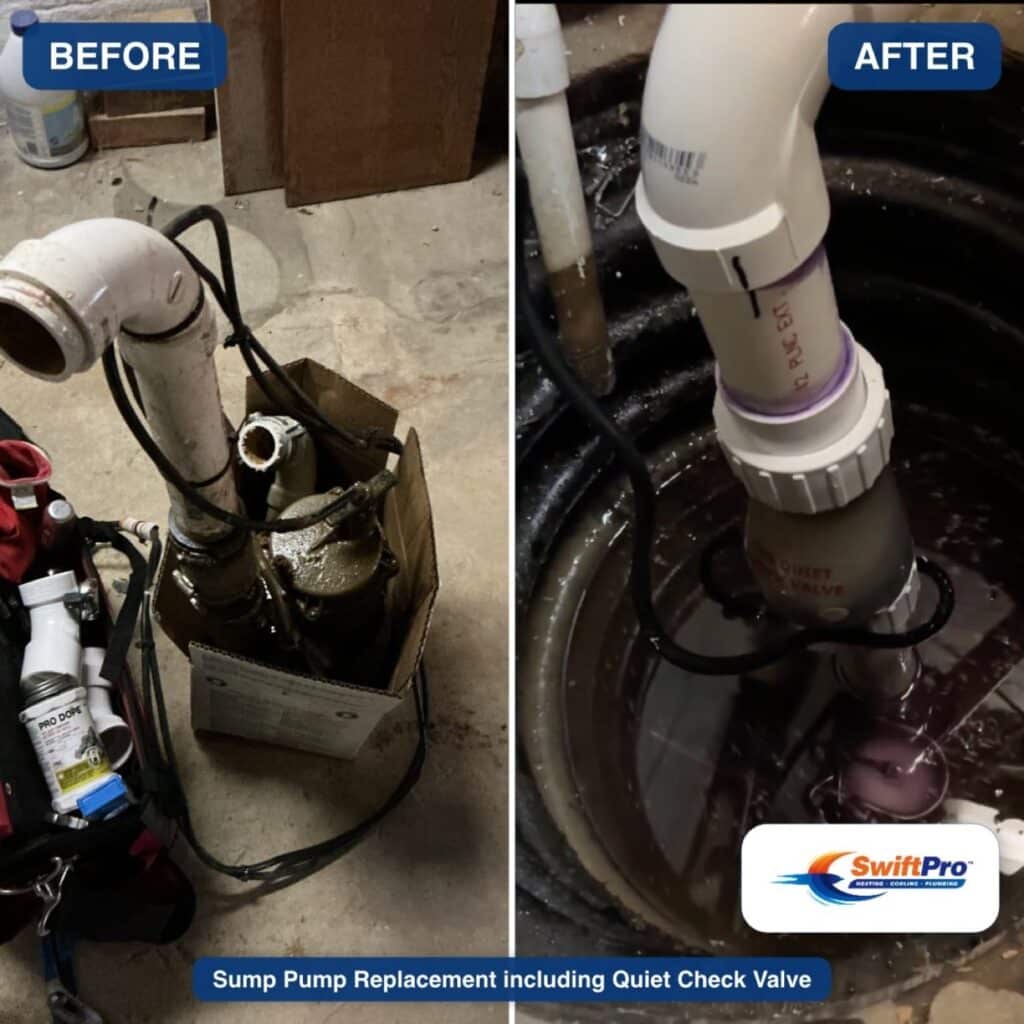
Eight in ten homes in 22101 are detached houses, and the median home there has nine rooms or more. Close to four in ten were built in the 1950s and 60s, when a McLean rambler or split-level usually got a basement or a lower level set into the slope. Plenty of those were dug without a sump. Where a pit is there now, it was often cut into the floor decades later, and the pump in it today is rarely the first one.
In a basement that age, the first thing we check is where the pump sends its water. Fairfax County counts French drains, downspouts and sump pumps tied into the sanitary sewer as unpermitted connections, and calls them illegal, because that water can overload the sewer and push raw sewage into creeks, onto streets and back into basements. A discharge pipe that drops into a floor drain or the laundry line is the giveaway. Rerouting it outside is the discharge line work named beside the price.
About one home in seven in 22101 went up in 2010 or later. When a new house on an existing lot gets a sump pump, Fairfax County’s infill lot grading plan has to show where it empties and carry the county’s sump note: at least ten feet out from the foundation, ten feet back from the property line downhill where the lot allows, no ponding on the neighbor’s side, and no concentrated flow across a public sidewalk or over the curb. A replacement pump ties into that same outlet line.
In 22102 close to half the homes are in buildings of 50 units or more, where a pump in the garage or lowest level usually belongs to the building. A sump pump that’s yours there is most likely in a townhouse or one of the detached houses, about one 22102 home in five, and it’s the same $697 job as in 22101.