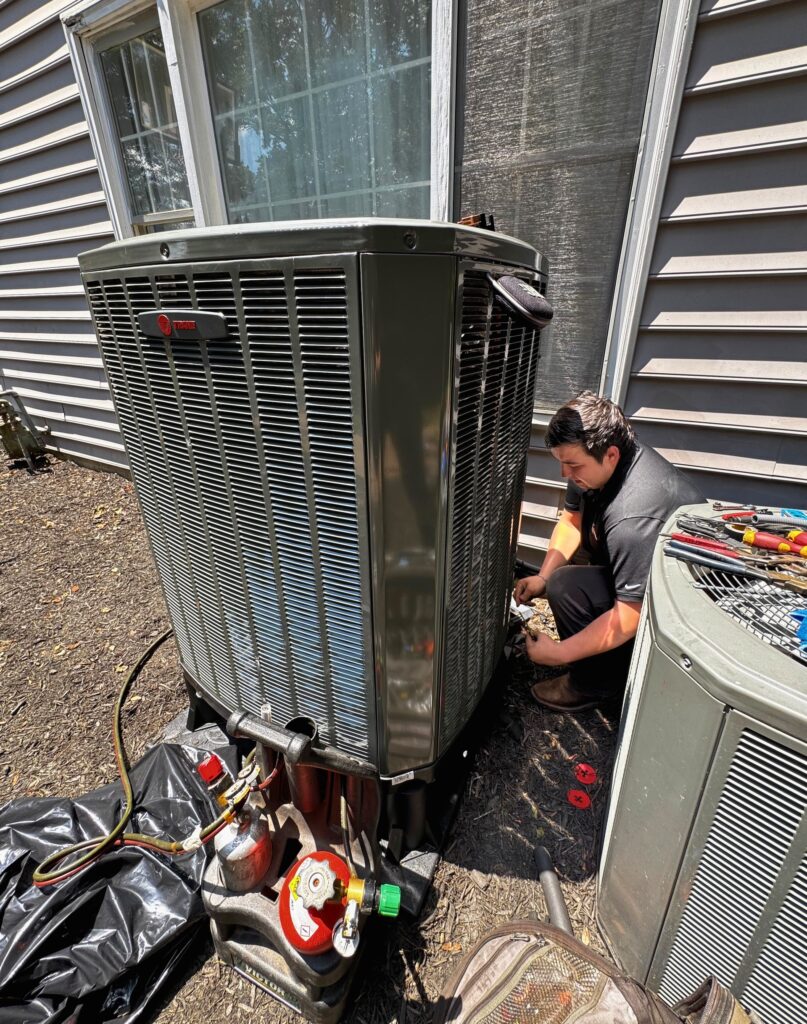
In the village about seven in ten owner homes heat with electricity, and out here that usually means a heat pump: the unit cooling the house in July is the same one heating it in January. So there’s really no such thing as a cooling-only repair. A swollen capacitor or a pitted contactor will quit in whichever season comes next, and it’s a lot better found on a hot afternoon than on a cold night with the backup strips carrying the house.
On a big lot the outdoor unit usually sits in the open, next to lawn or field. Clippings from a riding mower, pollen and leaves pack into its fins, and a matted coil can’t shed heat, so the unit runs all afternoon, the pressures climb and it trips out on the hottest days of the year.
The village houses are old for central air. Close to four in ten went up before 1960, before central air was standard, so the cooling came later: new ducts threaded through an attic or a crawlspace, or the old heating ducts pressed into service, often with one small return. Starve the indoor coil of air and it freezes, and what you notice is warm air and a sweating air handler. The tech checks the airflow before anybody sells you refrigerant.
Across the rest of 20181 the houses are younger, and about a quarter went up between 2000 and 2009. A heat pump that came with one of those is somewhere past 17 years old now, and if it went in before 2010 it may still use R-22, a refrigerant nobody produces anymore. On one of those a leak is a fork in the road, and you get the repair number and the replacement number next to each other.