The closest weather station with thirty years of normals is the cooperative one in Purcellville, about two and a half miles west-northwest of town. NOAA’s 1991 to 2020 normals put the average July afternoon at 86 degrees, with about 30 days a year at 90 or hotter, and on July 28, 2023, mesonets across western Loudoun recorded heat indices above 110. A run capacitor weakens with heat and age, and the hottest week of the summer is usually the one it picks to fail; a new one is $240 to $370.
Electricity heats 665 of the 1,298 owner homes in 20158, and electric heat here nearly always means a heat pump. The Purcellville normals set the heating load at 4,942 degree days against about 1,050 for cooling, so the outdoor unit that carries July carries far more hours from November into March. That’s why a failing defrost board, replaced for $450 to $1,150, is worth catching in August.
Summer storms here bring wind. On July 25, 2010, thunderstorm winds put at least thirty trees down across Hamilton, and on July 21, 2019, gusts estimated at 61 knots damaged a home’s roof on Meadowlark Drive, just northeast of town. After one like that, walk out to the outdoor unit before switching the cooling back on: limbs on the fan guard, fins bent by branches, a disconnect box knocked loose. If the power flickered and the house won’t cool, check the breaker and reset the thermostat. Still nothing? Call us after the storm and we’ll check the whole system.
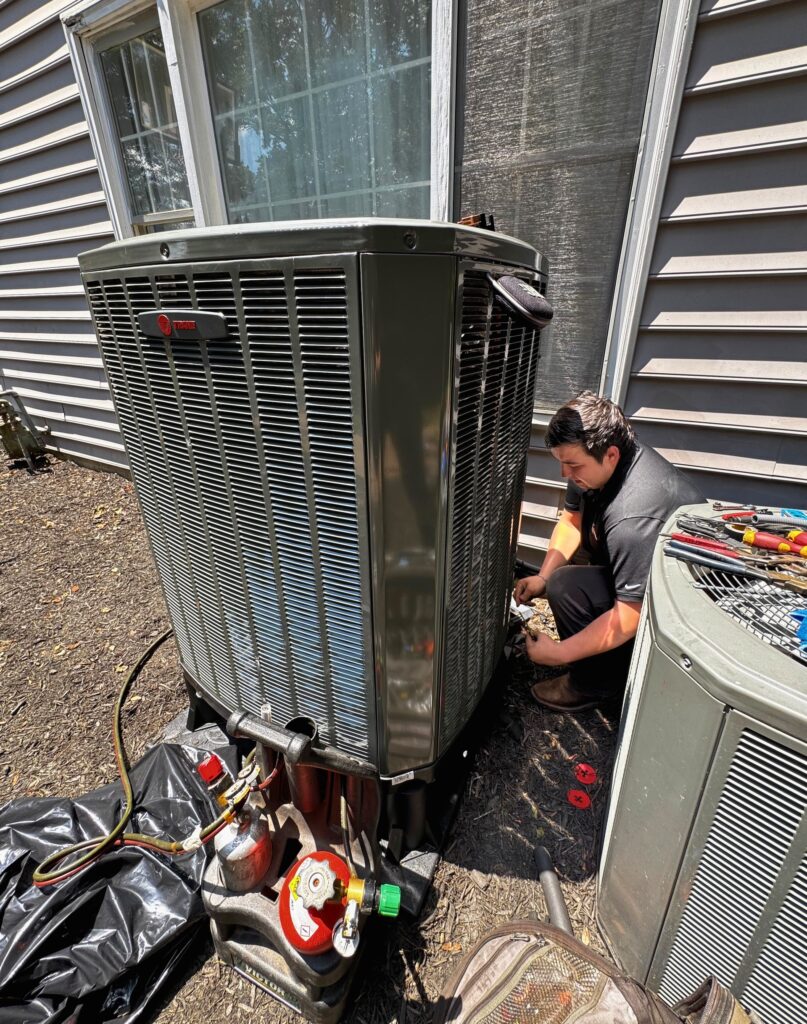
Nine homes in ten across 20158 are detached houses, plenty on country lots where the condenser sits in the open beside a lawn or a field. Mowing season blows clippings and seed fluff into the coil, and a packed coil can’t shed heat. In propane homes the air conditioner shares the furnace’s blower, and a blower wheel caked with dust starves the cooling too; pulled and cleaned, that’s $300 to $440.