Off post, Fort Belvoir’s houses split cleanly on gas. Fairfax County’s parcel records show all 256 Cook Inlet houses connected to it, and gas unavailable to 13 of the 14 houses on Backlick Road in Accotink. That one fact decides what a heat pump does in each.
Backlick Road is the old end of the ZIP. The county dates one house there to 1900, six to 1925, one to 1950 and six to 1978, and lists three with central heat but no central air. Without a gas line, a heat pump is the one system that heats and cools from the same outdoor unit, so swapping that kind of heat for one brings cooling along with it. More than half the Backlick Road houses have no basement, so the air handler goes in a closet, the attic or a crawl space, and the ductwork there sets how big the job is.
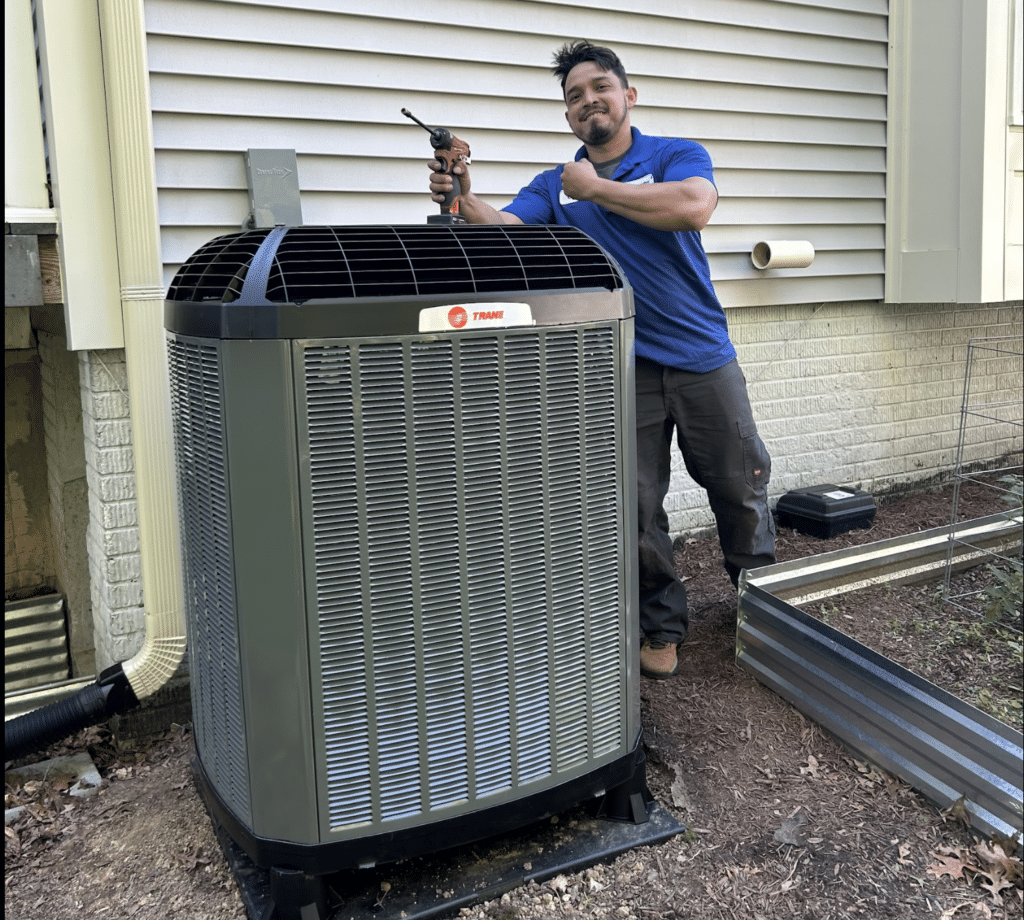
In Cook Inlet the heat pump usually replaces the air conditioner, not the furnace. It takes the condenser’s spot out back, carries the heating through fall and spring, and hands the bitter nights to the gas furnace already in the basement. That pairing is dual fuel, and with most of the neighborhood’s original condensers past twenty summers, it’s a fair question at replacement time.
The climate here is kind to heat pumps most of the year. Reagan National Airport, about 13 miles up the river, averages a January low near 30 and fewer than one night a year at 10 degrees or colder. The hard nights are fronts like December 2022’s, when wind chills fell to around 5 below near the tidal Potomac, and that’s when the backup heat earns its keep. The ground matters too: the county rates Cook Inlet’s clay slow to drain, with water as little as two feet down in places, so a new outdoor unit belongs up on a stand where its defrost water can get away instead of freezing around the base.