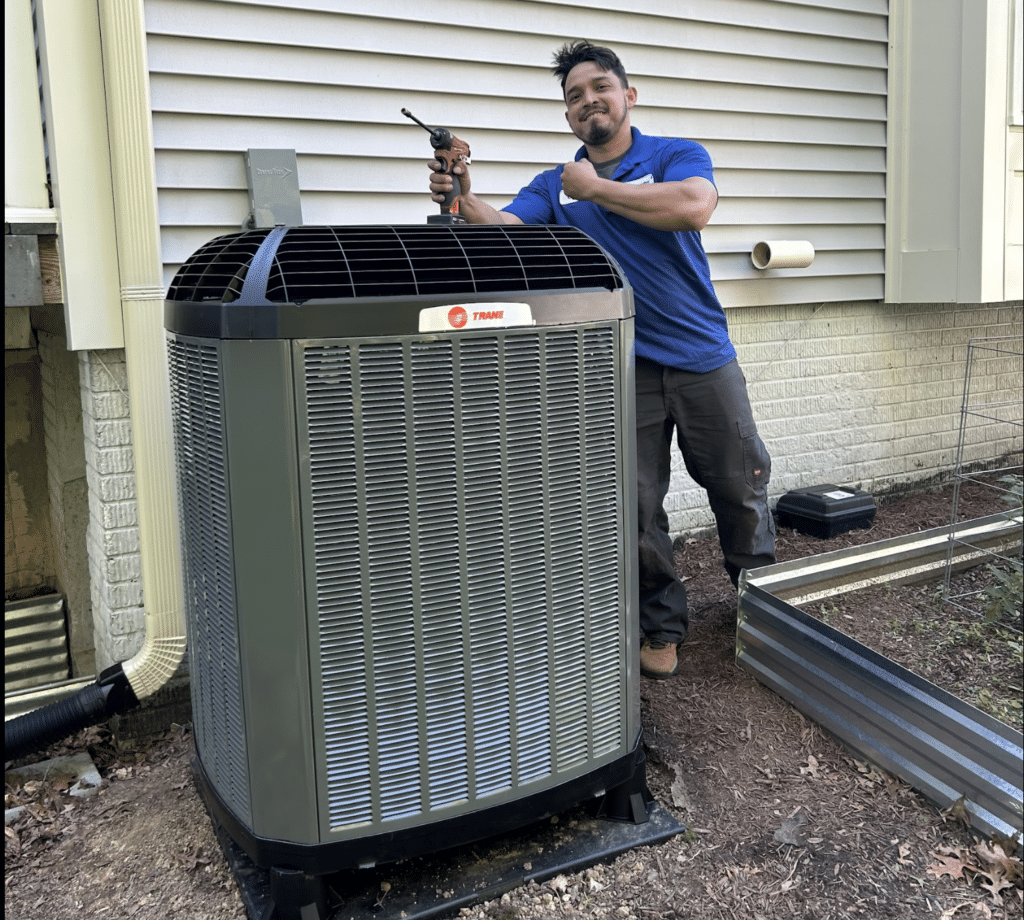
Electricity heats about 176 of the 627 owner homes in ZIP 22027, a little over a quarter, and the Census files a heat pump under electric heat; most of the rest, about 426, burn gas. So a heat pump job here comes in two shapes: an all-electric house replacing its heat pump and air handler, or a gas house putting one where the air conditioner sat.
What a heat pump faces here is the winter recorded at Vienna’s weather station, 3.6 miles west: a January average low near 23 degrees, roughly 99 nights a year at or below freezing, and close to four at 10 degrees or below. Recent winters went further. In January 2025 the air fell into the single digits for several nights, and late January 2026 brought Extreme Cold Warnings to Fairfax County on three nights. The outdoor unit feels the air temperature, not the wind chill, and nights like those are when a tired heat pump leans on its backup strips.
So the size and the model get chosen for those nights, not for July. A heat pump built for colder climates keeps more of its output in the teens and single digits, and the thermostat gets set so the strips come on only when the outdoor unit can’t keep up.
In the gas houses, the heat pump goes on the old air conditioner’s pad, heats through the mild days and passes the coldest nights to the furnace. Washington Gas, the gas company for most of Fairfax County, counts that as dual fuel in its Virginia rebate program only when the heat pump replaces an existing central air conditioner, so an all-electric 22027 house trading heat pump for heat pump sits outside it. Our dual fuel guide lays out the terms.