The Census files a heat pump under electricity, and sorted that way the Alexandria address splits three ways. Woodlawn, about six in ten owner homes, and Franconia, more than half, lean electric. The City as a whole is about four in ten, and so is Huntington. Hayfield and Fort Hunt sit at the far end, under one in six, nearly all gas.
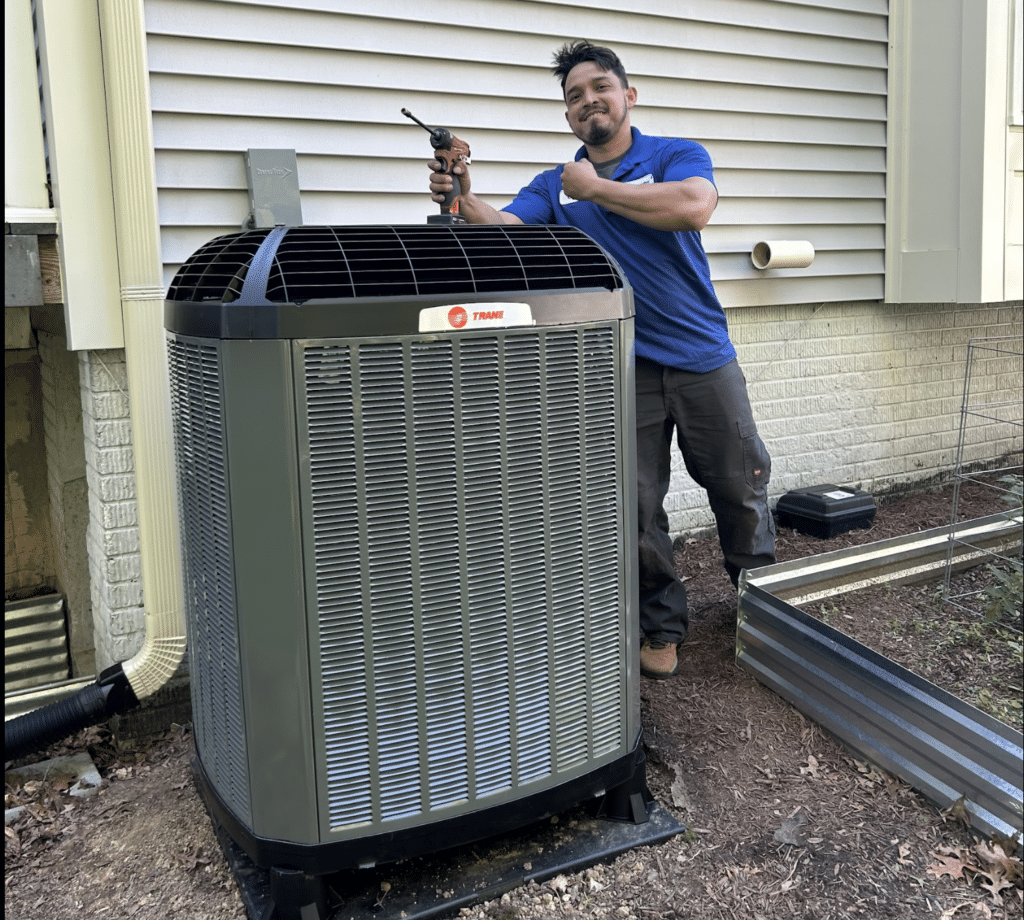
Woodlawn’s median owner house went up in 1976 and Franconia’s in 1986, and townhouses are a big share of both: about a third of Woodlawn’s homes and half of Franconia’s. In a row like that the swap is usually straight across, a condenser on its pad out back and an air handler, backup strips inside it, tucked in a utility closet or the attic. If yours went in before 2010 it most likely holds R-22; the sticker on the condenser says which.
Condos are their own case, and Huntington and the City both have plenty. The City tells condo owners that any work follows the association’s governing documents as well as the building code, and that an electrical panel upgrade in a unit needs a registered electrical engineer to study the whole building’s electrical system first. A new heat pump that wants a bigger breaker than the panel can give is where that bites.
In the gas corners, Hayfield, Fort Hunt and Rose Hill, the heat pump usually lands on the old air conditioner’s pad and leaves the furnace only the cold snaps. Washington Gas pays its customers a rebate for that setup, dual fuel, but the old equipment coming out has to be a central air conditioner, so a heat pump replaced by a newer heat pump is excluded. A Fort Hunt house giving up its air conditioner may qualify; a Woodlawn house replacing its heat pump won’t. Our dual fuel guide keeps the amounts.