Vienna’s cooperative weather station, 3.6 miles west, keeps the closest long-term record: a January low averaging 23 degrees, about 99 nights a year at freezing or colder, and close to 4,900 heating degree days, five times its cooling degree days. In half of all years the first freeze comes by October 29 and the last not until April 14, and about four nights a year reach 10 or lower.
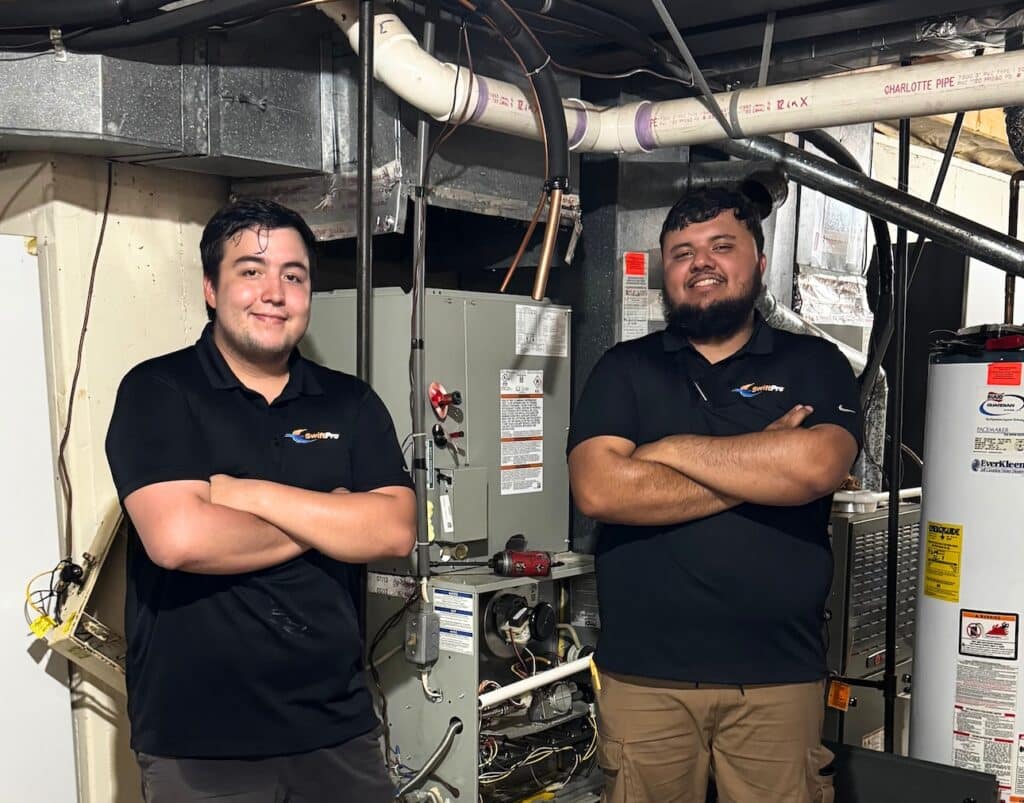
About two thirds of 22027’s owner homes heat with natural gas. The typical house went up in 1991, and the furnace usually sits in the basement. Most of today’s furnaces light with a hot surface igniter, $240 to $410 to replace. The high-efficiency kind vents out a side wall through two plastic pipes and drains water as it burns, and a slow drain shuts it down on the coldest night it can find.
Close to three in ten heat with electricity, usually a heat pump with electric strips as backup. On the few nights Vienna’s record puts at 10 or below, the strips carrying the load is normal; strips running through a 40-degree afternoon mean the heat pump has quit pulling its weight. A couple of homes in a hundred burn propane, and we repair those furnaces too, with the gas pressure set for propane.
Fairfax County got 20 to 28 inches of snow in February 2010, with outages countywide from snow-loaded trees and lines, and 23 to 31 inches in the January 2016 blizzard. Snow drifting over a high-efficiency furnace’s two pipes trips a safety switch and puts the burners out, so after a big storm, clear them before you shovel out the car. A power cut stops a gas furnace too, since the igniter, inducer and blower run on electricity. If the heat doesn’t come back with the lights, call us, and we’ll check the furnace, its vent pipes and its controls.