Before anyone opens a panel, the tech needs to know what your heat runs on. Of the 4,951 owner homes in the Census place called Gainesville, 4,035 heat with utility gas, 856 with electricity and only 18 with propane. A gas furnace gets its pressure read against utility gas settings, a propane one against propane’s. Electric heat in houses this young nearly always means a heat pump; if that’s yours, tell us on the phone.
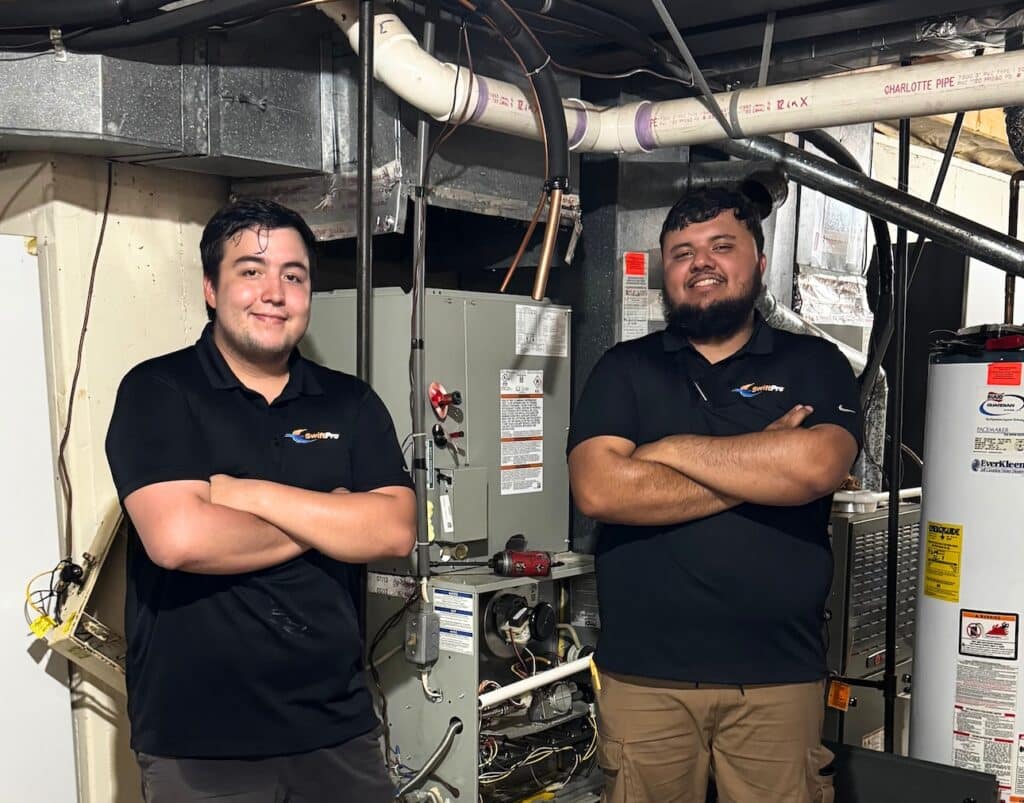
The visit runs the furnace through its sequence of operation, the steps it takes on every call for heat: the inducer fan clears the flue, a pressure switch proves the draft, the igniter glows, the gas valve opens, a sensor proves the flame, and only then does the main blower start. An original furnace in one of the 2,087 owner homes built in the 2000s has done that several times an hour on cold nights for close to twenty winters, and every step is a part that wears. Watching each happen in order is how a tune-up spots the one that hesitates.
The younger furnaces need the visit for another reason. About 1,900 owner homes went up from 2010 on, 428 since 2020, and there the parts are rarely the story. The first tune-ups write down the gas pressure and the temperature rise, the warm-up between the air going in and the air coming out, against the range on the rating plate. Next fall’s numbers get held up against this year’s, and a reading that drifts is a young furnace’s early warning.
Virginia Oaks, from 1994, watches its rooflines: the guidelines want chimneys masonry or enclosed, and any vent through the roof painted to match. A furnace there that still vents up a metal flue often shares it with the water heater; a newer high-efficiency one may run plastic pipe out a wall. Either way, the tune-up tests the switches that stop the burners when exhaust can’t get out. In Heritage Hunt’s four condominiums, the condo documents say who looks after each unit’s heat.