NOAA’s 1991 to 2020 normals for Dulles Airport, next door, average about two nights at or below freezing in October and about 13 in November. Reagan National averages none in October and fewer than four in November. October nights at Dulles normally bottom out near 45 degrees, about seven colder than at National. By early November a Sterling furnace is lighting most nights, so the tune-up belongs in September or early October.
About eight in ten owner homes in Cascades, Arcola and around Dulles Town Center burn gas, close to nine in ten on Oak Grove’s townhouse streets, and seven in ten in Lowes Island. Around Sterling Park it’s closer to even, about 44 in 100, Sugarland Run is about half, and in Countryside, where electric heat dominates, only about one owner in five has gas. The heat pumps there get their fall tune-up for the same $99.
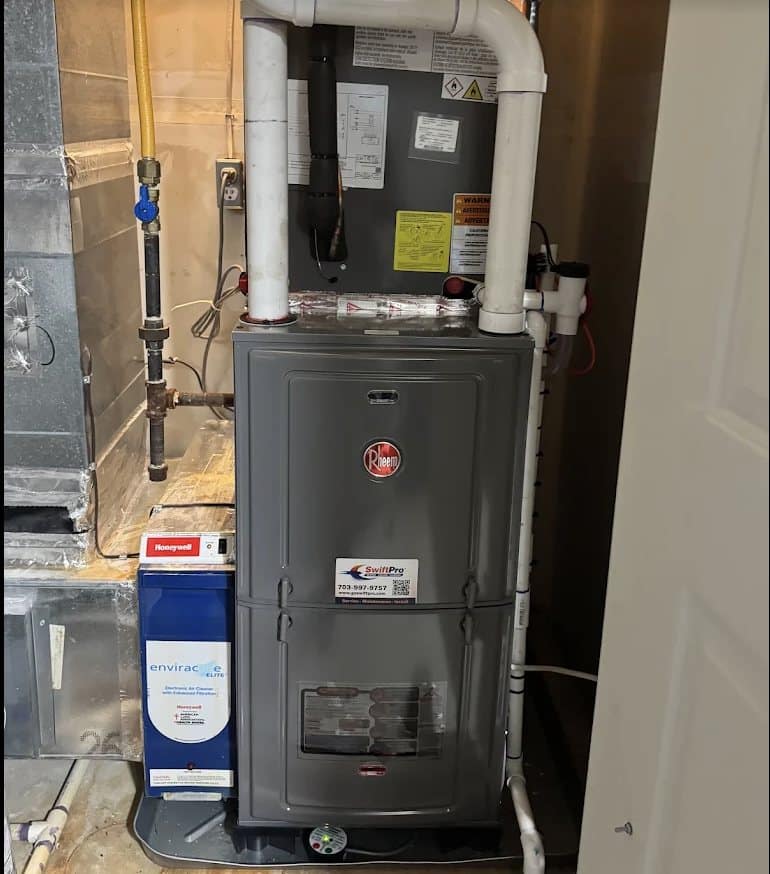
Many gas furnaces in Cascades, Lowes Island and Sugarland Run are high-efficiency replacements that make water as they burn, and out here it matters where that water goes. Dulles averages about five nights a year at 10 degrees or colder, and a condensate line routed through an unheated garage or out an exterior wall can freeze on one of them. The pressure switch then holds the burners off until it thaws. A tune-up follows that line to wherever it empties and flags any stretch that crosses a cold spot.
Propane is rare across Sterling, about one owner home in a hundred, but around Dulles Town Center it’s close to seven in a hundred. A propane furnace gets the same tune-up at the same price, with its gas pressure read against the propane figure on its rating plate rather than the natural gas one. Seven in ten homes there are rented; tenants, ask the owner to book.