Gas heats 9,625 of the 11,087 owner homes the Census counts in Linton Hall. In a Bristow house with a basement, the builder usually set the furnace in the unfinished part, beside the gas water heater. Twenty years on, plenty of those basements are family rooms and guest suites, and the furnace sits in whatever utility room got framed in around it.
That matters most to an original furnace. The 80 percent models of the build-out years burn air from the room around them and send their exhaust up a metal flue, often shared with the water heater. Close one into a small room behind a solid door and it can run short of air. The tune-up runs the furnace through its whole sequence, and a starved burner tends to show itself there: a flame that lifts or wanders, or a safety that trips.
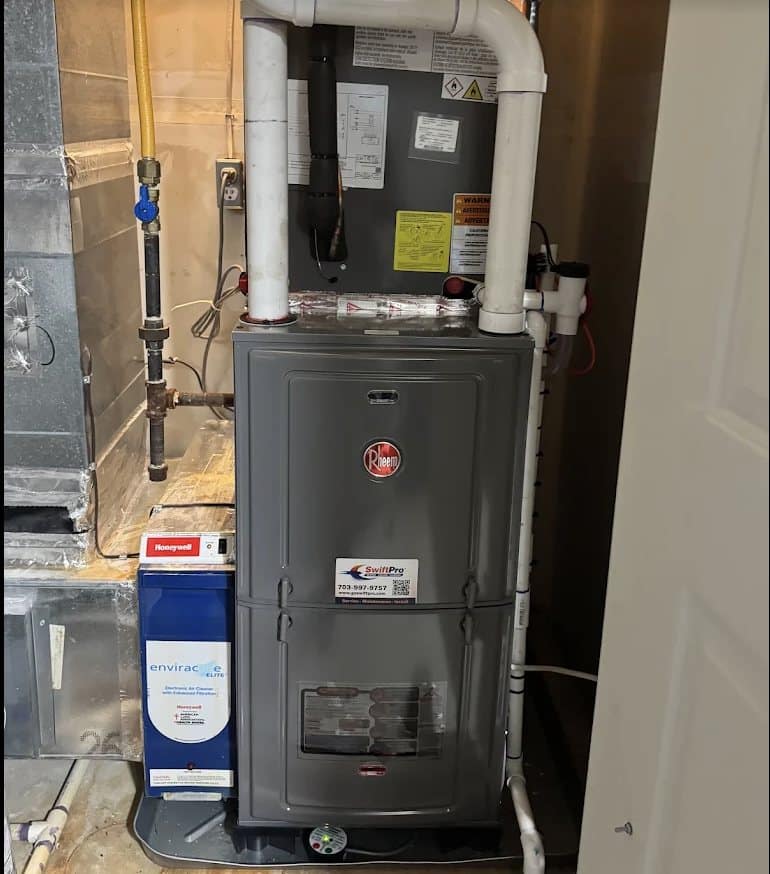
Plenty of 2000s furnaces here have already been replaced, and so have most of those in the 1990s houses, about one Linton Hall home in five. The newer ones are usually high-efficiency models with two white plastic pipes through a side wall. They make water as they burn, so the safeties a tune-up checks include the pressure switch that stops the burners when that water can’t drain or the exhaust can’t leave.
The Census puts 149 Linton Hall owner homes on propane, and toward Brentsville and along Bristow Road, outside the Census place, nobody counts at all. A propane furnace costs the same $99 to tune up, its gas pressure read against propane’s settings. About 1,280 owner homes heat with electricity, which in houses this young usually means a heat pump, and a Linton Hall heat pump’s autumn visit runs that same $99.