Piped natural gas never reached Delaplane. In ZIP 20144 the Census counts tank propane as the main heat in 54 percent of owner homes and utility gas in none, so nearly every furnace swap here is propane for propane, fed from a tank out in the yard. On install day the new furnace’s pressure gets read at its gas valve with your other propane appliances going too, because a larger furnace on the same line can come up short.
Most of the houses are younger than the village. About half of 20144’s homes went up between 1980 and 1999, and the typical owner’s house dates to 1986, which puts many Delaplane furnaces on their second round, or still on the first at thirty-odd years. Nearly every home in the ZIP is detached, so the furnace usually stands in a basement with room around it, and the work is in the venting and the size, not in squeezing through a closet door.
The size comes from the weather, figured against your house. Warrenton 3 SE, the closest long-record temperature station, averages close to 4,700 heating degree days a year and about 13 days that never climb above freezing; those are the days a furnace hardly rests. Fauquier County’s building criteria put the winter design temperature at 17 degrees, and a heat loss worked from that, your walls and your windows sets the new furnace’s output.
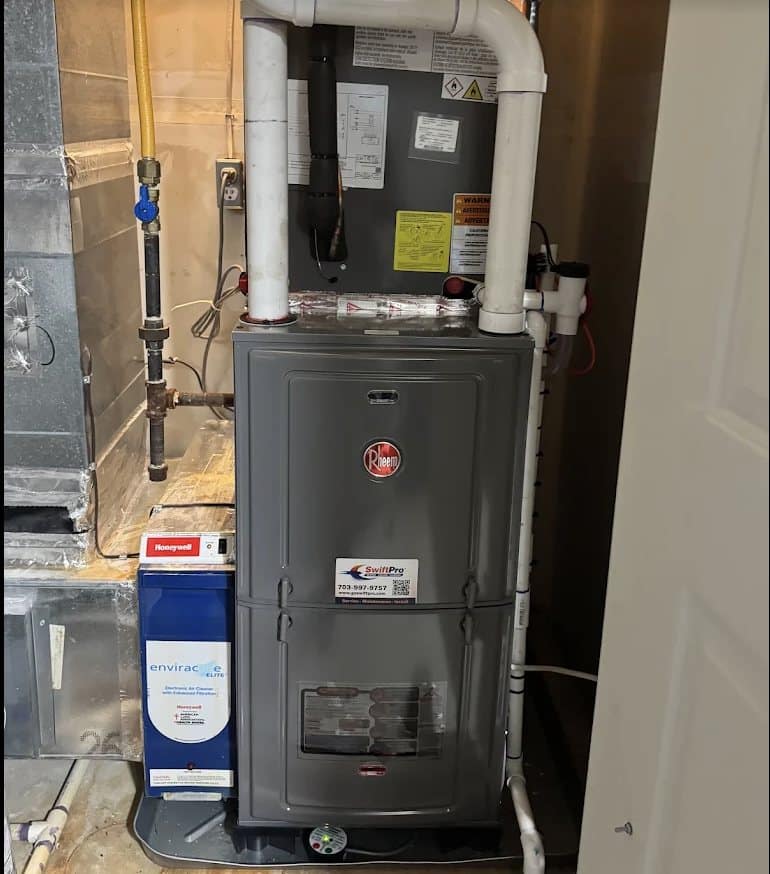
A high-efficiency furnace breathes through plastic pipes out a side wall, and snow is what to plan for. The January 2016 blizzard left an estimated 24 to 36 inches across northern Fauquier, and a drift over those pipe ends shuts the furnace off until somebody digs them out. On a new install the pipes go high enough to clear a drift where the wall allows, away from where snow comes off the roof.