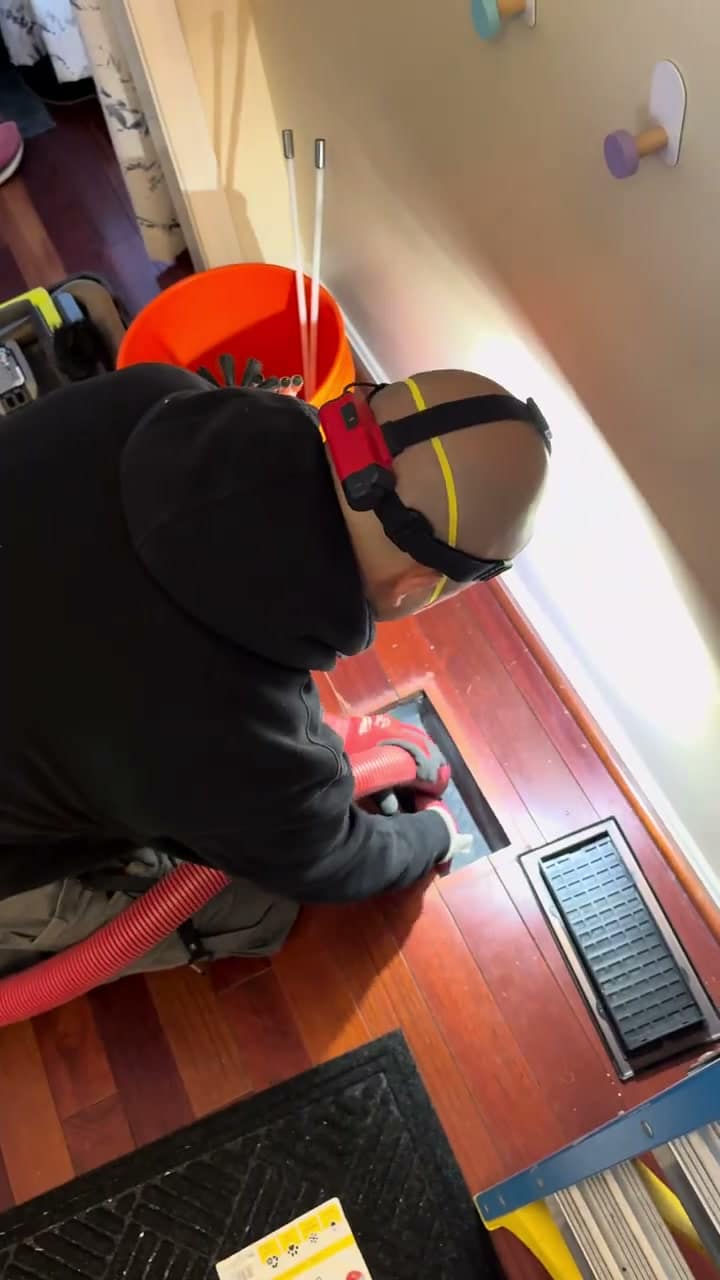
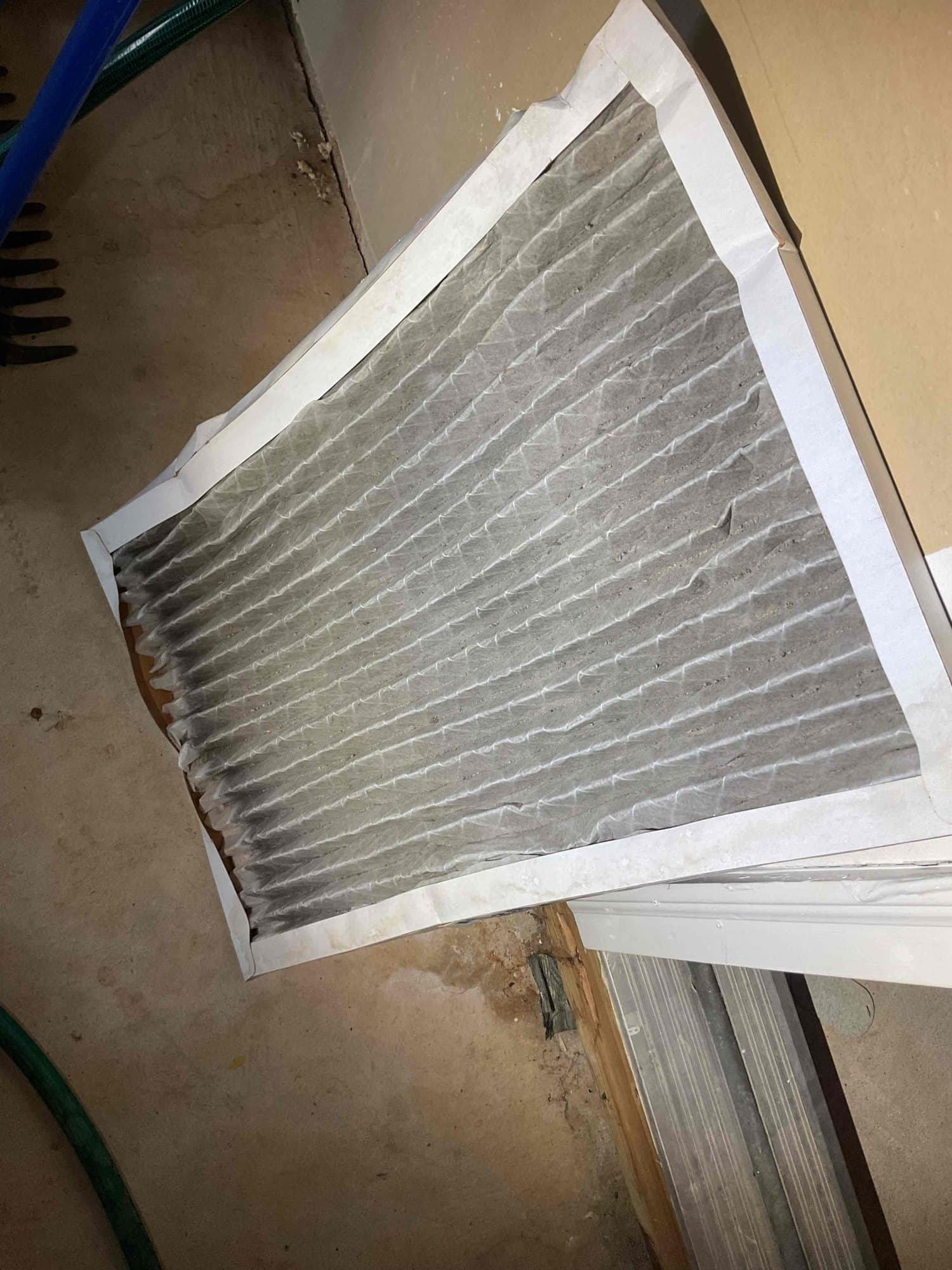
The state’s 2021 survey of the Upperville Historic District counts 136 principal buildings, and 40 of them were up before 1861, the oldest from about 1780. Houses that age were built around fireplaces, and forced air came generations later. Whoever put the ducts in worked around walls of stone, brick and sometimes log, so a run may jog past a chimney, drop through a closet floor or follow a beam across the cellar. With no builder’s drawing to go by, our tech traces each run and photographs it before anybody prices a thing.
The younger houses sit mostly on Parker and Patrick Streets: four small Minimal Traditional houses from about 1945 to 1955, thirteen ranch houses and three split-levels. A one-story house of that era without a basement usually runs its ducts in a crawlspace. Fauquier County’s village plan warns that soils in the drainageways feeding Panther Skin Creek flood or carry a high seasonal water table, and a crawlspace on wet ground stays damp. Sheet metal down there can rust at the seams and the insulation wrap can slump off, so those runs get photographed before a brush goes near them.
Natural gas plays no part here; the Census Bureau’s survey of 20184, rough for a ZIP this small, counts owners heating with electricity or propane. Electric heat is usually a heat pump, pushing the same air through the same ducts winter and summer. NOAA’s nearest long-record station, at Purcellville 14 miles northeast, averages about 4,940 heating degree days a year against about 1,050 cooling degree days. Heating is the long season, so the returns do most of their collecting between October and April, and a late spring cleaning finds them at their worst.
By the same rough count, most occupied homes in 20184 are rented. Either you or the owner can book, and the camera photos go to whoever is paying, so the owner sees what’s in the ducts before saying yes. The dryer vent cleaning on the same trip is $199.