About 9 in 10 homes in 22039 have four bedrooms or more, and a house that big is often served by two separate duct systems: sheet-metal trunks below for the lower floors, and flexible runs through the attic up to the bedrooms. The two wear differently, so we photograph and price them one at a time, and you can say yes to one and not the other.
The attic side runs through the hottest, dustiest space in the house, among insulation, roof dust and whatever drifts in through the soffits. A return joint that has come apart up there pulls attic air straight into the system, and the camera photos make a gap like that plain. That’s a repair to seal, priced separately, not something a cleaning fixes.
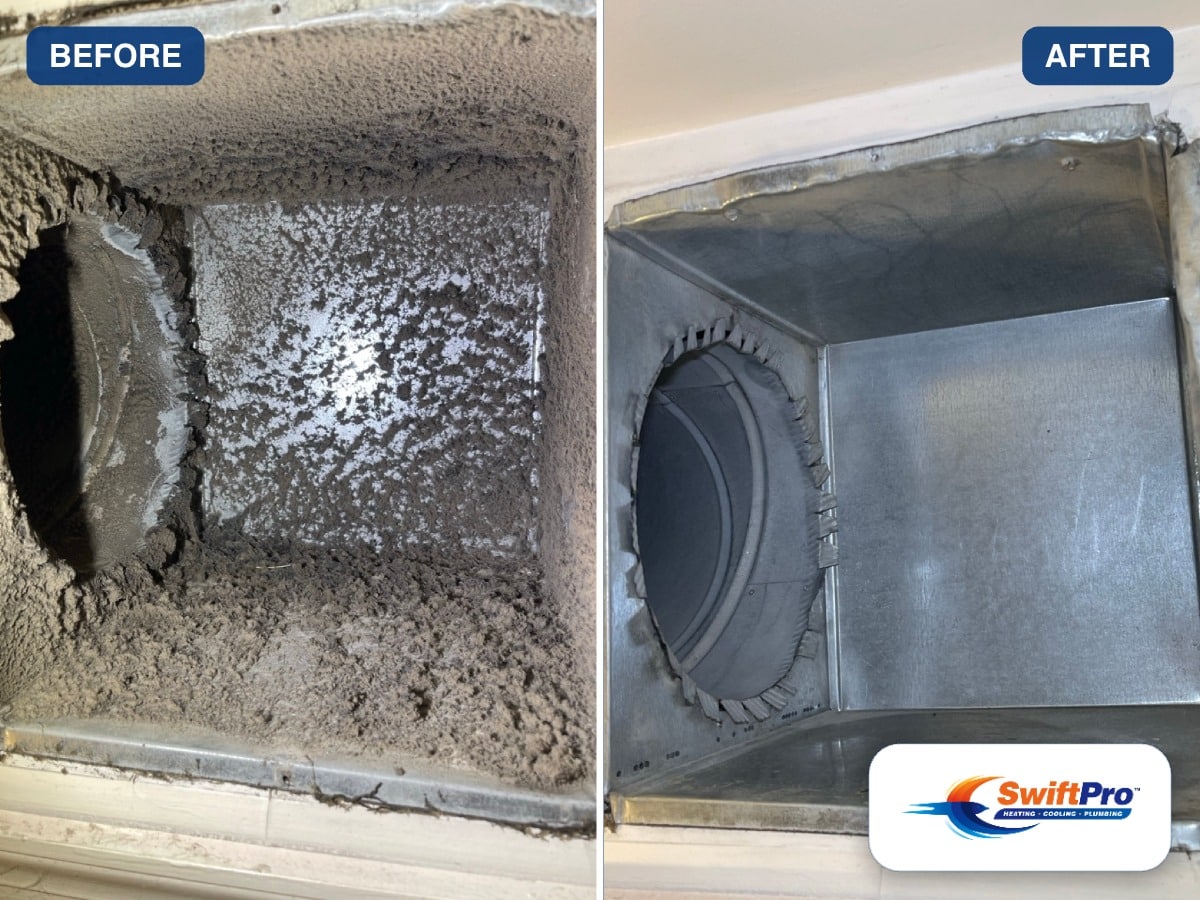
Most of these houses were built from 1980 to 1999, so the original trunks have moved air for 25 to 45 years; Crosspointe’s are the youngest, with a median house from 1993. Where a basement got finished later, drywall now covers the main trunk, and we reach it through the registers and return grilles instead. The camera photos show you the stretches you can’t see anymore.
About 1 in 20 owner homes here heat with oil, which in 22039 means a few hundred houses. An oil burner that puffs back, lighting late with a thump, sends soot through the blower and into the ducts, and that soot stays on the duct walls long after the burner is fixed. If yours has ever done it, mention it when you book; soot is easy to spot in the camera photos.