About one home in four across 20117 went up before 1940, and the Town’s 2016 survey of its Historic District dates around one building in five to before 1840. Houses that old were laid out to cool themselves, and the Town’s design guidelines still suggest using their window and door patterns for cross ventilation. Central air, where it came at all, came later through closets and an attic, and it usually falls short upstairs.
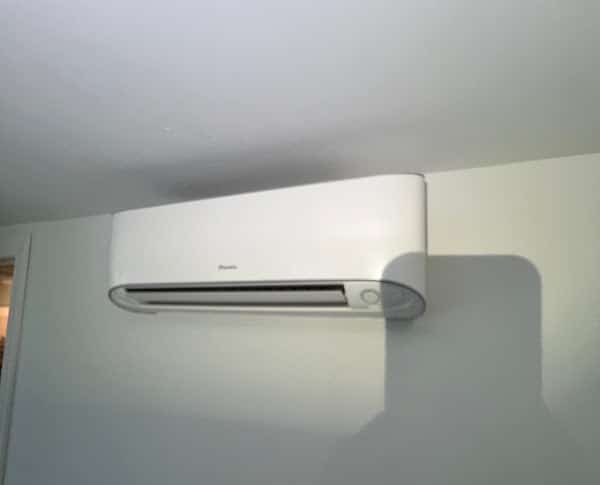
The guidelines are plain about the usual shortcuts. Window units are discouraged where they break up a facade, through-the-wall units are discouraged on historic buildings, and electrical conduit isn’t supposed to climb a historic facade. A mini split head needs one small hole through the wall behind it for its lines and drain, so the head sits inside the front room while everything outside runs down a back or side wall.
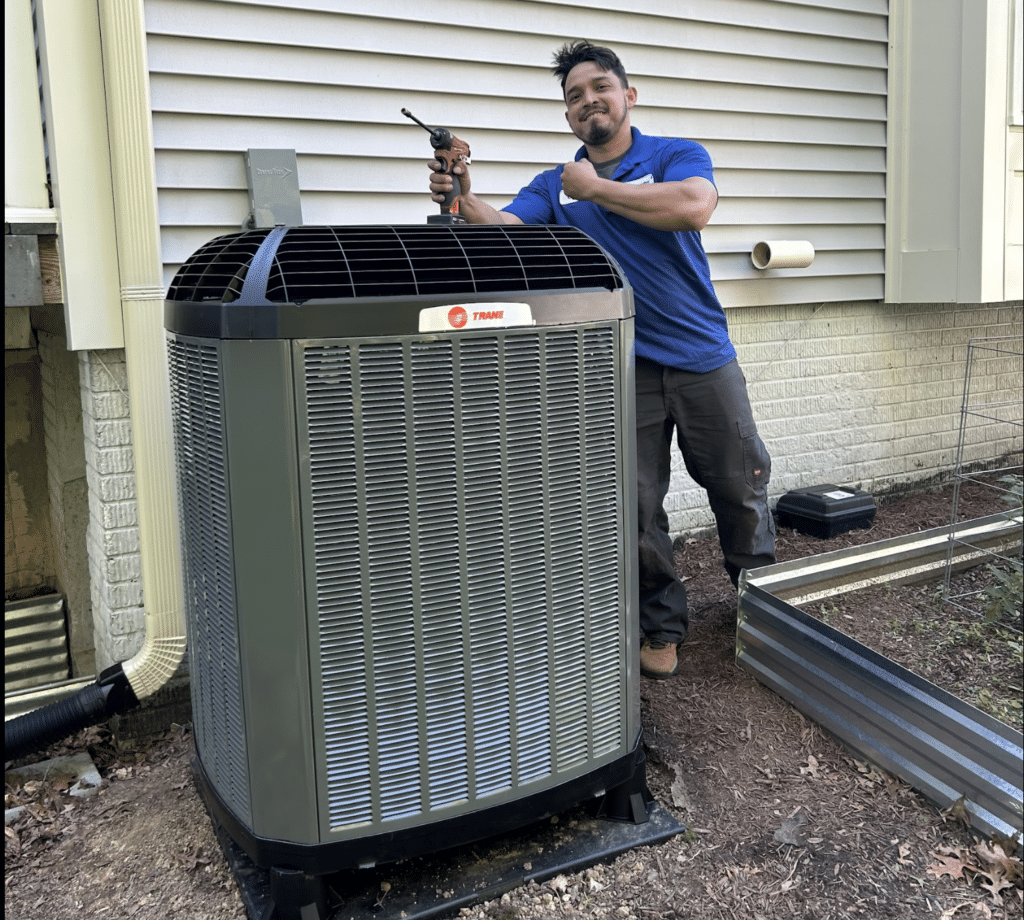
Where the outdoor unit lands is the Middleburg question. In the Historic District, equipment, pipes and vents a public street can see need a Certificate of Appropriateness, with scale drawings. A wall bracket around back keeps the unit out of view and up out of the snow: a spotter measured 34 inches in Middleburg in the January 2016 blizzard, and a buried outdoor unit can’t heat.
Out past the town limits, about 82 homes in 100 across 20117 are detached, and the room no duct reaches can be a wing added on or a separate building. A head heats as well as cools, so from the first freeze, around October 25 at the Purcellville station, a guest room or office can warm up without running the whole house.