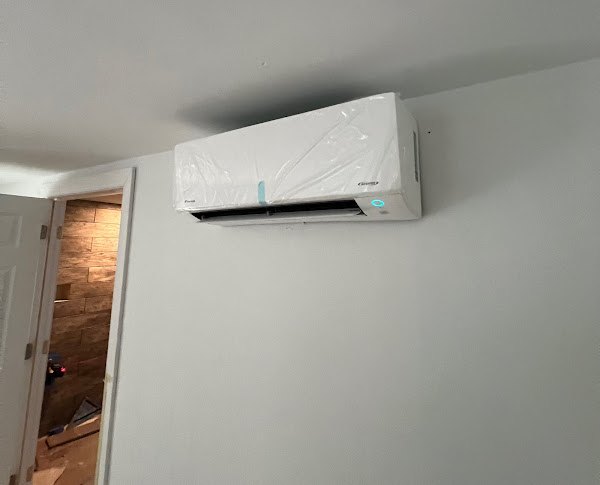
Midland’s village is older than almost anything around it. The County’s 2018 plan for the service district dates half or more of its surviving historic buildings to 1880 through 1910, most of them frame I-houses, two stories tall and a single room from front to back. A house built like that never planned for ductwork. A mini split skips it: a head high on an outside wall in each room, one small hole through the wall, and the lines run down the outside under a cover.
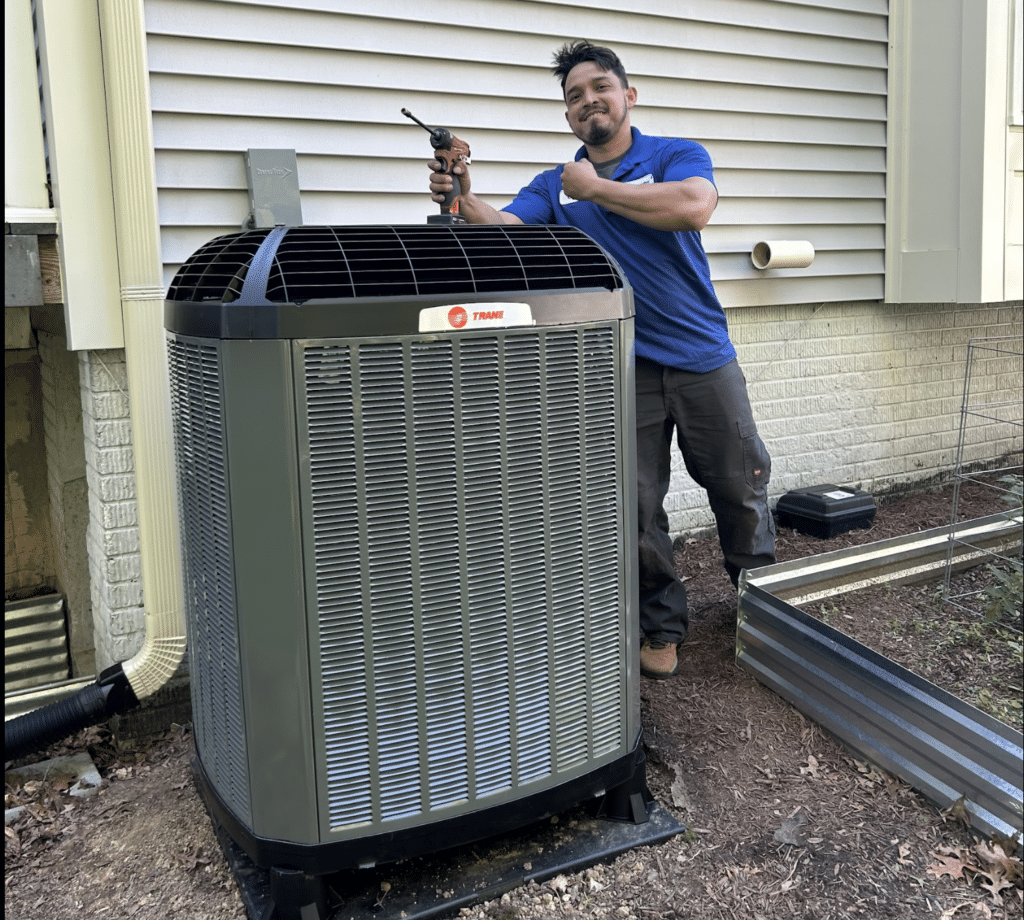
Most of 22728 is newer and spread out: almost every house stands on its own lot, about three in ten from the 1980s and 1990s and one in four since 2000. Land invites additions, a family room, a sunroom, a room over the garage, an office in an outbuilding, and none of those were on the duct plan. One head on its own outdoor unit takes care of the new room without asking the old system for anything.
A head here works both seasons. Warrenton 3 SE, the nearest NOAA normals station, puts the median first fall freeze on November 1 and the last spring freeze on April 9. So pick the outdoor unit for its heating output in the cold as much as its cooling, with Fauquier County’s 17 degree design morning as the yardstick.
The January 2016 blizzard dropped 30 inches at Opal, in the same forecast zone, and Warrenton 3 SE still had 25 inches on the ground days later. An outdoor unit buried in a drift can’t defrost, so it goes on a wall bracket or a tall stand, out of the roof’s drip line, and on a lot that drains toward Marsh Run or Licking Run, above any water you’ve seen stand there.