The Census counts every home in ZIP 20119 as a detached house, so each dryer vent line serves one household, dryer to hood. Its length mostly tracks the age of the house. About 180 homes here predate 1940, some in the old railroad village, put up long before clothes dryers were common. The laundry came later, in a cellar, a mudroom or a closed-in back porch, and the run out through the wall is often only a few feet.
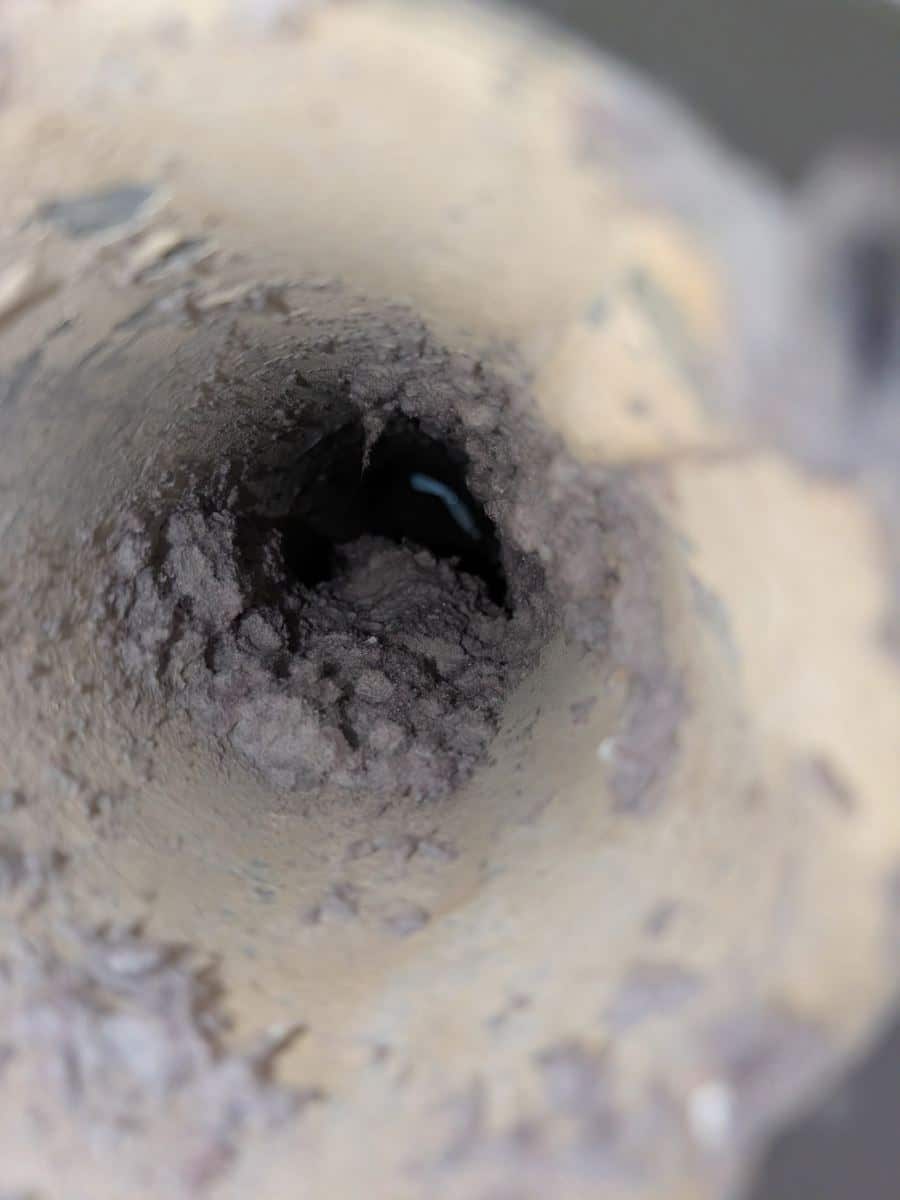
The 1990s and 2000s houses, about 470 of them, more often put the laundry room near the kitchen or upstairs by the bedrooms. From there the dryer vent line has to cross the floor framing to an outside wall, sometimes across most of the house, or rise through the attic to the roof. Lint catches at each bend, out where no one ever looks.
Then the outside end. In the January 2016 storm, the co-op gauge near Warrenton, seven miles west-northwest, measured a 20.5 inch snowfall on the 23rd alone and a snowpack of 25 inches by the 26th, plenty to bury a low hood. Quarter-size hail fell in Catlett on April 15, 2024, and on August 13, 2021 gusts estimated at 75 mph brought down trees along Old Dumfries Road, two miles northwest of the village. Plastic hood flaps can crack or stick after weather like that, and one stuck closed holds lint as surely as a clogged line.
Propane heats 301 of the ZIP’s 1,040 owner homes, and some of those houses run a propane dryer too, so combustion exhaust shares the dryer vent line with the lint. If yours burns fuel and no carbon monoxide alarm is in the house, Fauquier County’s fire and rescue department accepts alarm requests through an online form.