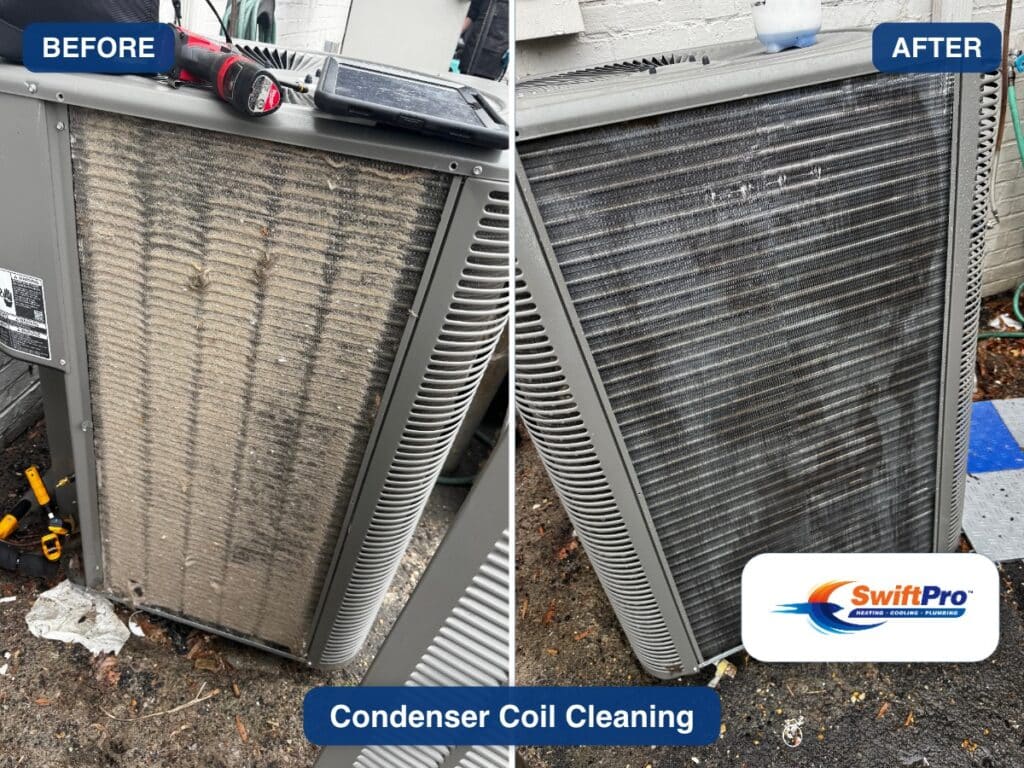
NOAA’s climate station for this stretch of the Rappahannock sits on the river at 60 feet, 5.2 miles south-southeast of the middle of 22405 and 22406. Averaged from 1991 to 2020, July tops out at 88.5 degrees there, roughly 41 afternoons a year reach 90, and July nights only cool to about 68. With little rest after sunset, spring is the time to catch a dirty coil or a pitted contactor.
Out Warrenton Road, 22406 is the builder-era ZIP: the Census counts 2,747 of its owner homes built between 2000 and 2009. A condenser set with one of those houses is nearing its twentieth summer, and anything built before 2010 probably holds R-22, which the EPA kept out of new equipment from 2010 and whose production and import ended in 2020. On a unit like that, low refrigerant means a leak to find, not a top-off.
22405 is older and leans electric: 5,243 owner homes, about half, heat electrically, and in most of those that means one outdoor unit cooling in July and heating in January. Around Falmouth about half the houses predate 1980, so the heat pump there is often the second or third, pushing air through ducts sized for whatever came first. The tech checks the airflow at the air handler before calling the outdoor side done.
Summer storms hit this side of the river hard. NOAA’s storm records log an April 2013 thunderstorm that tore the second floor off a house near Forbes Street and Falmouth Drive, a 70 mph gust at Route 17 and Poplar Road in the 2012 derecho, and an August 2024 tornado near Glendie. Afterward, walk out to the condenser before the cooling goes back on: branches in the grille, fins mashed flat, the unit knocked crooked on its pad. If something’s off, keep it off and have us out to check the whole system.