Lorton’s two ends were built a generation apart, and planning had a hand in it. When the old prison land was replanned in the late 1990s, about 250 acres of it were set aside to take the development rights off an 800-acre Mason Neck property, and the county’s plan calls Mason Neck largely rural: parkland, marsh, upland forest and scattered homes. The median Laurel Hill house went up in 2002, the median Mason Neck house in 1973.
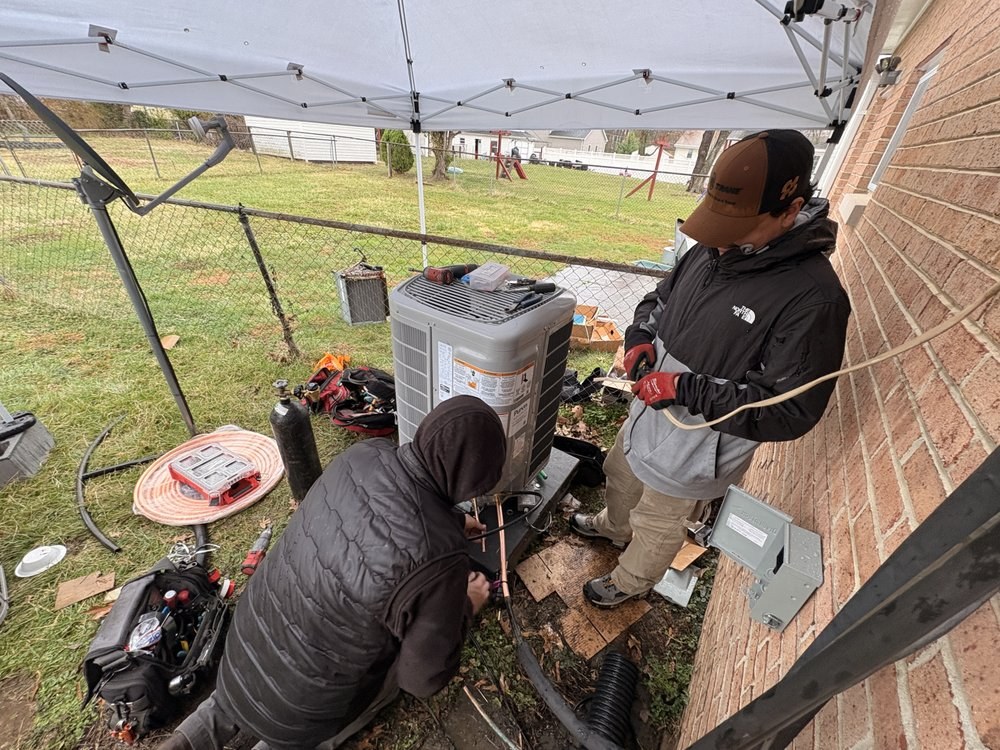
In Laurel Hill close to 85 percent of owners heat with gas, so the cooling is a split system: a condenser on a pad outside, and an evaporator coil perched on top of the furnace, borrowing its blower. A tune-up there works both halves: the condenser coil and fan outside, the indoor coil, the blower and the drain line that carries off the water the coil wrings out of July air. With the furnace in a basement, that drain often ends at a small condensate pump.
Mason Neck is the other end. Every home in its Census place is a single-family house, and close to two owners in three heat with electricity, which usually means a heat pump. Its outdoor unit never gets a season off: it heats from November into March, then cools from May on. On a lot with trees around it, the coil catches whatever comes down, leaves and seed pods packed into the fins, and rinsing that out is the most useful thing the spring visit does.
The Lorton Census place in between is the mixed one: about a third townhouses, a quarter condos and apartments, and more than a third of its homes rented. If you rent yours out, the written findings are the next best thing to seeing the system yourself: the filter the tenant did or didn’t change, the state of the coil, and the price of anything that needs fixing, before anybody touches it.