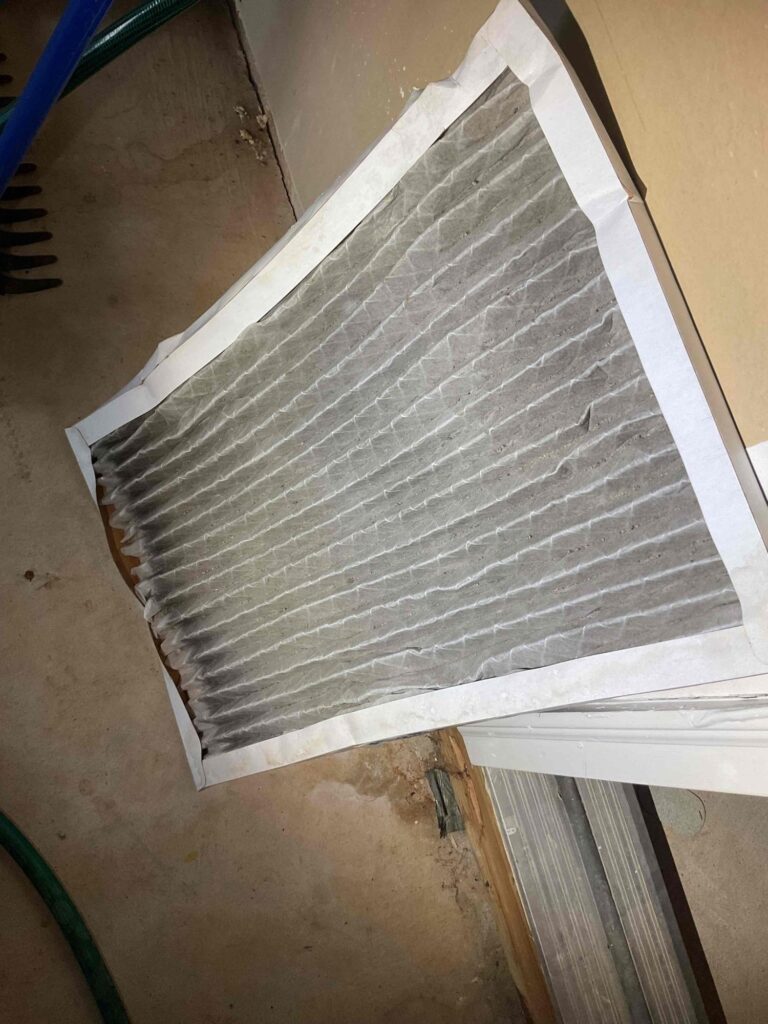
A third of Arlington’s homes went up before 1960, and the median owner’s house dates from 1960 itself. A Maywood four-square or Cape Cod, or a 1930s house in Ashton Heights, was built long before anyone planned for cooling ducts, so when cooling came, the air handler for the upstairs often went wherever it fit: the attic, or the crawl space behind a knee wall. Up there it spends July in the hottest air in the house.
That’s where an older Arlington house’s tune-up spends its time. The coil makes water every hour it cools, and the line carrying that water off runs through attic heat that grows a slime inside it. We clean that line on every visit, and in an attic it’s what keeps the bedroom ceiling under the pan dry.
Fairlington is a different machine. Its 3,449 garden apartments and townhouses went up from 1942 to 1944 with no central air, and heat pumps came in when the units were sold as condos in the 1970s. A heat pump’s outdoor unit never gets the winter off. By the time a Fairlington owner books the spring visit, it has already put in a season of heating, often with last fall’s leaves still caught in its fins.
More than half of Arlington’s homes are in buildings of ten units or more, and in the high-rises of Rosslyn, Courthouse and Crystal City a unit’s cooling is often a fan coil or a water-source heat pump in a closet, on a water loop the building runs. There may be no outdoor unit of yours anywhere, and a water-source heat pump is still a heat pump: its tune-up is $99 a system like any other. The tune-up there is all indoors: the coil, the blower, and the pan catching the coil’s water one floor above somebody’s living room.