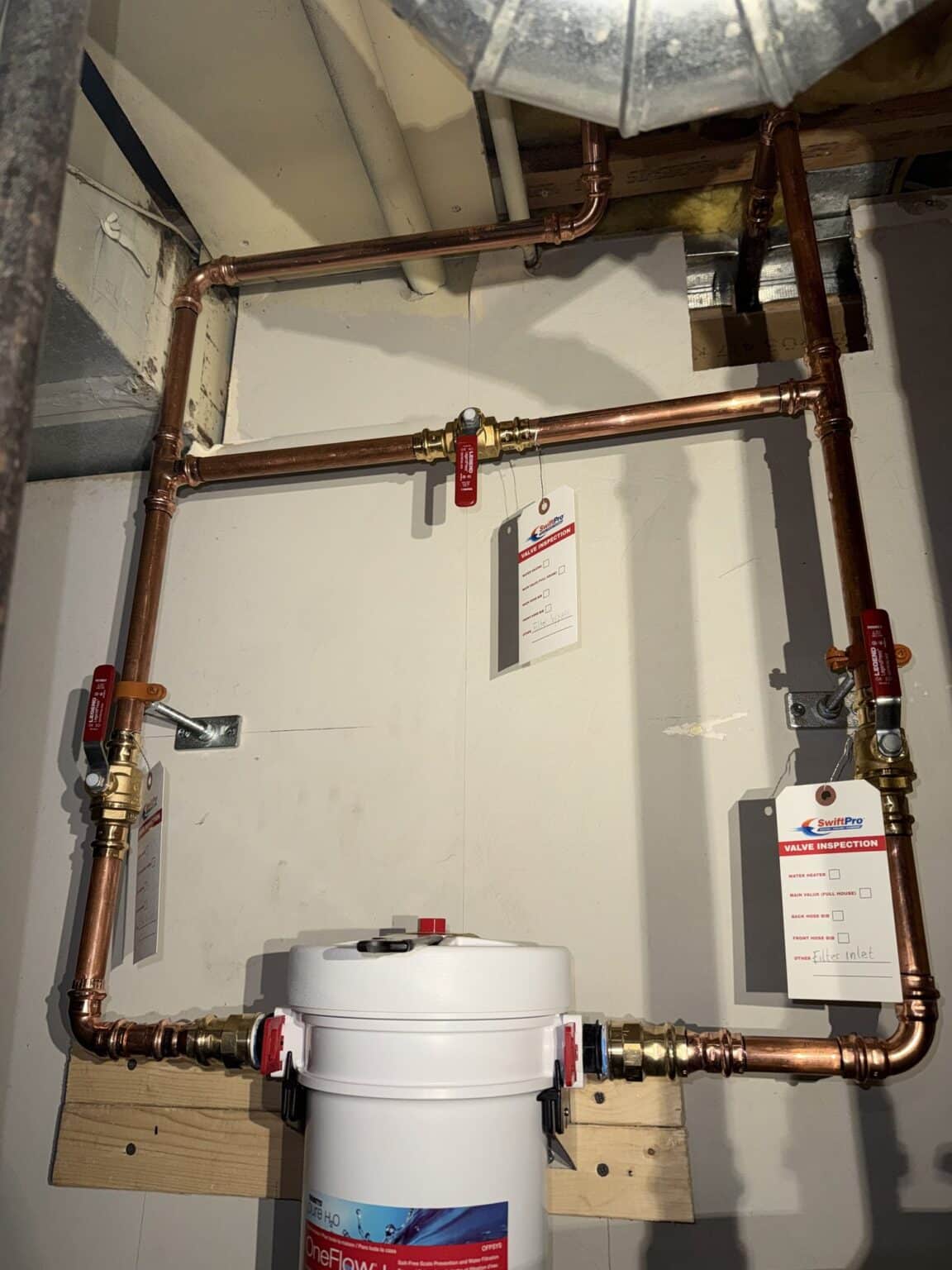
Inside the town limits, the water comes from four Town wells, filtered for iron and manganese and chlorinated, and the Town’s plan says a 125 foot elevated tank holding 75,000 gallons gives it pressure. That’s why a house in Keena or Heritage Highlands never thinks about a pump. Out past the limits, down Milltown Road or Rodeffer Road, the pressure comes from a tank in your basement and the pump that keeps it full, and when either one gives out, the faucets go quiet.
There’s a lot of that out there. Loudoun’s well records count 1,381 active household wells within three miles of the town center, with a median recorded depth of 350 feet, right on the county’s median. Even the Town doesn’t run every well it has: its plan lists six, with four in use and two mothballed in 2012.
The Census numbers on this page describe the Town itself, where 61 percent of owner homes went up after 2000 and nearly all of them draw Town water. The wells belong to the houses around it, old farmhouses on the roads out of town and newer houses on lots of their own. Loudoun’s records show why the age of a well matters: the county median for 1980s wells is about 300 feet, and for wells drilled in the 2020s about 460. When you call, tell us about when the house was built and, if you know it, how deep the well goes.
Dry spells hit a private well differently. In January 2026, with Loudoun under a state drought warning, the Town asked everyone to use water wisely. On your own well, a long dry stretch can mean the pump runs longer to keep up, and a well that’s slow to refill can draw down close to the pump. Newer pumps with dry-run protection, like Grundfos’s SQE, shut themselves off instead of burning up. An older pump may just quit. Either way we test it from the house before anything comes out of the ground.