An Amissville address covers a lot more ground than the village. Of the homes with 20106 mail, about half sit in Culpeper County and about four in ten in Rappahannock County, where the village itself is; only a handful are in Fauquier. The Census counts 99 in 100 of the owner homes as detached houses, and on lots like these a pressure tank in the basement is how water usually arrives. The rock mapped under the village is granite gneiss, hard crystalline stone of the sort the USGS describes under northwest Fauquier, where a well finds its water in cracks.
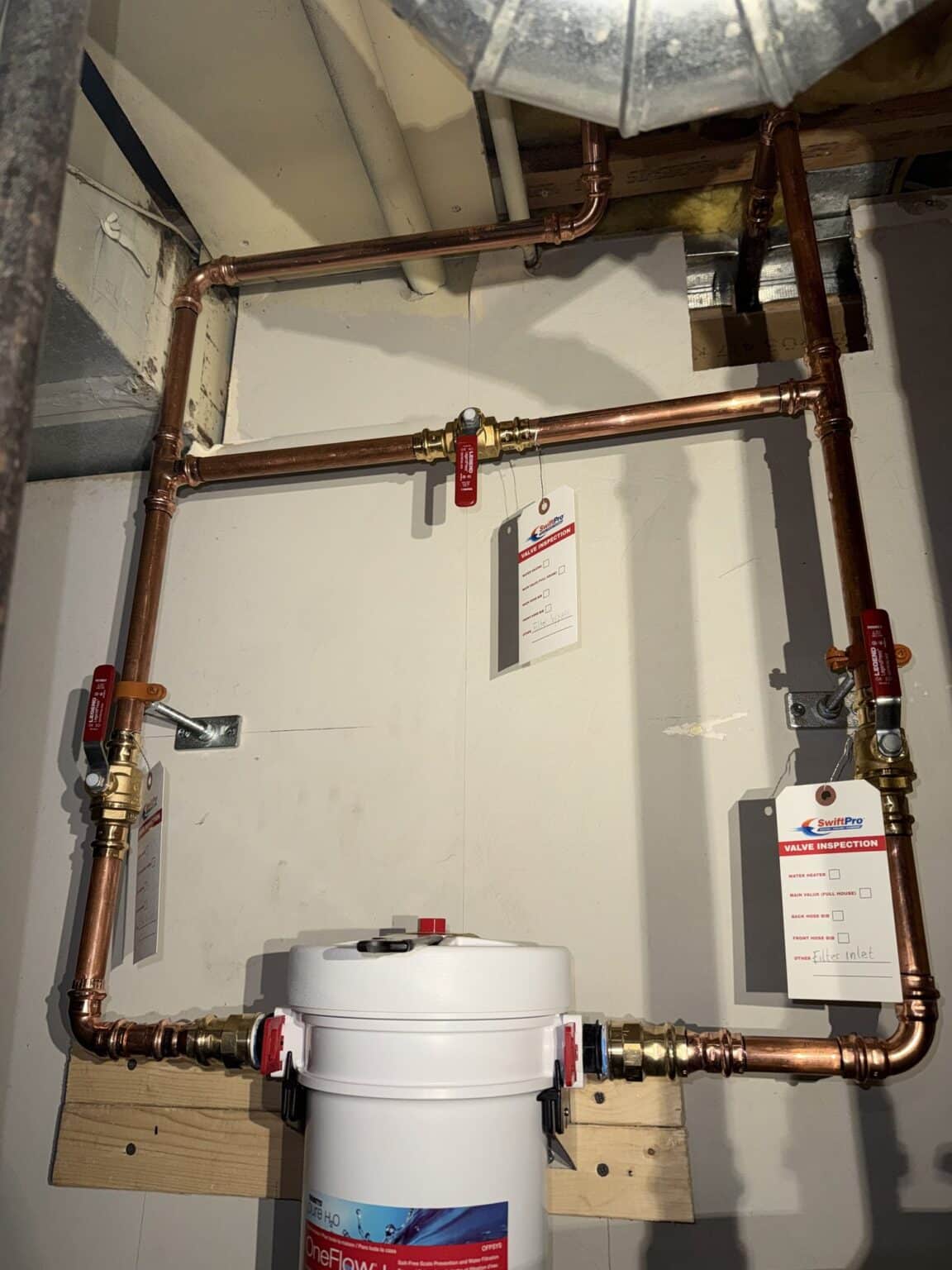
Virginia Cooperative Extension has sampled wells on both of the big sides. In Rappahannock County it tested 72 between 2010 and 2017, from 40 to 590 feet deep and 5 to 55 years old. In Culpeper County it tested 127 between 2008 and 2017, with wells reaching 700 feet. Both reports rank the same thing first: low pH, which showed up under 6.5 in 38 percent of the Culpeper samples. Extension’s point is that acidic water is corrosive to brass and copper, and a well system keeps most of its brass in a cluster right at the pressure tank.
That spread in depth matters more than the county line. A pump in a 40 foot well and one in a 590 foot well do the same job, but the deep one comes up with hundreds of feet of wire and pipe, and a nick or a bad splice anywhere along that wire can look exactly like a dead motor. So we test the wire from the surface before anything comes up, and a deep Amissville well can land on the $4,900 to $6,500 row rather than plain $2,781 to $4,000.
The houses add their own layer. The median owner home in 20106 dates from 1993, about three in ten have gone up since 2000, and roughly one in eight predates 1960. A 1990s build has likely had its pressure tank swapped already and may be due again. An older farmhouse has usually seen its pump and tank changed more than once, and the owner may not know what’s hanging down the well. The first thing we ask when we walk in is what’s original and what isn’t.