
Written October 2026, with EIA’s weekly Virginia price, the Washington Gas, Dominion and NOVEC rate sheets and Virginia’s tank law read the same week.
Heating oil in Virginia averaged $6.003 a gallon in the week of October 19, before tax, by the U.S. Energy Information Administration’s weekly state survey. The same week last year it was $3.627. EIA’s winter outlook puts the average U.S. home heated with oil at 443 gallons last winter, and at this week’s price that many gallons comes to $2,659. Most of those homes are in the colder Northeast, so for a Northern Virginia house the real number is on your own delivery tickets: add up last winter’s gallons and multiply.
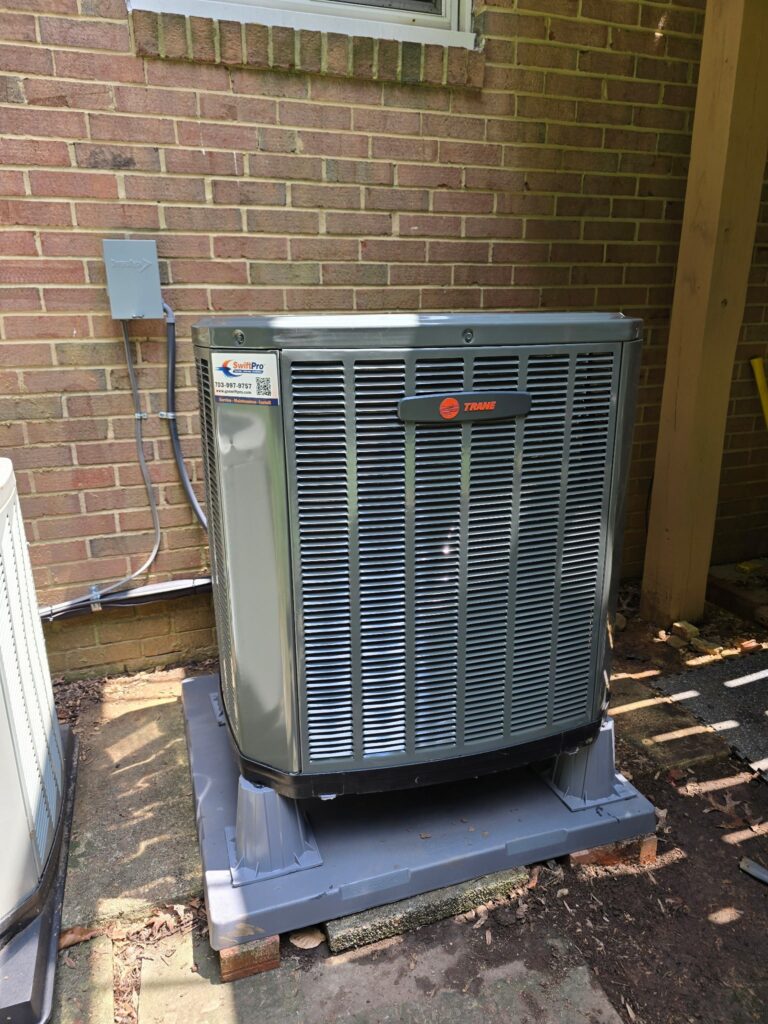
If you’re weighing a way off oil, the most common switch is a heat pump, because the ducts an oil furnace uses can usually carry one. Ours runs $8,499 to $21,650 installed, the outdoor unit and the indoor air handler. From about $142 a month at 0% APR for 60 months, the whole price financed, on approved credit. It’s priced and booked on our heat pump replacement page, and the gas, propane, boiler and ductless options are on HVAC replacement. Whether a switch makes sense for your house is the cost table below.
Why heating oil prices jumped, and why everyone checks in October
Heating oil and diesel are close relatives, both distillates, and heating oil’s price generally follows crude oil. Over the ten winters ending in 2022, crude was 48 percent of a gallon’s price, distribution and marketing about 37 and refining 15 (EIA’s breakdown). Then there’s the season: even with crude steady, EIA says heating oil tends to rise from October through March, when demand peaks.
This year crude and distillate both pushed up. Virginia’s weekly price stayed between $3.61 and $3.75 from last October through February, then ran from $3.88 on March 2 to $5.28 on March 30, and this season opened at $5.948. EIA’s October outlook expects homes heating mainly with oil to spend 21 percent more this winter, driven by “increasing global crude oil and distillate prices,” and its weekly petroleum report had distillate stocks 9 percent below the five-year average in mid-October.
Why everyone checks in October: it’s when the heating season starts. EIA only collects these prices from October through March, and October is when the first fill of the winter gets priced.
Heating oil vs gas, propane and a heat pump: what a million Btu costs
To compare fuels you price the heat, not the gallon. A gallon of heating oil holds 138,500 Btu, a gallon of propane 91,452, a therm of natural gas 100,000 and a kilowatt-hour 3,412 (EIA’s conversion factors). Multiply by how much of that the equipment delivers into the house, divide it into the price, and you have the cost of a million Btu of heat. Here it is at this month’s rates, beside what the heat in 100 gallons of oil would cost from each.
| Heat | Per million Btu | Same heat as 100 gallons of oil |
|---|---|---|
| Heating oil, furnace or boiler $6.003 a gallon, 83% AFUE |
$52.22 | $600 |
| Propane furnace $3.760 a gallon, 95% AFUE |
$43.28 | $498 |
| Natural gas furnace, Washington Gas $1.41 a therm, 95% AFUE |
$14.83 | $171 |
| Heat pump at 47°F, Dominion 16.15¢ a kWh, COP 3.1 |
$15.27 | $175 |
| Heat pump at 17°F, Dominion 16.15¢ a kWh, COP 2.55 |
$18.56 | $213 |
| Heat pump at 5°F, Dominion 16.15¢ a kWh, COP 2.1 |
$22.54 | $259 |
| Electric heat strips, Dominion 16.15¢ a kWh, COP 1 |
$47.32 | $544 |
| Heat pump at 17°F, NOVEC 12.56¢ a kWh, COP 2.55 |
$14.43 | $166 |
Prices: EIA’s Virginia averages for the week of October 19, before tax; Washington Gas’s October rate sheet, $1.41 a therm with riders and tax; Dominion’s Schedule 1 winter rate past 800 kWh, 16.15 cents all in; NOVEC’s rate with its power cost adjustment, 12.56 cents.
Oil gets 83 percent, the federal minimum for an oil furnace built since May 2013. An oil boiler built since 2021 must reach 86, and an oil furnace built before May 2013 only had to reach 78, so an older burner does worse than the table. Gas and propane get 95 percent, a condensing furnace. The heat pump is a Trane 20 variable speed at its rated points on the NEEP cold climate list: a coefficient of performance (COP) of 3.1 at 47 degrees, 2.55 at 17 and 2.1 at 5, the units of heat it moves for each unit of electricity. Heat strips, the backup in the air handler, are one for one.
Read it this way. Where gas runs down your street, gas is hard to beat. A heat pump on Dominion’s rate comes in well under oil at every temperature here, and oil would have to drop below $2.13 a gallon to match it at 17 degrees. Even strip heat costs less than oil while oil sits above $5.44. Propane lands closer to oil than to gas. None of it is a promise about your bill: insulation, the system’s size and model, the winter and your utility all move it. Where gas and a heat pump cross over is in our dual fuel guide, and running costs side by side are in heat pump vs. gas furnace.
The system we put in first
Built to take a beating. Put in by our crew.
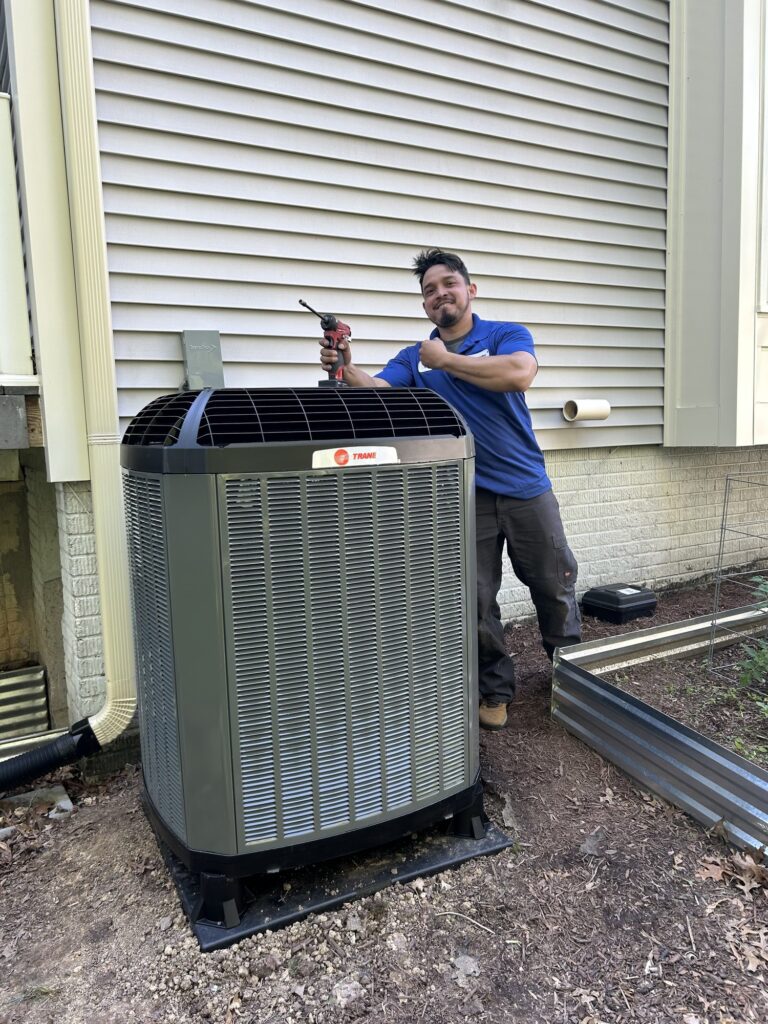
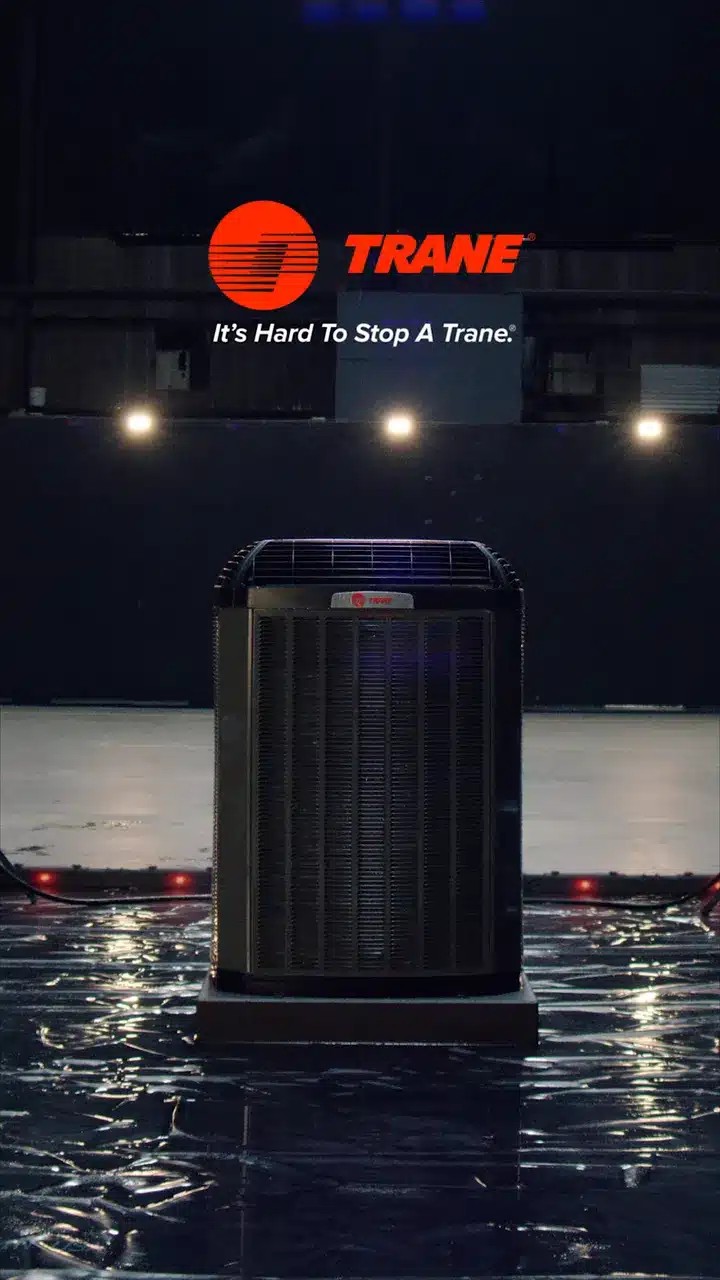
Heat lamps, snow and rain on one outdoor unit: that’s Trane’s own film. We’re a Trane Comfort Specialist, on Trane’s own dealer locator, and when you pick a Trane, our crew puts it in.
Films: Trane’s own.

Living with heating oil: deliveries, running out and the warning signs
Oil is a small share of Northern Virginia and a big one in a few places. The Census Bureau’s 2020 to 2024 survey counts 1.2 percent of Fairfax County homes heating mainly with oil, 1.5 in Loudoun and Prince William, 1.0 in Arlington and 6.5 in Fauquier, and about 8.6 percent in Purcellville, 5.5 in Great Falls and 4.1 in Warrenton (small samples, wide margins). Our Clifton, Great Falls and Marshall guides cover heating out there.
Deliveries. On automatic delivery the dealer tracks the weather and your usage and fills the tank before it runs low; on will-call you watch the gauge and phone in an order. Many dealers also sell a budget plan that spreads the winter over equal payments, or a price locked or capped for the season. Connecticut’s consumer protection office sums up the trade-off: pre-buy contracts “can be risky as you don’t know if the price will drop,” and a cap “may be less risky than pre-buys.”
Keep every ticket. They tell you what a winter really costs, and they’re how you’d catch a leak: Virginia’s DEQ says on its homeowner page that a tank running out faster than usual “could be a sign that your tank has developed a leak.”
Running out. Try not to. Beckett, a major oil burner maker, explains that sludge settles in older tanks, and “if sludge enters the oil distribution system, it can collect and plug the fuel unit, the nozzle line, or the nozzle.” A dry tank can also pull air into the line, which is why a run-out can end in a service call, not just a fill.
The warning signs. Smoke or soot around the burner, a thump when it lights, or a strong oil smell is a service call, not a wait-and-see. Beckett’s burner manual lists “hot gas puff-back,” heavy smoke and soot among the hazards of a burner that isn’t set up right, says not to restart one when excess oil has built up in it, and calls for a qualified technician every year. Turn it off at its switch and call. Smoke in the house means everyone out and 911.
Like any fuel-burning heat, an oil burner belongs in a house with working carbon monoxide alarms. CPSC’s advice: have a professional inspect every fuel-burning heating system every year, put CO alarms in the hallways near the bedrooms, and check the batteries monthly.
We don’t work on oil burners. For a no-heat call, a tune-up or any warning sign above, call an oil service company, often your fuel dealer’s service department. Where we come in is the day you decide to stop buying oil.
Your heating oil tank: what Virginia regulates, and what it doesn’t
A tank holding heating oil for the house it heats sits outside Virginia’s underground tank rules, buried or on the basement floor: the state code exempts “tanks used for storing heating oil for consumption on the premises where stored.” Aboveground tanks of 660 gallons or less fall outside the aboveground tank rules too. Fairfax County’s fuel tank page puts it in DEQ’s words: “Most heating oil tanks are regulated by the local building official rather than DEQ. Heating oil leaks, however, are regulated by DEQ and must be reported to DEQ right away.”
A leak. The owner reports it, and the state law on oil discharges says to do it “immediately upon learning of the discharge.” Fairfax, Loudoun, Prince William, Arlington and Fauquier are all covered by DEQ’s Northern Regional Office in Woodbridge. Report first, then dig: DEQ says cleanup done more than 24 hours before the report may not be reimbursed.
That reimbursement is the Virginia Petroleum Storage Tank Fund. For a home heating oil tank, the statute has it paying reasonable cleanup costs above the first $500, up to $1 million per leak. The catches, per DEQ: the work must be pre-approved, the fund doesn’t pay to remove, repair or replace the tank, and it doesn’t pay what homeowner’s insurance covers. DEQ tells owners to hire an environmental consultant for the cleanup.
A tank you stop using. DEQ says the statewide building code requires closing it: removing it, or filling it with a solid, inert material, with the supply lines capped so nobody delivers into it. The counties run the permits:
- Fairfax County lists a Fire Prevention permit and inspection to abandon or remove a home fuel oil tank (aboveground tanks of 60 gallons or less excepted), and a call to the Health Department first if the property is on a well or septic with a buried tank or an aboveground one of 500 gallons or more.
- Loudoun County‘s fire marshal issues a storage tank removal permit, and its form considers closing a tank in place only where digging it out would damage the structure.
- Prince William County requires a closure permit for removal or abandonment in place, and may not allow closing in place if the tank is suspected or known to leak.
We don’t do tank work. A tank removal contractor does the closure under the county’s permit, and an environmental consultant handles soil testing and any cleanup.
Selling or buying. We couldn’t find a Virginia law requiring a tank sweep at sale, and the state’s disclosure statute doesn’t mention tanks. Sweeps and soil samples happen because buyers, lenders and insurers ask; DEQ notes banks and insurers may put conditions on a loan or a policy when a buried tank is there.
Switching off heating oil: what your house can switch to
Start with what moves the heat around your house now, because that mostly decides it.
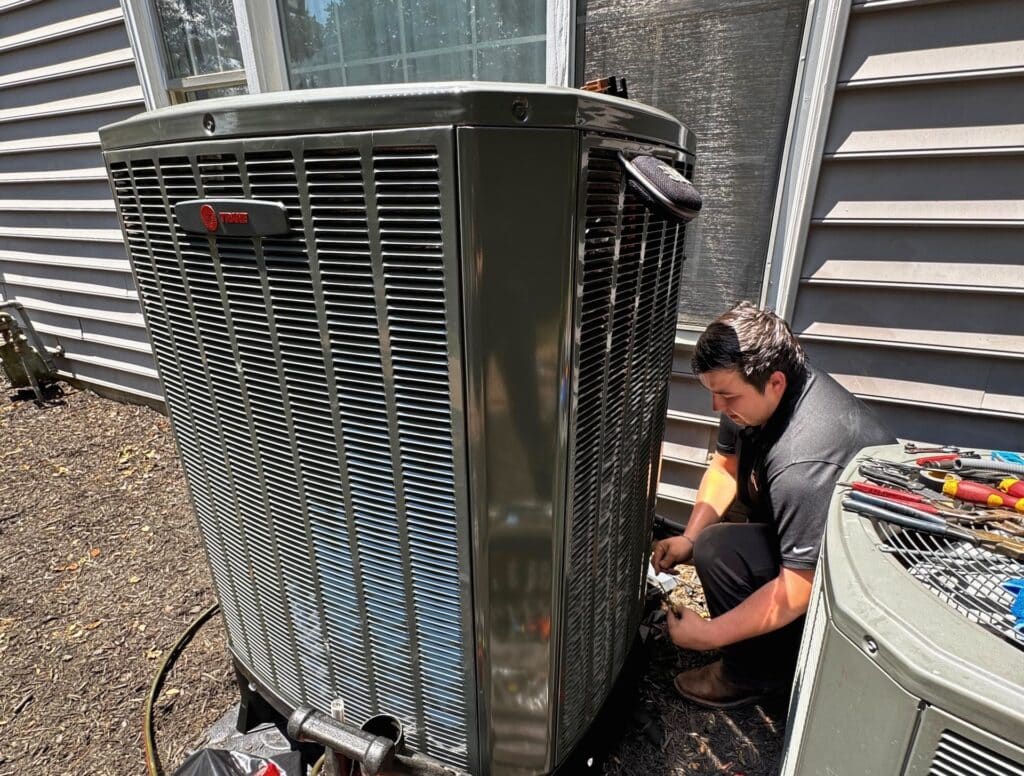
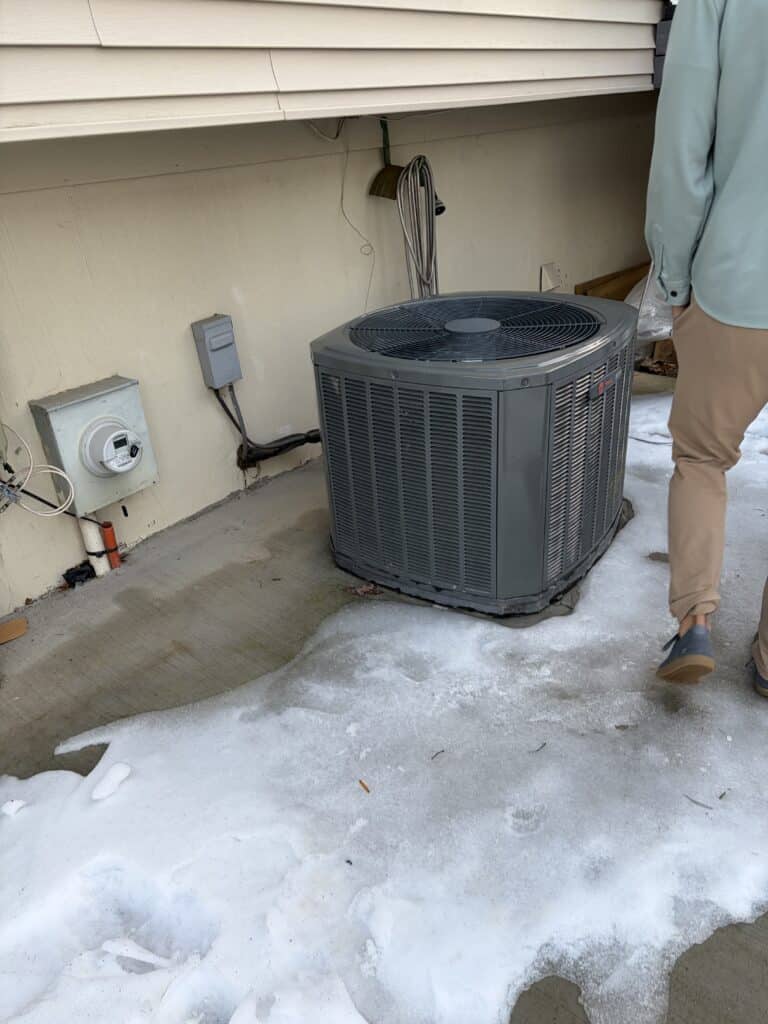
Ducts and vents (an oil furnace). A heat pump is the common switch: an outdoor unit that heats and cools, and an air handler where the oil furnace stood, on the ducts you already have. Ours runs $8,499 to $21,650 installed. From about $142 a month at 0% APR for 60 months, the whole price financed, on approved credit. A house that has always heated with oil needs room in the electrical panel for the heat pump and its backup strips, so checking the panel is part of the estimate. If gas or propane can come in, dual fuel pairs the heat pump with a furnace that takes the coldest hours, priced at your house. A gas or propane furnace on its own runs $4,285 to $14,040 installed. From about $71 a month at 0% APR for 60 months, the whole price financed, on approved credit. Book either on heat pump replacement or furnace replacement.
Radiators or baseboard (an oil boiler). The pipes and radiators stay. Where gas or propane can come in, a gas or propane hot water boiler takes the oil boiler’s place, and ours run $9,900 to $16,500 installed. From about $165 a month at 0% APR for 60 months, the whole price financed, on approved credit. A high-efficiency condensing boiler vents out the wall in plastic pipe, not up the chimney the oil burner used. If gas isn’t an option, or you want cooling too, ductless mini splits heat room by room with no ducts at all: $7,000 to $10,000 for one zone. From about $117 a month at 0% APR for 60 months, the whole price financed, on approved credit. Two to six zones run $11,000 to $30,000. From about $183 a month at 0% APR for 60 months, the whole price financed, on approved credit. Some radiator houses put ductless in the rooms they live in and keep the boiler for the coldest days; if that boiler burns oil, it stays your oil company’s to service. See our boiler page and ductless mini splits.
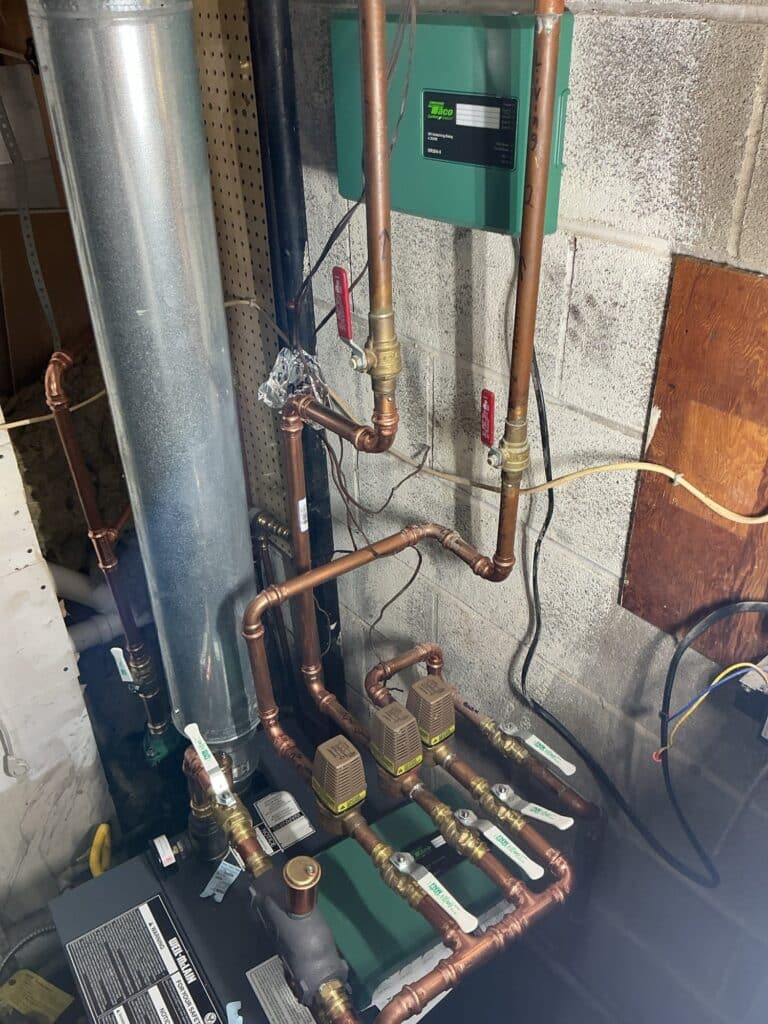
Getting gas to the house. If a Washington Gas main runs near you, the utility brings in the line and the meter. Its conversion page says the process can take up to six months, asks for the request six months ahead, and says Washington Gas sets the cost of the underground line and meter. Past the meter the piping is the homeowner’s, and running it to the furnace or boiler is ours (who owns which gas pipe). Where no main reaches, propane does the same job from a tank a propane supplier sets.
Your hot water. If it comes off the oil boiler (some heat the house’s water with a coil inside) or from an oil-fired water heater, switching means a new water heater too. We install gas, propane and electric, tank and tankless: water heater prices.
The tank. Once nothing burns oil it has to be closed, so schedule the tank contractor after the new system runs, never before. The HVAC estimator and the boiler estimator show an installed range for your house, and our heating installation guide walks through each install.
Rebates for switching off heating oil, checked this month
Fewer than you’d hope, so here is each one straight.
- Dominion Energy. Its home energy program pays toward heat pump upgrades, but its measures chart says “Fuel switching is not permitted within the rebate program,” and the old-equipment list on its heat pump application has no oil furnace or boiler. As written, an oil-to-heat-pump switch doesn’t qualify.
- Washington Gas. It pays back $500 on a new furnace rated 95.1 to 96.9 percent AFUE and $700 at 97 percent and up, for its Virginia residential customers, through a contractor in its network, paperwork due within 30 days of the install. We’re in Washington Gas’s contractor network for furnaces. Homes on Columbia Gas, parts of Chantilly and Herndon among them, don’t qualify. Its terms say nothing either way about a house converting from oil, so we’d confirm with Washington Gas before counting on it.
- The federal tax credit is gone for anything installed in 2026. The IRS says the 25C credit “will not be allowed for any property placed in service after December 31, 2025.”
- Virginia’s home energy rebates haven’t launched. Virginia Energy’s FAQ, updated October 13, gives no date, and says under current DOE guidance the appliance rebates can’t help pay to replace a non-electric appliance.
Whatever we’re running this month is on our offers page, and financing explains the monthly plans.
Heating oil questions, answered straight
What are heating oil prices in Virginia right now?
EIA’s weekly survey had Virginia at $6.003 a gallon for the week of October 19, before tax, against $3.627 a year earlier. EIA’s price table updates every Wednesday from October through March. Your dealer’s price moves with delivery size and plan.
How much heating oil does a house use per year?
EIA puts the average U.S. home heated with oil at 443 gallons last winter and 402 forecast for this one, and says a Northeast house might use 850 to 1,200 in a typical winter. Size, insulation and the thermostat swing it. Your delivery tickets are the real number.
Is heating oil cheaper than electric?
Not right now, per unit of heat. At this week’s Virginia price, oil in an 83 percent furnace costs $52.22 per million Btu delivered. A heat pump on Dominion’s winter rate runs $18.56 at 17 degrees and $15.27 at 47. Even strip heat, $47.32, wins while oil stays above $5.44 a gallon.
How much does an oil to heat pump conversion cost?
Our heat pump system runs $8,499 to $21,650 installed, the outdoor unit and the indoor air handler, usually on the oil furnace’s ducts. From about $142 a month at 0% APR for 60 months, the whole price financed, on approved credit. Closing the tank is separate, done by a tank contractor under a county permit. A house with radiators and no ducts can go ductless, $7,000 to $10,000 for one zone. From about $117 a month at 0% APR for 60 months, the whole price financed, on approved credit.
Do I have to remove my oil tank if I switch?
You have to close it, not necessarily remove it. DEQ says the building code requires removing an unused tank or filling it with a solid, inert material, with the supply lines capped. Closing in place is the county’s call: Loudoun considers it only when digging would damage the structure, and Prince William may refuse it if the tank leaked.
Do you deliver heating oil?
No. Heating oil comes from a fuel dealer. We price and install what replaces it: heat pumps, gas and propane furnaces, gas and propane hot water boilers, and ductless.
Do I need a carbon monoxide alarm with oil heat?
Yes. CPSC says to put CO alarms in the hallways near the bedrooms, check the batteries monthly, and have a professional inspect every fuel-burning heating system every year. Beckett’s manual says the same about the burner: a qualified technician, every year.
Why is heating oil so expensive this year?
Crude and distillate prices both rose. EIA expects homes that heat with oil to spend 21 percent more this winter, and U.S. distillate stocks were 9 percent below their five-year average in mid-October. Virginia’s weekly price went from $3.88 to $5.28 in March alone.
Does Virginia require an oil tank inspection when you sell a house?
Not that we could find, and the state’s disclosure statute doesn’t mention tanks. Buyers, lenders and insurers often ask for a tank sweep or soil samples anyway, and DEQ notes banks and insurers may put conditions on a loan or a policy when a buried tank is present.
Ready to price the switch off oil?
Call (703) 997-9757 or book online. Tell us what heats the house now (an oil furnace with ducts, or a boiler with radiators), whether gas reaches your street, and roughly how many gallons you burn in a winter. Every system’s price is on our HVAC replacement page, and if someone else already quoted you, we’ll give you a free second opinion. More reading: oil vs. gas heat and does a heat pump work in a Virginia winter.

SwiftPro Heating, Cooling & Plumbing installs heat pumps, gas and propane furnaces, dual fuel systems, ductless mini splits and hot water boilers across Northern Virginia, from Chantilly and Ashburn. We’re a Trane Comfort Specialist, a Rheem Pro Partner, Carrier experts and a Mitsubishi Electric Diamond Contractor, and in Washington Gas’s contractor network for furnaces. Family owned, BBB Accredited with an A rating, 24/7 emergency service, Virginia Class A contractor license 2705192276, and rated 5.0 stars across 1,132 reviews on Google, Angi, Yelp, the BBB and Facebook. Read the reviews.