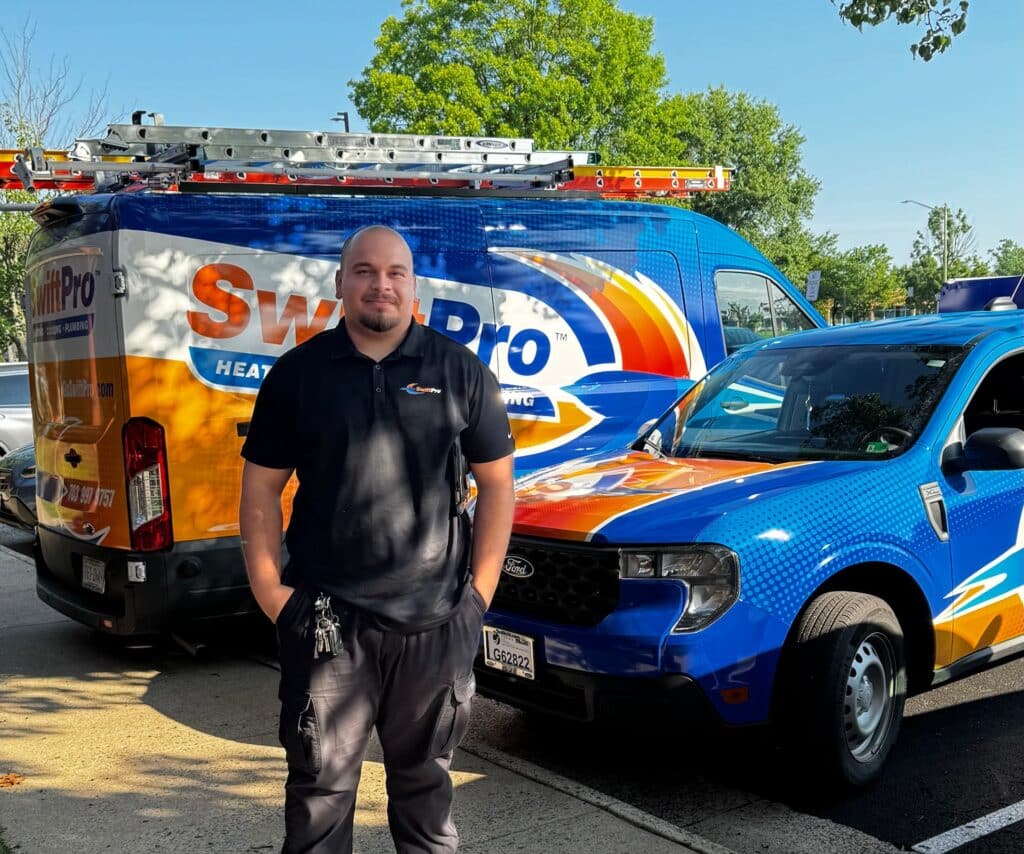

By Tyler Griffin, Founder of SwiftPro · Updated June 2026
Get an AC replacement quote from two companies in Fairfax or the Route 50 Loudoun corridor and you can watch the same job swing from $7,000 to $18,000. This is the honest, no-pressure breakdown of what Northern Virginia homeowners actually pay in 2026, and the part nobody tells you: who you hire changes your final invoice by thousands.
Want the number for your own house before you read the ranges? The SwiftPro furnace and AC price estimator asks a few questions about your home and gives you a real price range, with monthly payment options, in about two minutes. No phone call, no sales visit.
The system we put in first
Built to take a beating. Put in by our crew.
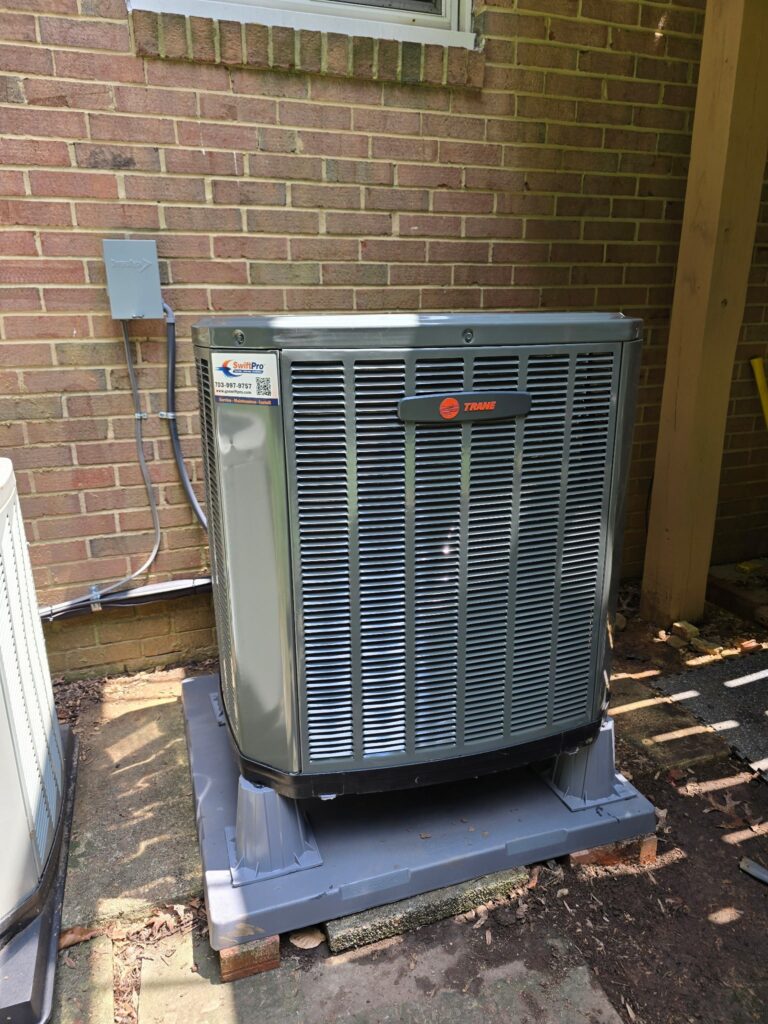
Heat lamps, snow and rain on one outdoor unit: that’s Trane’s own film. We’re a Trane Comfort Specialist, on Trane’s own dealer locator, and when you pick a Trane, our crew puts it in.
Films: Trane’s own.
Estimated AC Replacement Costs in Northern Virginia
At SwiftPro, a furnace and air conditioner replaced together run $8,898 to $23,000 installed, by system size, two to five tons. An air conditioner on its own, keeping the furnace you have, runs $5,942 to $14,450 installed; our AC replacement page has both side by side, and the heating and cooling estimator narrows either to your house. Equipment is only half the math, company structure and scope of work drive the rest.
From about $148 a month at 0% APR for 60 months, the whole price financed, on approved credit. How financing works
For the air conditioner alone: From about $99 a month at 0% APR for 60 months, the whole price financed, on approved credit. How financing works
Why the Same Job Costs Wildly Different Amounts
There are hundreds of HVAC pricing articles online. Most pull national averages, paste a generic definition of “SEER ratings,” and call it a day. That advice is close to useless here. Whether you own a 1970s Burke colonial or a 2005 estate in Aldie, our housing stock sits in one of the more expensive trade-labor markets in Virginia. Two honest companies can quote the same house very differently based on the equipment tier they lead with and how their business is structured.
A Few Terms Worth Knowing First
- SEER2: The federal efficiency rating in force since 2023. Virginia sits in the Department of Energy’s Southeast region, where the minimum for a residential split-system AC is 14.3 SEER2 (13.8 SEER2 at 45,000 Btu/h and up); most quality replacements land well above that.
- Tonnage: A sizing measure of cooling capacity. One ton removes 12,000 BTUs of heat per hour.
- Private Equity (PE): National investment funds that have quietly bought up dozens of legacy Northern Virginia HVAC brands. Same name on the truck, different ownership and sales quotas.
- Variable-speed / inverter: Premium systems that modulate output continuously instead of just switching on and off, quieter, more efficient, better at controlling humidity.
What “Replacement” Actually Includes
“AC replacement” rarely means swapping one metal box outside. What gets physically removed sets your baseline price:
- Townhomes & clusters (Reston, Stone Ridge, Centreville): Often 1.5 to 2.5-ton systems. Tight interior closets frequently need slim-profile coils or vertical air handlers, which adds labor hours.
- Suburban colonials (Burke, Springfield, South Riding): Usually 3.5 to 5-ton capacities or dual-zone splits. Homes from the 70s and 80s often need a furnace upgrade and some duct work at the same time (a furnace alone runs $4,285 to $14,040 installed).
- Western Route 50 estates (Aldie, McLean): Frequently need multi-zone, variable-speed heat pump systems to manage large, sprawling square footage.
What Each Part of the Area Usually Has
Costs shift across our service area with typical home size and the mechanical setup the houses were built with:
| City / Sub-Market | Typical System |
|---|---|
| McLean / Great Falls | Variable inverter / multi-zone |
| Aldie / Stone Ridge / South Riding | 16 to 18 SEER2 heat pumps & dual-fuel splits |
| Burke / Springfield | 2-stage AC + 80% gas furnace match |
| Chantilly / Centreville | Single-stage & two-stage swaps |
| Reston / Herndon | Heat pump (townhome split) |
| Alexandria / Annandale | Compact air handler conversions |
Who You Hire: Three Contractor Tiers
Because so many local shops are now PE-owned, the type of company you call matters as much as the equipment. Here is how the three tiers usually compare:
Tier 1: Corporate & PE Brands
Large consolidated regional fleets with heavy advertising budgets. Expect same-day emergency capacity, but also aggressive “today only” discounts and commissioned salespeople working repair-to-replace scripts.
Tier 2: Small Solo Shops
One to five employees, where the owner turns the wrenches. Lowest overhead and high personal accountability, but often severe scheduling bottlenecks in July when everyone needs them at once.
Tier 3: Mid-Size Local (the sweet spot)
Locally owned operations decoupled from corporate debt. You get multi-brand factory access, non-commissioned technicians, dedicated permit coordinators, and fair, transparent pricing. This is where SwiftPro sits, large enough to do it right, small enough to still answer the phone.
Equipment Tiers, Plainly Explained
- Single-stage: Runs at 100% until the target temperature is hit. Lowest upfront cost, but it struggles with humidity during muggy Virginia summers.
- Two-stage: Shifts between a low (about 70%) and high (100%) gear. Quieter, uses less power, and dehumidifies far better.
- Variable-speed inverter: Modulates output continuously to match real-time demand. Best efficiency and near-silent operation, and the biggest comfort difference in a two-story home.
How to Read a Legitimate Proposal
Be skeptical of verbal quotes and single-line email estimates. To compare bids fairly, insist on an itemized proposal that spells out all five of these:
- Exact AHRI-matched model numbers (condenser + coil + furnace)
- Calculated tonnage backed by a Manual J heat-load calculation
- The SEER2 rating, written out clearly
- Written permit confirmation for your county’s code inspection
- Labor vs. factory warranty terms, listed separately
What each of those means on install day, from the AHRI-matched coil to the pressure test and the charge, is in what a proper AC installation includes.
Here is a short request you can copy into your email to every company you’re comparing, it forces an apples-to-apples answer:
Subject: Request for itemized HVAC proposal, [Your Last Name]
Please provide a formal estimate that explicitly includes: (1) exact AHRI-matched model numbers for the condenser, coil, and furnace; (2) calculated cooling tonnage and the certified SEER2 rating; (3) written confirmation that you will pull the local municipal permit; and (4) the duration and terms of your included labor warranty.
Rebates & Incentives (Read This Carefully)
- Federal 25C tax credit, expired. The Energy Efficient Home Improvement Credit (Section 25C), which previously offered up to $600 for qualifying AC units and up to $2,000 for qualifying heat pumps, ended for systems placed in service after December 31, 2025. Equipment installed in 2026 does not qualify. Confirm current federal rules with a tax professional before counting on any credit.
- Utility rebates. Washington Gas pays $500 to $700 back on a new high-efficiency gas furnace for its Virginia customers. Dominion Energy’s heat pump upgrade rebates are small and need a home energy evaluation first, and NOVEC doesn’t offer one. Amounts change, so verify the active program before you sign.
- Manufacturer promotions. Trane, Rheem, and Mitsubishi periodically offer seasonal rebates applied directly to the contractor’s invoice.
The One Trap That Costs Homeowners the Most
Skipping the county permit. Whether the job is in Fairfax County or Loudoun County, an unpermitted install bypasses the required third-party safety inspection. That can complicate a future home sale and gives insurers grounds to question a related claim down the road. A reputable contractor always pulls the permit, if a bid is cheap because it skips one, that’s not a savings, it’s a liability.
About SwiftPro Heating, Cooling & Plumbing
We are SwiftPro, an independent, family-owned heating, cooling, and plumbing team based on Lafayette Center Drive in Chantilly. With 1,132 reviews across Northern Virginia, we’re a Trane Comfort Specialist™, a Rheem Pro Partner and a Mitsubishi Electric Diamond Contractor.
How we work: Our founder Tyler Griffin built SwiftPro on one principle, honest education over high-pressure sales. We give you a fully documented proposal, pull every required municipal permit, register your factory warranties, and give you the time to decide. No commissioned closers, no “today only” scripts.
Getting AC Quotes in Northern Virginia? Get a Straight One.
Before you sign a five-figure proposal, let us give you an honest, itemized estimate. Schedule your estimate online or call us directly at (703) 997-9757. We’ll register your warranties and give you the unhurried time you need to make the right call.
SwiftPro Heating, Cooling & Plumbing · 4230 Lafayette Center Drive, Suite N, Chantilly, VA 20151 · (703) 997-9757 · VA License #2705192276. Published as a free homeowner education resource.
Watch real system replacements go in
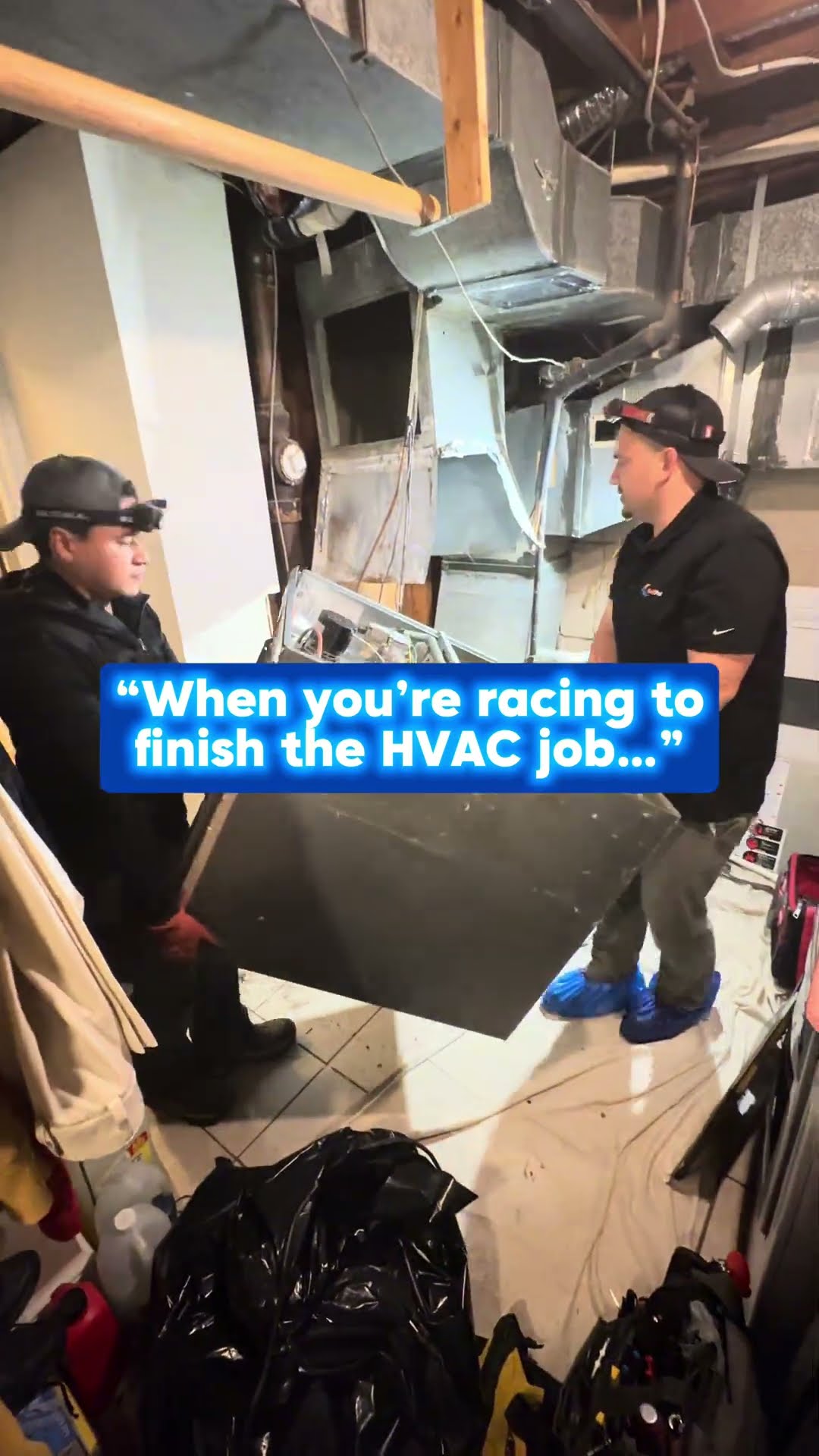
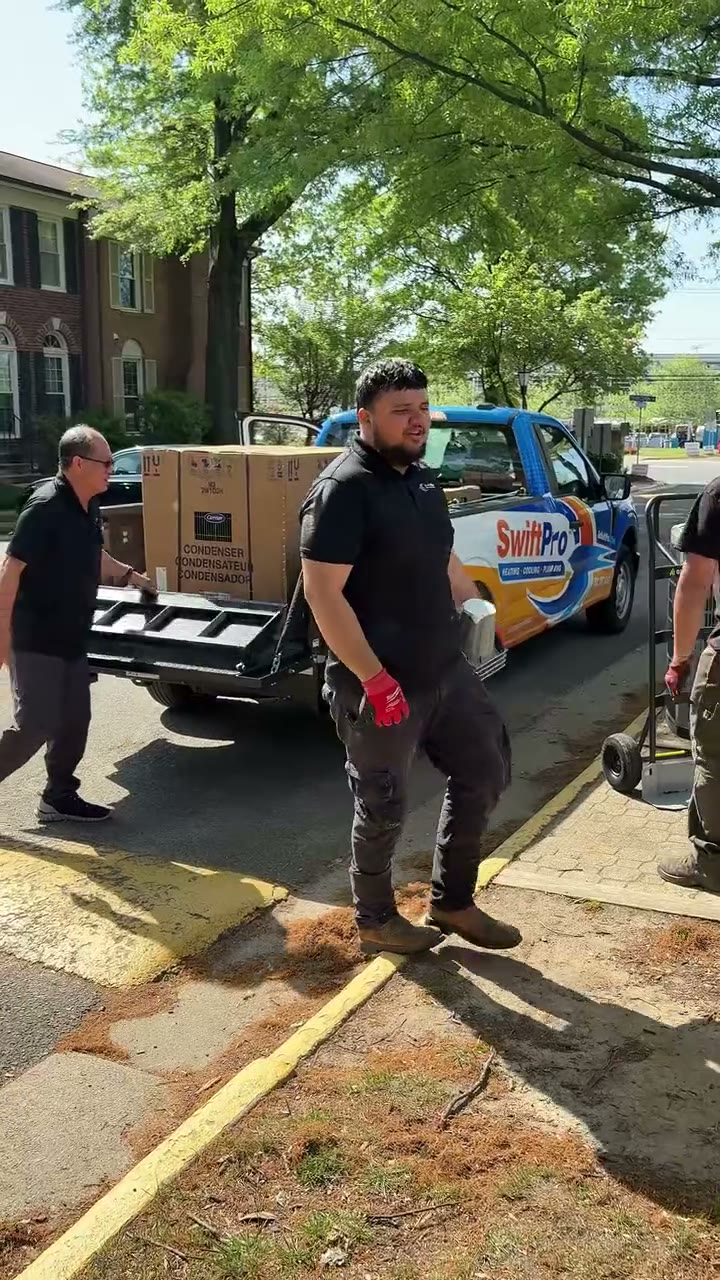
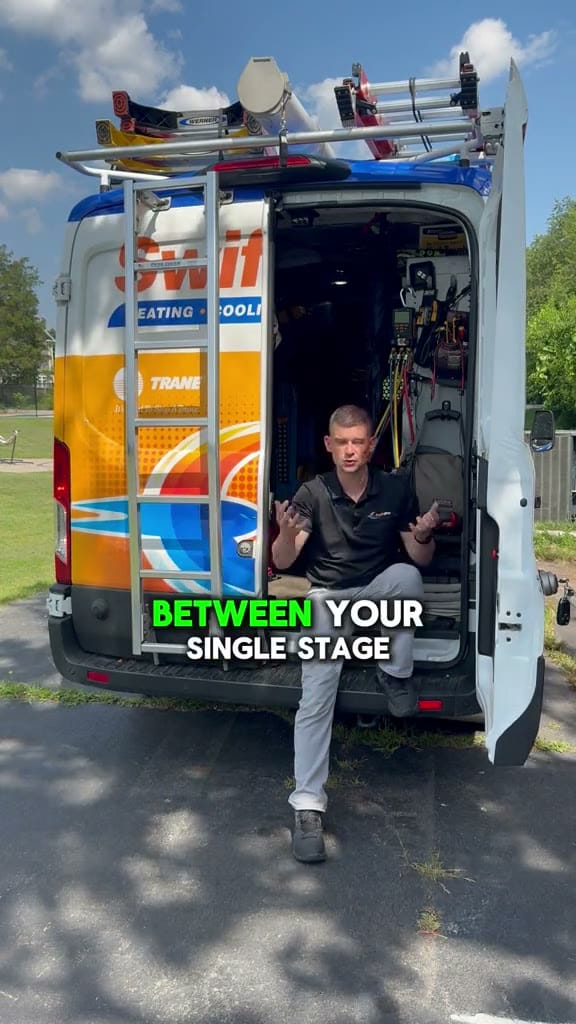
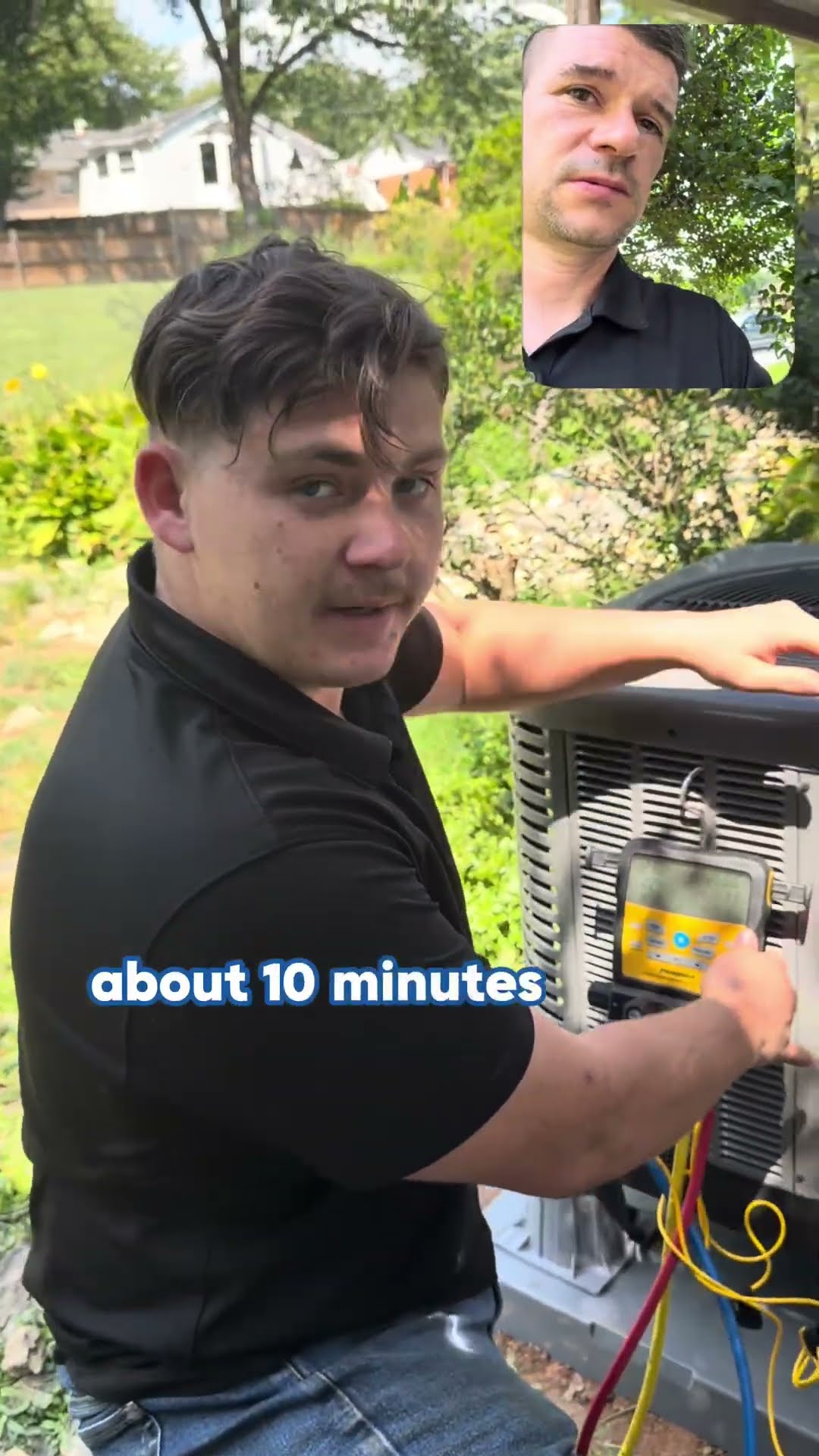
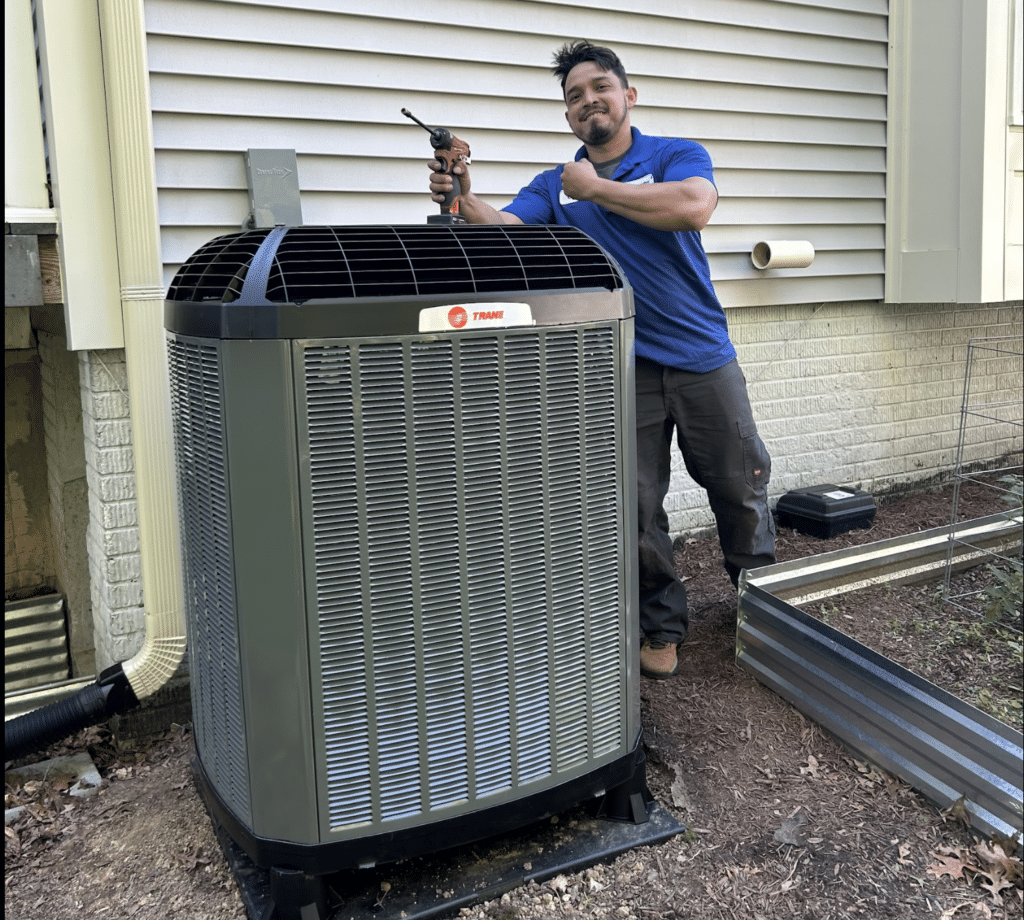
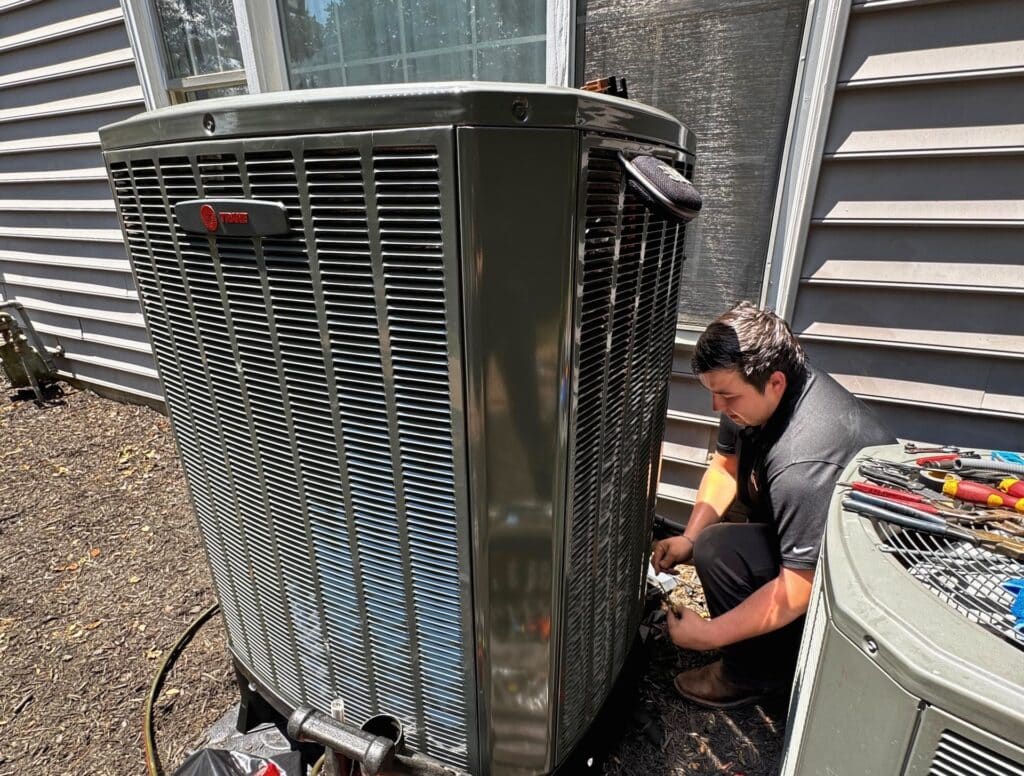
Real jobs in Northern Virginia homes, filmed by our own crew. Tap one to watch.