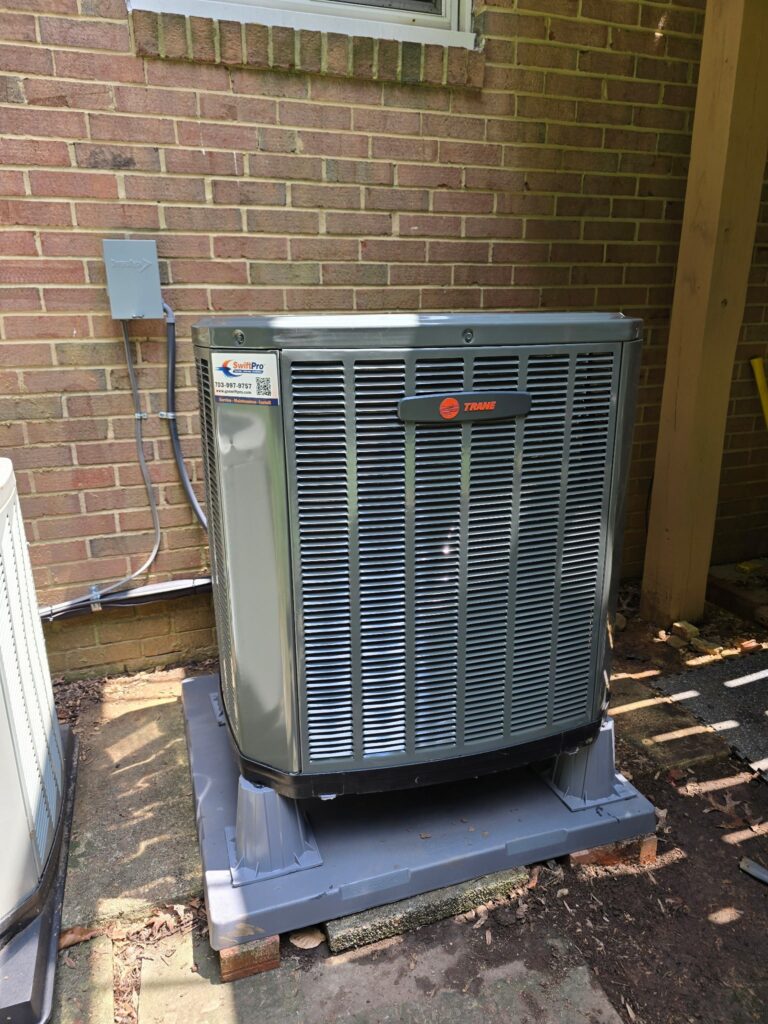

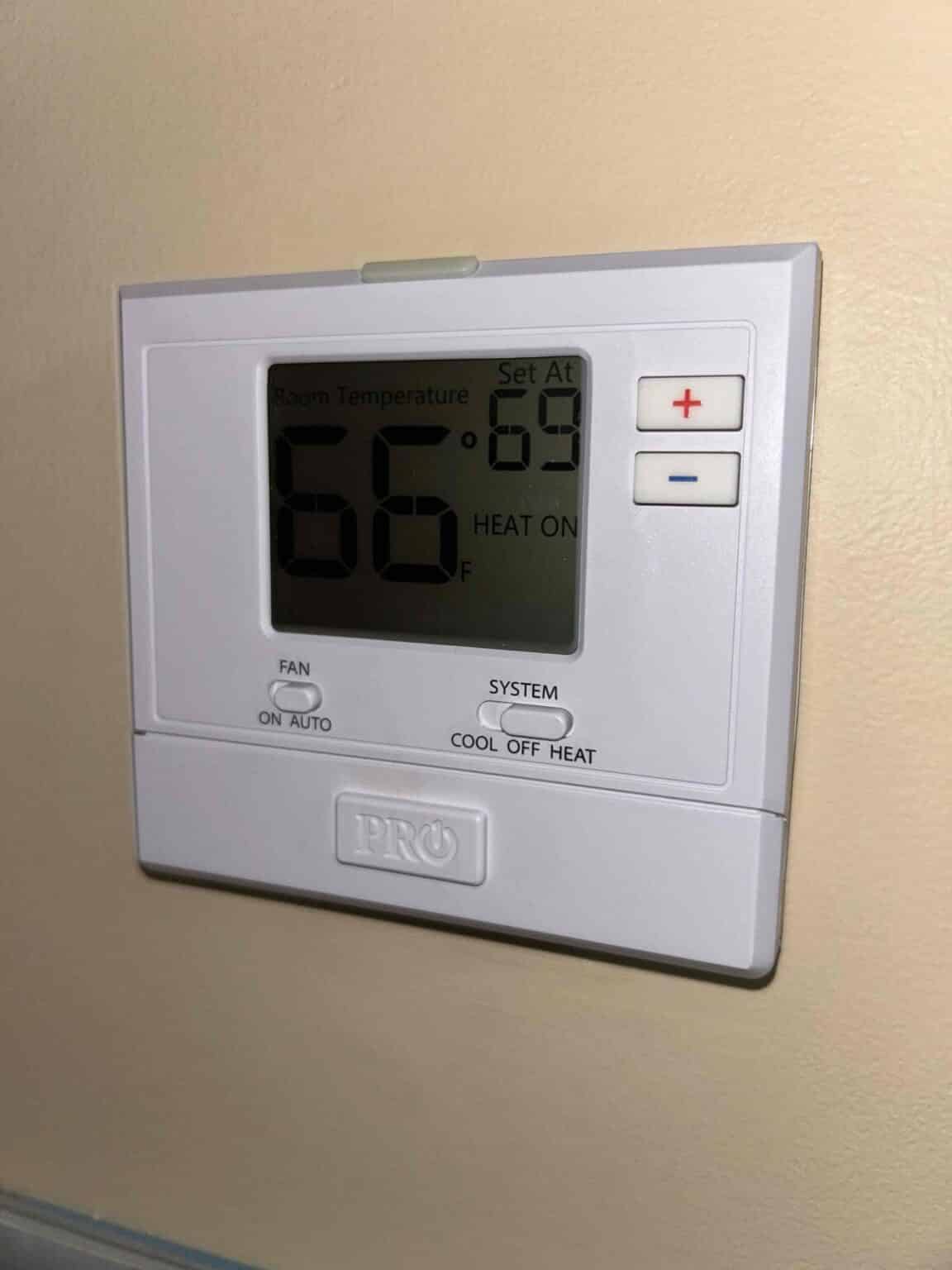
If you only do one thing: go to the thermostat and check two settings. The system should say Heat, not Cool or Auto, and the fan should say Auto, not On. Fan On blows air all day whether the furnace is heating or not, and between cycles that air is room temperature. It feels cold. It is one of the most common reasons for this call, and it costs nothing to fix.
If the settings are right and the air is still cold, the table below is what we would check, in roughly the order we would check it. Most of it you can look at yourself in ten minutes.
What you feel, and what it usually is
| What you notice | What it usually is | Can you fix it? | If it needs us |
|---|---|---|---|
| Cold air for the first minute, then warm | Normal. The burners heat the exchanger before the blower starts. | Nothing to fix | Nothing |
| Cool air between heating cycles | Thermostat fan set to On | Yes, set it to Auto | Nothing |
| Heat pump air feels lukewarm, not hot | Normal. Heat pump air usually runs in the mid 80s to low 90s. | Nothing to fix | Nothing |
| Heat pump blows cool for a few minutes, steam outside | Defrost cycle | Wait it out | Defrost board $450 to $1,150 if it never ends |
| Warm for a few minutes, then cool, over and over | Dirty filter, furnace overheating and shutting the burners off | Yes, new filter | Blower wheel cleaned $300 to $440 |
| Burners light, go out after a few seconds | Dirty flame sensor | No | Cleaned $95 to $180 |
| Clicking, no flame at all | Igniter | No | $240 to $410 |
| Heat quit, water by the furnace | Clogged condensate drain | Sometimes | $175 to $420 |
| Warm at the close rooms, cold at the far ones | Duct leaks in the attic, crawl space or garage | No | Priced at the house |
| Cold air right after a new thermostat went in | Thermostat set up for the wrong equipment | Often, in the setup menu | Thermostat $300 to $640 if it is the wrong one |
Our Northern Virginia prices, from the same price book as the full furnace repair list. The diagnostic visit is $99.
First: is it actually broken?
Two of the most common “cold air” calls are a furnace or heat pump doing exactly what it is supposed to.
A gas furnace waits before it blows. When the thermostat calls for heat, the inducer fan starts, the igniter glows, the burners light, and then the blower waits on purpose, usually the first minute or so, while the heat exchanger warms up. If you are standing at a register at the start, you feel a little cool air from the ducts first. At the end of the cycle the burners shut off and the blower keeps going for a minute or two to pull the last heat out. That air cools off as it goes. Both are normal.
A heat pump never feels hot. Gas furnace air usually comes out of the register somewhere around 100 to 140 degrees, depending on the furnace. Heat pump air usually runs in the mid 80s to low 90s, which is warmer than your house and cooler than your body. Hold your hand at the register and it feels cool, and it is still heating. The test is a thermometer, not your palm: if the supply air is clearly warmer than the room and the house holds temperature, the heat pump is fine. How a heat pump actually behaves in a Virginia winter is here.
Heat pump blowing cold air in winter
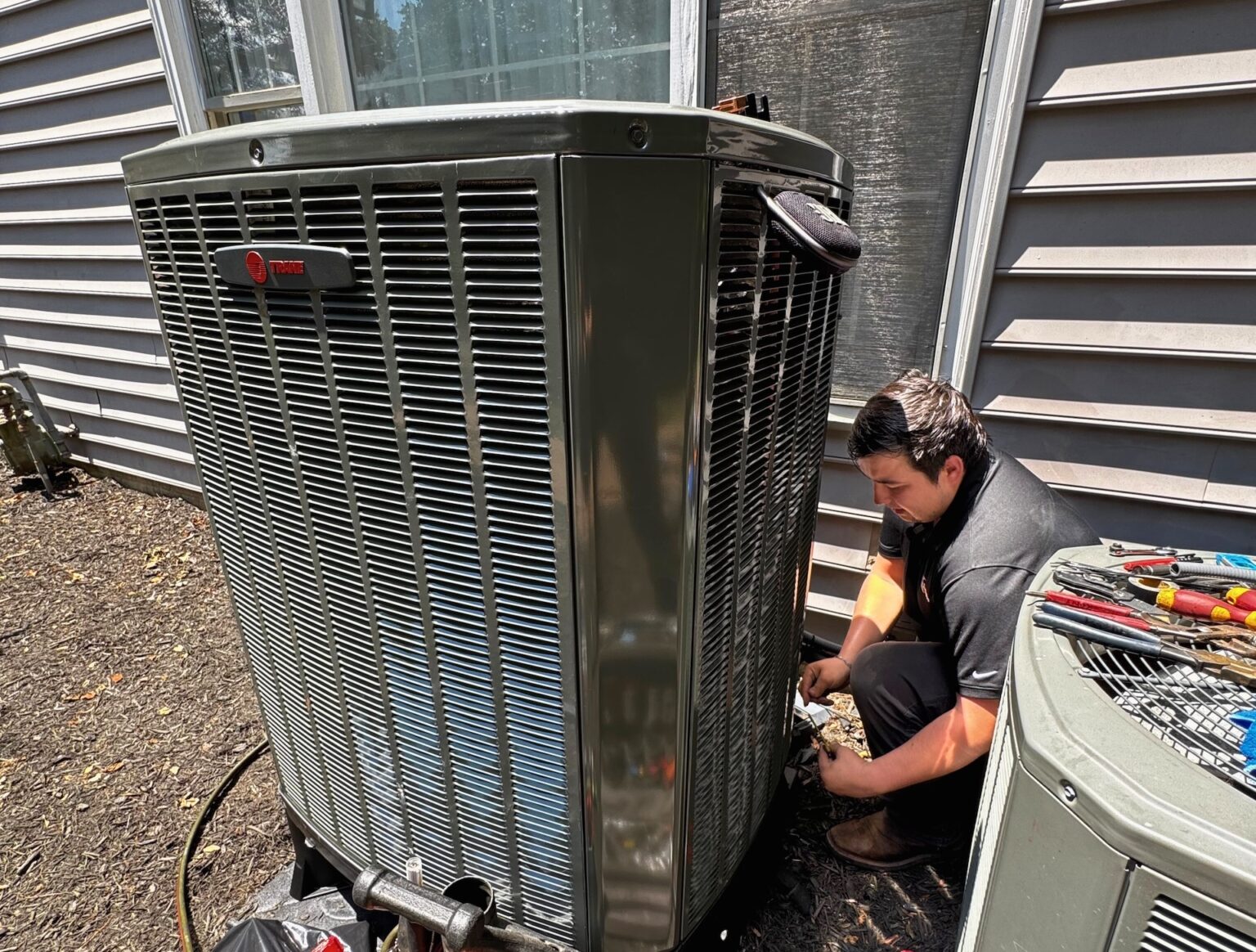
Defrost. On a cold, damp day the outdoor coil frosts over, and every so often the heat pump runs backwards for a few minutes, sometimes up to fifteen, to melt it. You will see steam coming off the outdoor unit, which alarms people and is completely normal. Inside, the air goes cool for those minutes unless the backup heat comes on to cover it. If the outdoor unit is a solid block of ice that never clears, the defrost is not doing its job, often a defrost board or sensor, $450 to $1,150.
The outdoor unit is not running. Go look. If the fan outside is still and the house is getting by on warm-ish air, the backup electric heat is carrying it, which is expensive. A failed contactor ($290 to $425) or capacitor ($240 to $370) is the usual cause. If the house is getting cold air and the outdoor unit is off, the backup heat is not coming on either, and that needs a visit. What aux heat and emergency heat actually mean.
On a heat pump, the five usual reasons the indoor unit blows cool, two of them normal, are in air handler blowing cold air.
Snow, ice or leaves on the outdoor unit. A heat pump pulls its heat out of the outdoor air through that coil. Packed with snow, ice or leaves, it can’t, and the house gets lukewarm air while the backup heat runs up the bill. Keep the top and sides clear, and keep drifts and gutter drips off it.
Dual fuel. If you have a heat pump and a gas furnace together, the air will feel cooler on mild days when the heat pump is doing the work and hotter on cold days when the furnace takes over. That is the design. Where it switches is a setting, and here is where it belongs at this year’s rates.
The system we put in first
Built to take a beating. Put in by our crew.
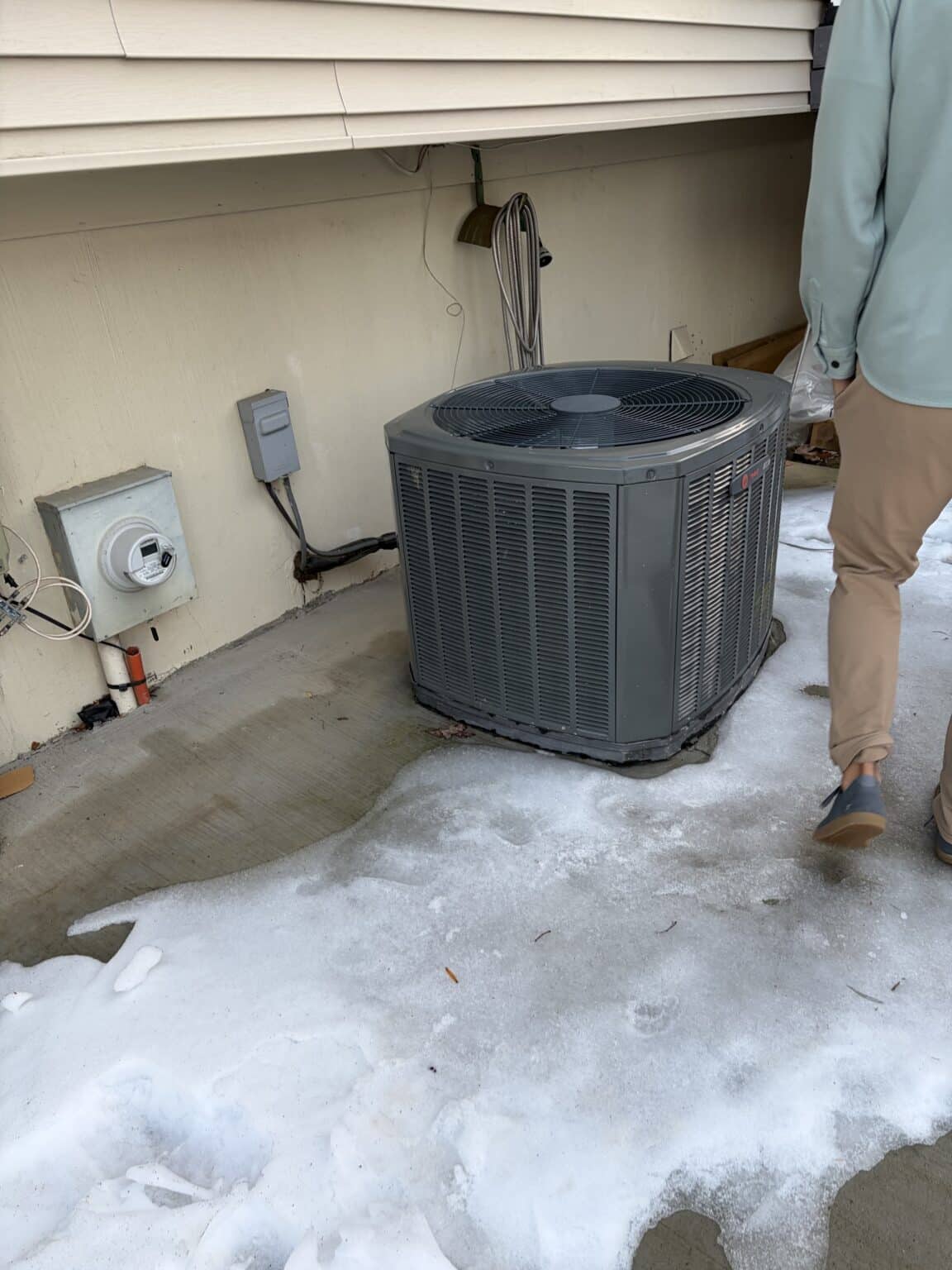
Heat lamps, snow and rain on one outdoor unit: that’s Trane’s own film. We’re a Trane Comfort Specialist, on Trane’s own dealer locator, and when you pick a Trane, our crew puts it in.
Films: Trane’s own.
Furnace blowing cold air: what to check, in order
1. The thermostat. Heat, not Cool. Fan Auto, not On. Setpoint above the room temperature, not below it. If it runs on batteries and the screen is faint, change them, because weak batteries can make a thermostat drop out. If you or anyone else installed a new smart thermostat recently, go into its equipment settings and confirm it knows what it is running. A thermostat told the house has a heat pump when it has a gas furnace, or set up with the reversing valve backwards, will run the air conditioner when you ask for heat. That one is common after a do-it-yourself install, and it is a setup screen, not a repair. More on thermostats here.
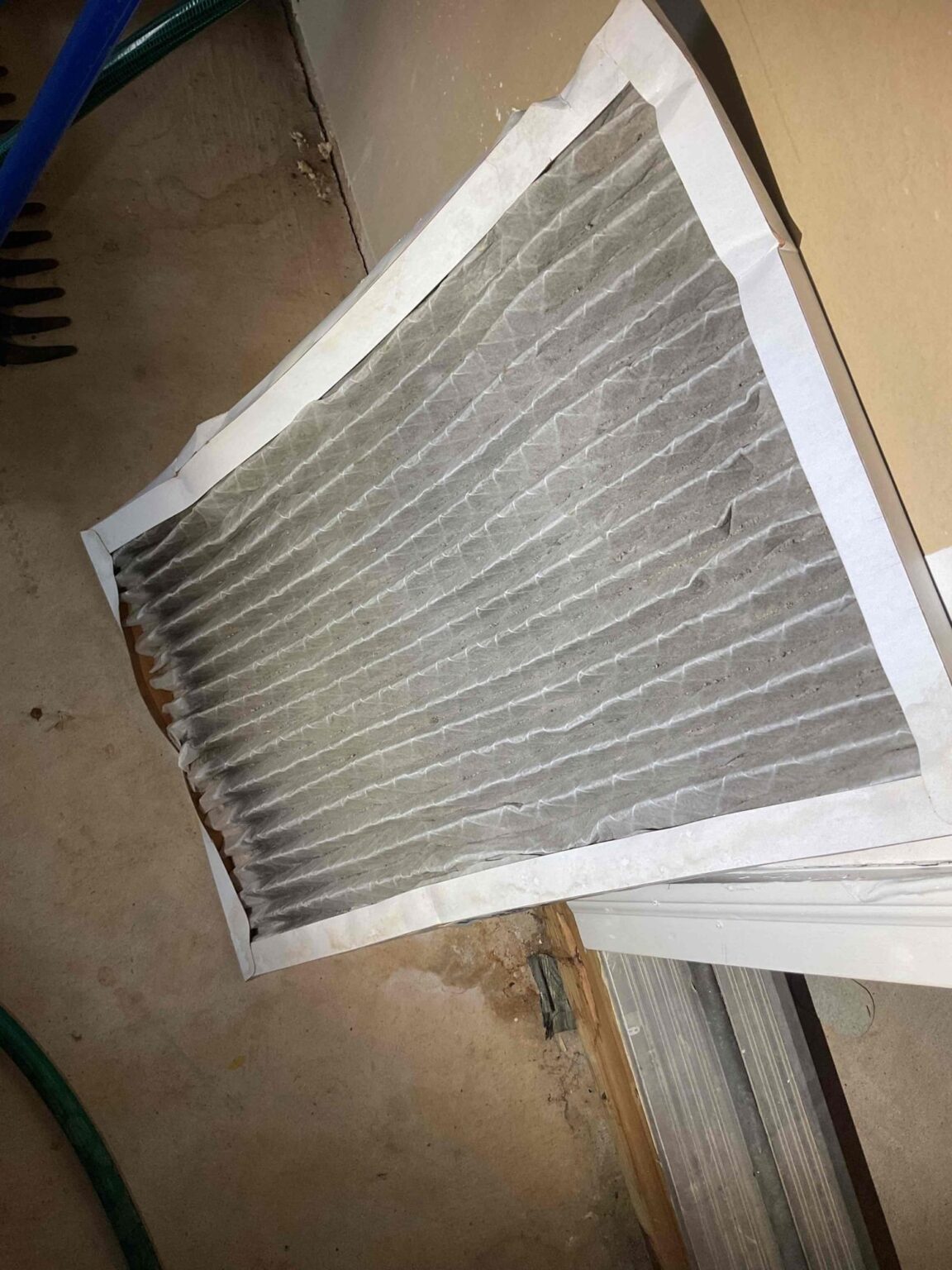
2. The filter. Pull it and look. If it is gray and you cannot see light through it, that alone may be your problem. A choked filter starves the furnace of air, the heat exchanger overheats, and a safety called the high limit switch shuts the burners off while the blower keeps running to cool things down. You get a few minutes of warm air, then cool air, then warm again. A new filter fixes it if it was caught early. If it has been happening for weeks, have the furnace looked at, because running hot over and over is hard on the heat exchanger, the part that keeps exhaust out of your air. Which filter to buy is here.
3. The status light. Most furnaces from the last few decades have a small status light on the control board, usually visible through a little window in the lower door. It blinks a code, and the code chart is usually on a label on the door or inside the cabinet. Count the blinks and write the number down before you touch anything, because on some furnaces cutting the power, or just pulling that door off, wipes the code. That number tells a technician most of what they need before they walk in, and it is the most useful thing you can tell us on the phone.
4. Power and gas. There is a light switch on or near the furnace, usually on the side of the unit or on the ceiling joist above it. Somebody flips it every winter thinking it is a basement light. Check the breaker. Make sure the front door of the furnace is seated, because a switch behind it keeps the furnace off when the door is loose. Then the gas: if the stove lights, gas is reaching the house. The valve on the pipe going into the furnace is open when the handle runs the same direction as the pipe. If you have propane, check the tank gauge. Out in Clifton, Marshall and the other propane areas, an empty tank is one of the first things to rule out.
5. Water by the furnace. If your furnace has white plastic pipes coming out of it, it is a high efficiency unit, and it makes water every time it runs. When that drain clogs or freezes, a safety switch keeps the burners off until the water can drain. Sometimes clearing the trap gets you going again. If it keeps happening, the drain needs to be redone. The full story on that drain is here.
If all five check out and the air is still cold, stop there. The rest of the list is inside the furnace. Our crew shows a few of these on video: three checks to try before you call.
What it is when it is inside the furnace
The flame sensor. The burners light, run a few seconds, and go out. The furnace tries again, usually a few times, then locks itself out. That is a thin metal rod in the flame with a film on it, and the furnace cannot tell the flame is there. It is one of our most common fall no-heat calls and one of the cheapest: cleaned, $95 to $180. More on the flame sensor, and how to tell it is the culprit.
The igniter. You hear the inducer fan start and nothing lights. A hot surface igniter is a ceramic element that gets brittle with age, and it tends to go on the first hard run of the season. Replaced, $240 to $410.
The control board or blower. A board that has stopped telling the parts what to do runs $550 to $1,180. A blower motor runs $670 to $2,400, and the spread is a standard motor against a variable speed one.
A safety that keeps tripping. Furnaces have a rollout switch near the burners that trips when flame comes out where it should not. Some reset with a button. If yours has tripped, do not keep resetting it to get heat back. A rollout switch that trips is usually pointing at a blocked flue or a heat exchanger problem, and that is a carbon monoxide question, not a comfort one. Turn the furnace off and call. What a cracked heat exchanger actually is, and how to know the diagnosis is real.
When the air is warm near the furnace and cold everywhere else
That is usually not the furnace. It is the ducts. Ducts that run through an attic, a crawl space or a garage lose heat on the way, and a disconnected or crushed run can dump warm air into the attic and deliver almost nothing to the room at the end of it. A return leak in the same spaces pulls cold air into the system. The rooms farthest from the furnace and the rooms over the garage get the worst of it. How to tell if it is the ducts, and why one room is always colder.
When it is time to call
- You smell gas. Leave the house, then call 911 and your gas company from outside. Do not flip switches on the way out.
- The rollout switch tripped, or the furnace locked out and the code points at the flame or the flue.
- Your carbon monoxide alarm went off. Get everyone out and call 911. What the beeps mean.
- The filter is fine, the settings are fine, and the air is still cold after one full cycle.
- The heat pump’s outdoor unit is iced solid, or not running at all.
Write down the blink code and what you checked. It makes the visit shorter. If the furnace is old enough that you are already doing the repair against replacement math, here is what a new one costs. $4,285 to $14,040 installed, by size and efficiency. From about $71 a month at 0% APR for 60 months, the whole price financed, on approved credit.
More cold weather problems, month by month, are in the Cold Season Field Guide.
Book a repair, or see what a new one costs
Need it fixed? The diagnostic visit is $99, and you get the repair price in writing before any work starts. Book a visit online or call (703) 997-9757, day or night.
What a replacement costs in your house. Answer a few questions and see the installed price for your size: the furnace estimator for a gas furnace (from $4,285) and the heating and cooling estimator for a heat pump or a furnace and AC together (from $8,499). From about $71 a month at 0% APR for 60 months, the whole price financed, on approved credit. Each one lets you book a free in-home measurement.
SwiftPro repairs every brand of furnace and heat pump across Northern Virginia. No heat right now is what the 24 hour line is for.